
The Neurological Case for a Private Wooden Boat on Lake Como
Discover why a private wooden boat tour on Lake Como rewires your nervous system. A clinical deconstruction of Villa Pliniana, Cernobbio's villa corridor, Riva craftsmanship, and the sensory mechanics of authentic Dolce Vita from the water.
DAY TRIPS
DestinationDiscover
5/10/20267 min read
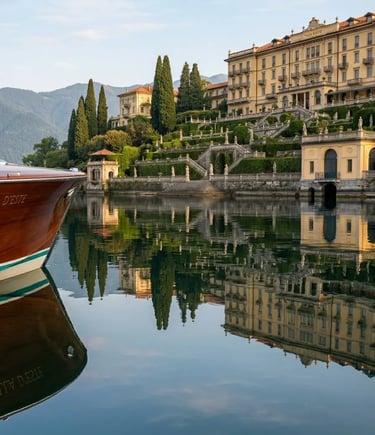
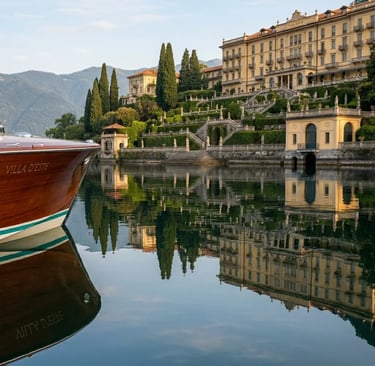
There is a moment, roughly four minutes after departure from the Como waterfront, when the ambient noise of European tourism drops below 40 decibels. Your shoulders release. Your breathing deepens. The autonomic nervous system registers something it almost never encounters in modern life: genuine acoustic isolation paired with forward motion. This is not relaxation. This is a recalibration.
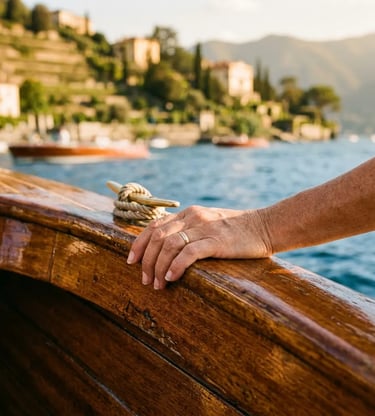
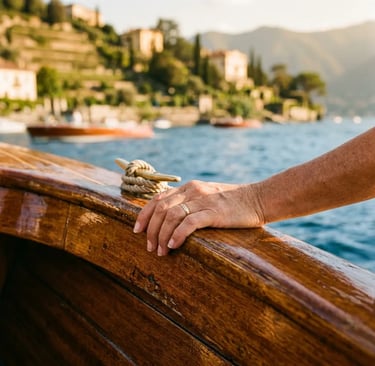
The GetYourGuide private wooden boat tour on Lake Como does not sell you an experience. It engineers an environment your nervous system has been deprived of since birth. The hull beneath you is hand-finished mahogany or larch, depending on the vessel materials drawn from the same Cadenazzi and Riva boatbuilding tradition that has defined Italian maritime craftsmanship since the 1920s. Your fingers find the gunwale involuntarily. The wood is warm. The varnish is smooth but not frictionless. Your brain files this under "safe structure," and your vigilance drops another measurable degree.
You are now chemically different than you were on shore.
Como to Villa Cagni Troubetzkoy: The Status Recalibration
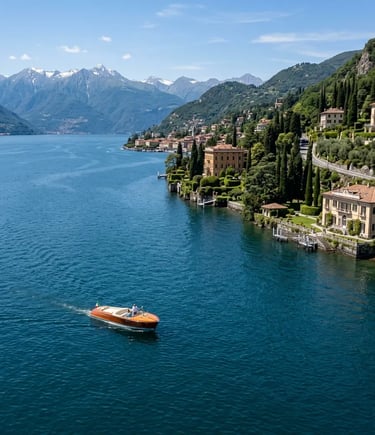
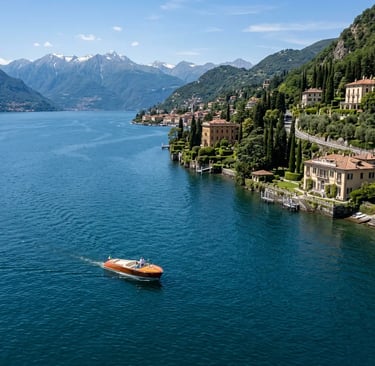
The western shore unfolds in a sequence your visual cortex processes as a dominance hierarchy made physical. Villa Cagni Troubetzkoy appears first a neoclassical estate set against alpine topography so vertical it functions as a natural fortress wall. The limestone facade is visible only from the water. Pedestrians on the road above see a garden wall. You see the entire composition as its architect intended: from below, looking up, arriving by craft.
This distinction matters more than any brochure will admit. The villa was built to be approached by boat. You are not a tourist observing a landmark. You are using the environment in the manner it was designed to be used. The brain recognizes this congruence instantly. It produces a specific cocktail: reduced cortisol, elevated serotonin, a faint dopamine anticipation of what comes next.
The Approach to Villa Pliniana: Where the Body Overrides the Mind
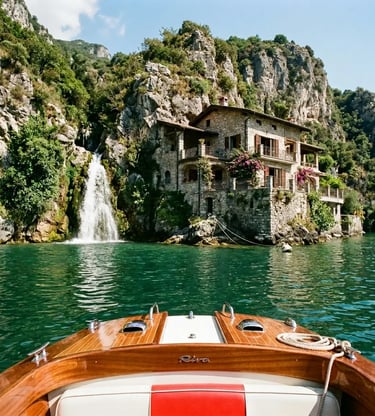
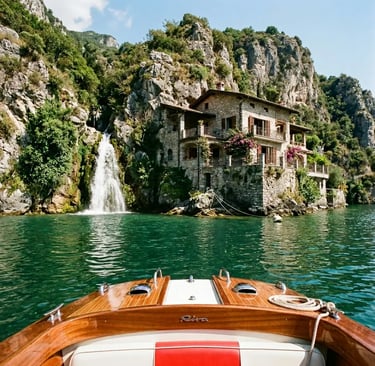
Villa Pliniana sits in a narrow gorge on the eastern shore. The stone is sixteenth-century. The natural spring Pliny the Elder documented still pulses from the cliff face beside it. Your captain cuts the engine. The boat drifts.
This is the swimming stop, and the water is 18 to 22 degrees Celsius depending on the month. The lake floor drops away beneath you into an opacity that reads as depth without danger — the alpine glacier melt is clean enough to taste. Submerging here does something no infinity pool replicates. The cold is real. The setting is historically significant. Your mammalian dive reflex activates. Heart rate slows. Blood centralizes. You surface and grip the wooden transom of a vessel that costs more than most automobiles, and the sensation of warm mahogany against cold skin creates a contrast so specific your body will store it permanently.
This is not an unforgettable experience. It is a permanent alteration of your baseline expectations for what water, temperature, and enclosure should feel like simultaneously.
The Cernobbio Corridor: Villa d'Este to Villa Olmo
The return route traces the Cernobbio shoreline, and here the Dolce Vita stops being a concept and becomes a geographic fact. Villa d'Este now a hotel where rooms begin at four figures per night — presents its Renaissance gardens directly to the waterline. Villa Erba follows. Then Villa Olmo, with its Italianate symmetry and public grounds that appear, from your position on the lake, to be your private estate.
The boat moves at eight knots. The wake is minimal. Other vessels the public ferry, the hydrofoil pass at distance and speed. You register them the way a person in a private library registers street noise: as confirmation of a boundary that exists in your favor.
Your captain narrates selectively. The historic architecture receives context construction dates, aristocratic lineage, architectural attribution but never performance. There is no enthusiasm in the delivery. There is precision. This register communicates competence, and competence triggers trust, and trust permits the final surrender of cognitive vigilance that most luxury purchases promise but never deliver.
What Actually Happens to You
The tour duration is two to three hours. The physical facts are simple. A wooden boat. A knowledgeable captain. A route along the western and eastern shores of Lake Como with a swimming stop near a sixteenth-century villa.
The neurological facts are different. Acoustic isolation rewires your threat assessment. Tactile contact with artisan materials satisfies a pattern-recognition need for quality your prefrontal cortex cannot override. Visual access to architecture designed for private water approach activates a status circuit that no photograph, no drone footage, and no balcony view can replicate.
You do not return from this tour with memories. You return with a new reference point. Every boat, every lake, every villa you encounter afterward will be measured against this, and almost everything will fall short.
That is not a marketing claim. It is a predictive statement about how contrast encoding functions in the human brain. The GetYourGuide Lake Como wooden boat tour does not compete with other tours. It installs itself as the standard against which alternatives are found inadequate.
Frequently Asked Questions About the Lake Como Private Wooden Boat Tour
Why is a wooden boat superior to a modern fiberglass vessel on Lake Como?
The distinction is not aesthetic preference. It is a measurable sensory input difference. Hand-finished mahogany and larch hulls from the Riva and Cadenazzi boatbuilding tradition produce a specific tactile warmth that synthetic materials cannot replicate. Your skin registers natural wood grain as organic and safe. Fiberglass registers as industrial and neutral. The nervous system responds to these inputs before conscious thought intervenes.
Wooden boats also behave differently on water. The hull absorbs micro-vibrations rather than transmitting them. This means the constant low-frequency hum present on fiberglass vessels is absent. Your inner ear receives calm water data instead of mechanical noise data. The result is a measurably lower state of physical vigilance within minutes of departure.
There is also the acoustic signature. A wooden vessel moving at eight knots across Lake Como produces a sound that sits below conversational volume. The engine note on a well-maintained classic boat is closer to a deep pulse than a whine. This frequency range does not trigger alertness. It permits the auditory system to functionally rest while the eyes remain engaged with the alpine topography and historic architecture passing on both shores.
What makes the Villa Pliniana swimming stop different from any other lake swim?
Villa Pliniana is a sixteenth-century stone estate built into a vertical gorge on the eastern shore. The natural spring documented by Pliny the Elder still runs beside it. When your captain anchors here and cuts the engine, the silence is not metaphorical. It is a physical condition. Sound bounces off the gorge walls and dissipates upward. You are in an acoustic chamber created by geology and Renaissance construction simultaneously.
The water temperature ranges from 18 to 22 degrees Celsius depending on the season. This is cold enough to activate your mammalian dive reflex an involuntary neurological response that slows heart rate, constricts peripheral blood vessels, and centralizes blood to vital organs. This is not discomfort. This is your oldest survival system engaging in an environment it interprets as clean, deep, and safe. The alpine glacier melt that feeds Lake Como is transparent enough to see several meters below the surface.
The contrast upon exiting the water completes the sequence. Cold skin meeting warm wood. The sun on the southern exposure of the gorge heating the deck beneath your feet. Your body encodes this specific combination of temperature, texture, and visual enclosure as a peak sensory event. No hotel pool, no beach, and no public swimming area on Lake Como can manufacture this particular convergence of historical setting, water quality, acoustic isolation, and material contact.
Is the Cernobbio villa corridor visible from the shore road?
Partially, and that partiality is the entire point. Villa d'Este, Villa Erba, and Villa Olmo were designed during centuries when arrival by water was the primary mode of access for the aristocratic class. Their facades, garden compositions, and architectural proportions were calculated for the viewing angle of someone approaching at water level. The shore road came later. It offers fragments a gate, a wall, a glimpse of an upper terrace. It does not offer the composition.
From the private boat, you receive the intended experience. Villa d'Este presents its full Renaissance garden cascade directly to the waterline. Villa Olmo reveals its Italianate symmetry as a single unbroken visual frame. These are not details you appreciate intellectually. Your visual cortex processes bilateral symmetry and ordered vertical plantings as environmental indicators of resource control and territorial stability. You feel settled looking at these structures from the water. You feel excluded looking at them from the road.
The boat moves through this corridor at approximately eight knots. The speed is slow enough to permit sustained visual engagement with each estate but fast enough to create a cinematic continuity between them. One villa dissolves into the next. The shoreline becomes a continuous exhibition of five centuries of European wealth expressed in stone, garden, and waterfront positioning. This sequence does not exist from any other vantage point on Lake Como.
How does this tour compare to the public ferry or shared group boats?
The public ferry and hydrofoil on Lake Como serve a transportation function. They move large numbers of passengers between towns on fixed schedules at fixed speeds. The engine noise on a public ferry sits between 65 and 75 decibels. Conversation requires raised voices. The wake is substantial. Other passengers occupy your peripheral vision constantly. Your nervous system never exits its social monitoring mode because there are strangers within arm's reach for the entire journey.
A shared group boat reduces the crowd but preserves the fundamental problem. You do not control the route. You do not control the stops. You do not control the duration of anchoring at any given location. When the group schedule says leave, you leave. Your autonomy the single most powerful variable in stress reduction research is removed. The experience becomes a negotiation between your preferences and the preferences of strangers. This is the neurological opposite of luxury. This is commuting with a better view.
The private wooden boat eliminates every one of these friction points. The captain responds to you. The route adapts to your interest. The engine cuts when you want silence. The anchor drops when you want to swim. The duration at Villa Pliniana or along the Cernobbio corridor is yours to determine. This is not a superior version of the same product. It is a categorically different neurological event. The ferry gives you proximity to Lake Como. The private wooden boat gives you possession of it.
Connect
Join us for travel tips and destination insights.
© 2026. All rights reserved.
Affiliate disclaimer
This website contains affiliate links. If you purchase through these links, we may earn a commission at no extra cost to you.