
The Zotter Playbook: How a Chocolate Maker in Rural Austria Hijacked the Human Brain
Discover how Zotter Chocolate Factory uses behavioral psychology, sensory overload, and ethical influence to hijack the human brain. Why bizarre flavors, factory tours, and fair-trade sourcing create obsessive brand loyalty.
DAY TRIPS
DestinationDiscover
3/6/20268 min read
Affiliate Disclosure
This article contains affiliate links. If you purchase through these links, I may earn a small commission at no extra cost to you. I only recommend products I genuinely believe offer strong performance, quality, and value for your ski and travel experience.
You think you choose your chocolate. You don't.
Every time you reach for a bar wrapped in loud, hand-drawn packaging with a flavor combination that makes zero logical sense fish and chocolate, beer and caramel, pumpkin seed and chili you are not exercising free will. You are executing a program. A program that Josef Zotter, a self-taught chocolatier from a small town in Styria, Austria, wrote decades ago.
And he didn't write it with marketing. He wrote it with a scalpel-level understanding of human behavior.
This is a breakdown of how he did it. Not the fairy tale. The mechanics.
1. The Anatomy of Shock
The human brain is a prediction machine. Every second of every day, it is running models, anticipating what comes next. When a prediction is confirmed, dopamine stays flat. When a prediction is violated when something doesn't make sense the brain floods with neurochemicals. Attention spikes. Memory encodes deeper.
This is the orienting response. It's involuntary. You can't turn it off.
Josef Zotter doesn't just know this. He weaponizes it.
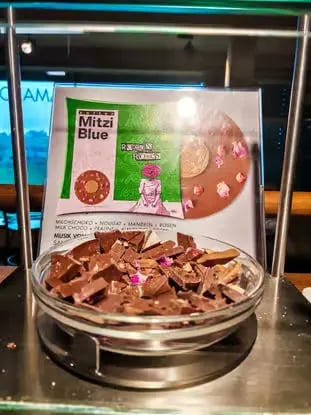
Pork blood and chocolate. Cheese and dark cacao. Fish and berry. These aren't random flavor experiments by an eccentric Austrian. They are calculated prediction violations designed to hijack the orienting response.
Ask yourself: why do you remember the weird flavors? Why can you name them right now but can't recall a single flavor from the last Lindt bar you ate?
Because Lindt confirmed your prediction. Zotter destroyed it.
And destroyed predictions get stored. They become stories you tell other people. They become social currency. You don't say, "I tried a milk chocolate bar." You say, "I tried chocolate with bacon and pumpkin."
That's not a flavor. That's a virus. It replicates.
2. The Sensory Siege
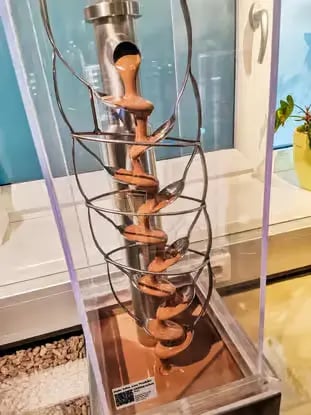
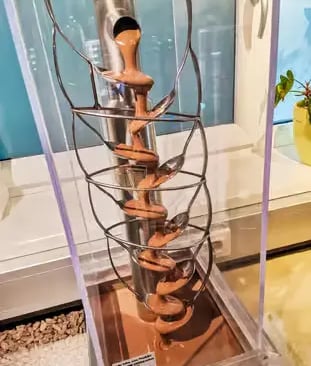
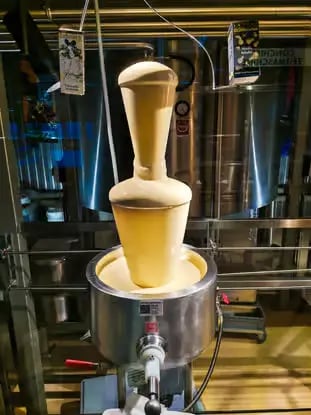
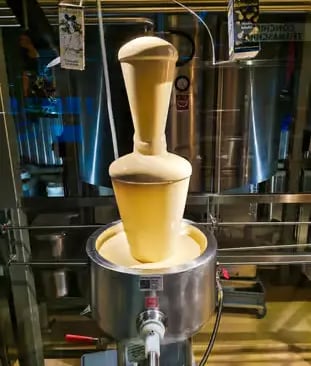
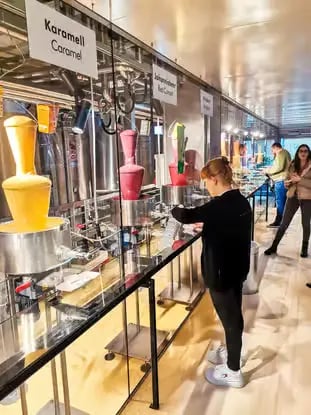
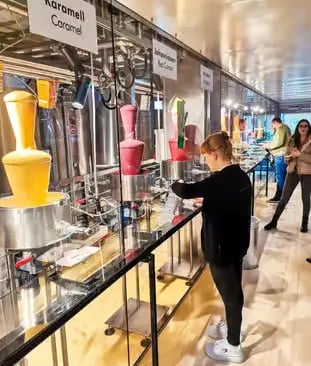
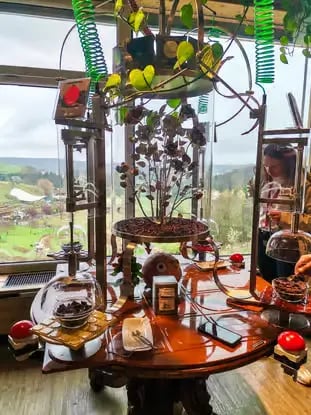
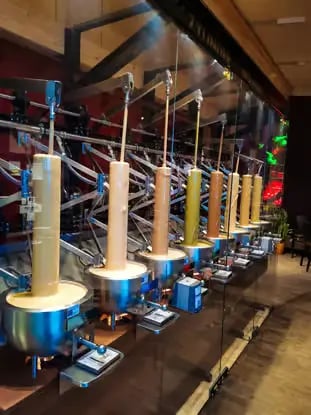
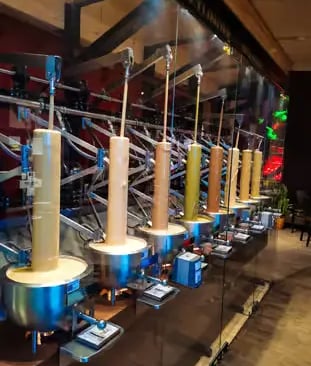
The Zotter factory tour the so-called "Chocolate Theatre" in Riegersburg is not a tour. Let me be clear about that. It is a meticulously engineered environment designed to overwhelm your sensory processing capacity and collapse your decision-making defenses.
Here is what happens to you there. You walk in. Within minutes, the smell of roasting cacao envelops you. This is not accidental. Olfactory input bypasses the thalamus and goes directly to the amygdala and hippocampus. Smell is the only sense with a direct line to the emotional brain. Before you've read a single sign or spoken to a single employee, your limbic system is already activated.
Then come the tasting stations. Hundreds of them.
Not ten. Not twenty. Hundreds.
This is not generosity. This is tactical overload.
When the brain is presented with an overwhelming amount of novel stimuli taste after taste, texture after texture the prefrontal cortex begins to fatigue. This is the part of your brain responsible for rational evaluation, price sensitivity, and saying "no." As it tires, impulse takes over. Emotional processing dominates. The evaluative mind steps aside, and the experiential mind takes the wheel.
By the time you reach the gift shop, you are not a rational consumer. You are a dopamine-saturated organism looking for one more hit. And the gift shop is right there. Perfectly positioned. Frictionless.
You buy. Not because you decided to. Because the architecture decided for you.
3. The Illusion of Choice
Here's the deeper trick.
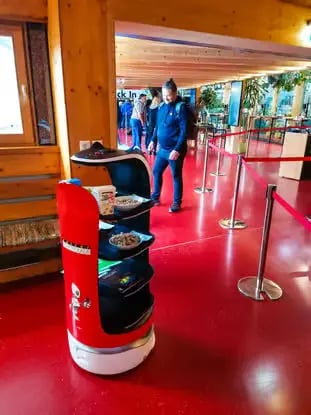
Zotter offers over 500 varieties. That number sounds like freedom. It feels like agency. But research on choice architecture tells a different story.
When you are faced with an extreme number of options, you don't become a better decision-maker. You become a worse one. You shift from analytical processing to heuristic shortcuts. You grab what looks interesting. You buy based on emotional impulse, packaging color, the story on the wrapper.
And every wrapper tells a story.
This is critical. Zotter's packaging is hand-illustrated. Every bar is a small piece of visual art. Each one signals: this is not mass-produced. This was made. By someone. For you.
That signal triggers a deep evolutionary heuristic: the craftsmanship bias. Humans instinctively assign higher value to objects that show evidence of individual effort. A hand-drawn wrapper communicates scarcity, intentionality, and care even before you taste anything.
You're not choosing between 500 products. You're being guided by 500 carefully constructed emotional triggers, each one designed to make you feel like you discovered something rare.
4. The Moral High Ground Effect
Now let's talk about the part nobody wants to admit.
Zotter is bean-to-bar. Organic. Fair trade. He sources his own cacao from cooperatives he personally visits. He pays farmers significantly more than the commodity price. His supply chain is transparent down to the farm level.
This is admirable. It is also one of the most powerful influence tools in modern commerce.
Here's why.
When you buy Zotter chocolate, you are not just buying chocolate. You are buying a version of yourself. A better version. A version that cares. A version that makes ethical choices. A version that is, frankly, morally superior to the person next to you eating a mass-produced bar made with exploitative labor practices they didn't bother to investigate.
This is identity-based purchasing. And it is ferociously effective.
Research in moral psychology shows that ethical consumption doesn't just satisfy it elevates. It triggers what psychologists call "moral licensing." You feel virtuous. And that feeling of virtue becomes psychologically addictive. You return not just for the taste. You return for the identity reinforcement. For the quiet inner narrative that says: I am the kind of person who buys this.
Zotter doesn't sell you chocolate. He sells you a mirror. And in that mirror, you look good.
5. The Biochemistry of Loyalty
Why do people drive hours to visit a chocolate factory in a remote Austrian village?
It's not the chocolate. Not entirely.
It's the cocktail.
Combine the dopamine surge from novelty (bizarre flavors), the oxytocin release from the narrative of ethical sourcing (trust and connection), the serotonin bump from moral elevation (I am a good person), and the endorphin release from literal cacao consumption and you have a neurochemical profile that closely mirrors bonding.
Not brand loyalty. Bonding.
The same cocktail the brain produces when forming deep interpersonal attachments.
This is why Zotter customers don't "prefer" Zotter. They advocate for it. They tell friends. They bring back bars as gifts. They post about it. They return to the factory like a pilgrimage.
Because somewhere in the deep wiring of the brain, Zotter stopped being a brand and became a relationship.
6. The Tribal Signal
There's one more layer most people miss entirely.
Zotter is not mainstream. It's not in every airport and gas station. You can't grab it at a checkout counter in Kansas. It's specific. It's niche. It's insider knowledge.
And that is perhaps the most potent behavioral lever of all.
Humans are tribal. We define ourselves not just by what we like, but by what other people don't know about. Discovering Zotter makes you feel like part of an elite group. Sharing it signals taste, sophistication, worldliness.
When you hand someone a bar of Zotter and say, "You've probably never heard of this it's from a small factory in Austria," you are not sharing chocolate. You are asserting status. You are communicating: I know things you don't. My palate is more refined. My world is bigger than yours.
Social currency. Status signaling. Tribal identity.
All from a chocolate bar.
The Zotter Doctrine: What Everyone Should Learn
Josef Zotter did not build a chocolate empire by following the rules. He built it by understanding something more fundamental than market trends or consumer demographics.
He understood people.
He understood that we are not rational. That we are driven by novelty, overwhelmed by sensation, seduced by narrative, addicted to moral virtue, and desperate to belong to something that makes us feel special.
He didn't compete with Lindt or Milka on their terms. He didn't try to make a "better" mainstream chocolate. He built an entirely different psychological ecosystem one that operates on a deeper layer of human motivation than price, convenience, or taste.
The lesson is not about chocolate. It is about dominance.
Every brand. Every leader. Every individual trying to move through the world with influence should understand this:
You don't win by being better at the existing game. You win by making people forget the game existed.
You violate their predictions. You overwhelm their senses. You give them an identity they want to protect. You make them feel like insiders. And you never, ever let them believe it was your idea.
You let them believe it was theirs.
That is the Zotter Doctrine. And it is, without exaggeration, one of the most elegant influence architectures operating in the consumer world today.
Hiding in plain sight. In a small village. Wrapped in hand-drawn paper. Tasting like something that shouldn't work but absolutely does.
Just like the best influence always does.
Frequently Asked Questions
What makes Zotter Chocolate different from mainstream chocolate brands?
Zotter operates on a completely different psychological level than brands like Lindt or Milka. While mainstream brands rely on predictability and mass distribution, Zotter deliberately violates consumer expectations with over 500 bizarre flavor combinations from pork blood to fish and berry triggering a neurological orienting response that forces the brain to pay attention and encode the experience deeper into memory. Add to that a fully transparent bean-to-bar production process, hand-illustrated packaging that activates the craftsmanship bias, and organic fair-trade sourcing that feeds the consumer's need for moral identity and you have a brand that doesn't compete on taste alone. It competes on the level of human wiring. Every element, from the wrapper to the supply chain story, is an influence lever most consumers never consciously recognize.
Why is the Zotter Chocolate Theatre considered such a powerful experience?
The Chocolate Theatre in Riegersburg, Austria, is not a factory tour in any conventional sense. It is an architecturally designed sensory siege. The moment you walk in, roasting cacao floods your olfactory system the only sense with a direct neural pathway to the emotional brain priming your limbic system before your rational mind even engages. Then come hundreds of tasting stations, each delivering novel flavor after novel flavor, systematically fatiguing your prefrontal cortex the part of your brain responsible for saying no, comparing prices, and making measured decisions. By the time you reach the strategically placed gift shop, your analytical defenses are functionally offline. You are operating on dopamine and impulse. The architecture of the space did the selling long before any product was placed in front of you.
How does Zotter's ethical sourcing influence consumer behavior?
Zotter's commitment to fair trade and organic sourcing is genuine but from a behavioral psychology standpoint, it also functions as one of the most potent influence tools in modern commerce. When consumers buy Zotter, they are not just purchasing chocolate. They are purchasing an upgraded version of their own identity. Research in moral psychology shows that ethical consumption triggers a phenomenon called moral licensing a neurological reward loop where virtuous choices produce serotonin elevation and a feeling of moral superiority. This creates a self-reinforcing cycle: you buy Zotter, you feel like a better person, and you return not just for the flavor but for that identity reinforcement. Zotter effectively turns every purchase into a psychological mirror that reflects the version of yourself you most want to be, making brand loyalty almost involuntary.
Connect
Join us for travel tips and destination insights.
© 2026. All rights reserved.
Affiliate disclaimer
This website contains affiliate links. If you purchase through these links, we may earn a commission at no extra cost to you.