
Your Brain Is Lying to You About the Balkans Here's How to Shut It Up
American travelers fear the Balkans for all the wrong reasons. Discover how guided multi-country tours eliminate language barriers, transport anxiety, and logistical unknowns so your brain can finally relax and let the destination do its job.
DAY TRIPS
DestinationDiscover
3/23/20265 min read
Affiliate Disclosure
This article contains affiliate links. If you purchase through these links, I may earn a small commission at no extra cost to you. I only recommend products I genuinely believe offer strong performance, quality, and value for your ski and travel experience.
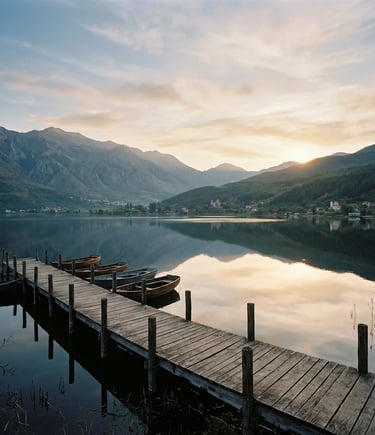
There's a specific kind of dread that hits American travelers the moment they type "Albania" into a search bar.
It's not fear of danger. It's the fear of not knowing. The fear of standing at a bus station in Tirana with no data signal, a phrase book that's useless, and three bags you can't leave unattended. Your nervous system doesn't distinguish between a lion in the grass and a confusing train schedule. Both trigger the same cascade cortisol, hypervigilance, the overwhelming urge to just stay home and watch a documentary about it instead.
Chase Hughes would call this a control vacuum. And the Balkans, for all their staggering beauty, have a masterful way of creating one.
But here's what the anxiety doesn't want you to know: the unknown is only threatening until someone hands you the map.
How to Avoid Travel Stress in the Balkans?
The answer isn't to toughen up or do more research. More research feeds the anxiety loop. You read one Reddit thread about a missed connection in Skopje and suddenly your entire trip feels like a liability.
The real answer is structured certainty. Your brain's threat-detection system the amygdala calms down almost instantly when it perceives that someone competent is in charge. This is why passengers on turbulent flights relax when the pilot speaks calmly over the intercom. The situation hasn't changed. The perceived control has.
Stress-free Balkan travel isn't about finding a destination with no friction. It's about outsourcing the friction to someone who has already solved it a thousand times before.
That's the psychological architecture behind guided multi-country tours. You're not paying for transportation and hotel check-ins. You're paying for the neurological relief of knowing every variable has been handled before you landed.
What Is the Safest Multi-Country Tour From Albania?
When American travelers ask about "safety" in the Balkans, they're rarely asking about crime statistics. They're asking: Will I feel lost? Will I feel foolish? Will I be the person standing on the wrong platform while everyone around me speaks a language I don't recognize?
That vulnerability the social exposure of not knowing the rules is what stops people from ever booking the trip at all.
This GetYourGuide verified tour is engineered, whether intentionally or not, to dismantle that vulnerability at every pressure point.
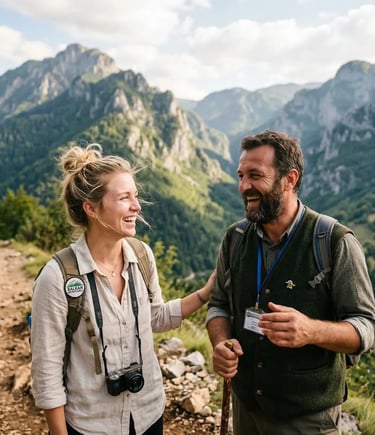
Language barrier? Eliminated. Your guide is the interpreter, the negotiator, the cultural translator. You never have to perform confidence you don't feel.
Transportation logistics in Eastern Europe? Pre-solved. Every transfer, every border crossing, every "how do we get from here to there" question has already been answered. You show up. You follow. You actually see the country instead of managing it.
Accommodation unknowns? Gone. Verified, vetted, expected. Your nervous system can finally stop scanning for threats and start absorbing the fact that you're standing somewhere genuinely extraordinary.
Why Secure Travel Logistics in Eastern Europe Change Everything
There's a concept in behavioral psychology called cognitive load the mental bandwidth you consume just managing basic tasks. When you're navigating an unfamiliar transit system, translating menus, haggling over cab fares, and trying to remember which currency is accepted where, your cognitive load maxes out. You're not traveling anymore. You're surviving.
Secure travel logistics in Eastern Europe don't just make your trip easier. They return your attention to you. Suddenly you're not staring at Google Maps you're watching the light change over the Albanian Riviera. You're not calculating exchange rates you're actually tasting the food in front of you.
The Balkans reward presence. They are layered, textured, historically dense, visually overwhelming in the best possible way. But presence is a luxury. And luxury, here, means not having to think about the bus.
The Bottom Line on Guided Balkan Tours and Why Your Brain Will Thank You
The travelers who come back from the Balkans talking about it like a religious experience aren't the ones who white-knuckled through the logistics alone. They're the ones who handed the operational weight to someone else and showed up with their full attention available.
This GetYourGuide tour [INSERT LINK] is that handoff. It is, in the most practical psychological sense, a control mechanism the external structure that quiets the internal noise.
The Balkans aren't as complicated as your anxiety insists. But your anxiety doesn't need to be right. It just needs to be managed.
Book the tour. Then let the place do what it does.
Frequently Asked Questions About Stress-Free Balkan Travel
Is the Balkans a safe destination for first-time solo American travelers?
The Balkans are significantly safer than most American travelers expect. The region's reputation for complexity comes mostly from logistical unfamiliarity language barriers, unfamiliar transit systems, and multi-currency environments rather than genuine safety concerns. Crime rates in countries like Albania, Montenegro, and North Macedonia are notably low compared to major Western European cities. The real risk isn't danger. It's disorientation, and that's entirely solvable with the right structure in place.
Do I need to speak any local languages to travel through the Balkans?
You don't need a single word of Albanian, Serbian, or Macedonian to have a rich, fully immersive experience in the region. English is widely spoken among younger generations and in tourist-facing businesses across most Balkan cities. However, once you move beyond the main hubs into smaller towns and rural areas, communication can become genuinely difficult. A guided tour removes this pressure entirely your guide handles all language-dependent interactions, from restaurant orders to border crossings, so you never have to perform confidence you haven't yet earned in an unfamiliar place.
How do multi-country Balkan tours handle border crossings and transportation?
This is precisely where guided tours earn their value most visibly. Crossing borders in the Western Balkans involves a patchwork of regulations, varying documentation requirements, and transit schedules that can confuse even experienced European travelers. A verified GetYourGuide tour pre-manages every transfer, every crossing, and every connection in the itinerary. You are never responsible for researching what comes next. The logistical architecture is already built you simply move through it, which frees your attention for the actual experience of being somewhere extraordinary.
What is the best time of year to take a guided multi-country Balkans tour?
Late spring and early autumn are widely considered the optimal windows specifically May through June and September through October. During these months, temperatures are comfortable for walking and sightseeing, crowds are manageable compared to peak summer, and the landscape is at its most photogenic, with either fresh green vegetation or warm harvest tones depending on the season. July and August are viable but bring intense heat along the Adriatic coast and noticeably higher tourist density in popular areas. Winter travel is possible but limits access to certain mountain routes and reduces the operational hours of smaller local businesses.
Connect
Join us for travel tips and destination insights.
© 2026. All rights reserved.
Affiliate disclaimer
This website contains affiliate links. If you purchase through these links, we may earn a commission at no extra cost to you.