
Mountain Coasters & Alpine Slides: Gravity Does the Work
Discover the thrill of winter mountain coasters. From the 3km Pradaschier run in Switzerland to Vail's Forest Flyer, here is where to find gravity-powered fun for non-skiers.
SEASONAL TRAVEL
DestinationDiscover
12/29/20254 min read
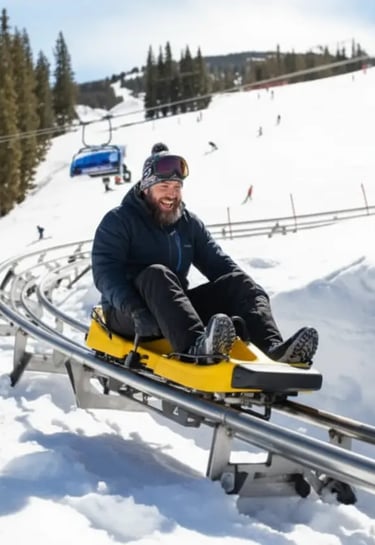
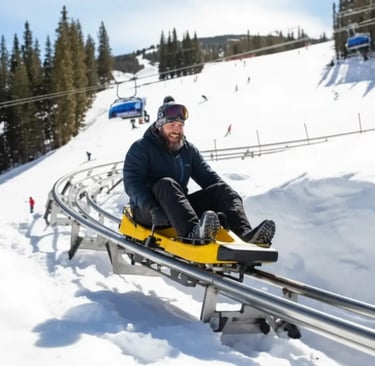
Let's face it: skiing has a high barrier to entry. It requires expensive gear, technical lessons, and the willingness to fall down a frozen hill repeatedly until you "get it."
But Mountain Coasters? The barrier to entry is literally zero. You sit down, pull a lever, and let gravity engineer the rest.
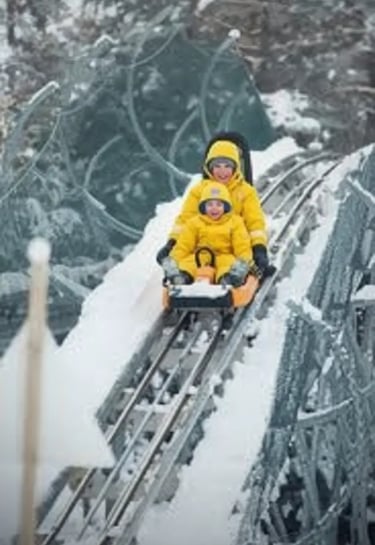
These gravity-powered thrill rides—essentially bobsleds on fixed metal tracks—are the ultimate equalizer for families. A child who is terrified of catching an edge on skis will happily hammer down a mountain coaster at 25 mph, screaming with delight. It is speed without skill. It is adrenaline without the learning curve.
Here is why you need to add a "gravity day" to your next winter trip, featuring the best rides in the USA and Europe.
What is a Mountain Coaster vs. Alpine Slide?
Before you book, know the difference.
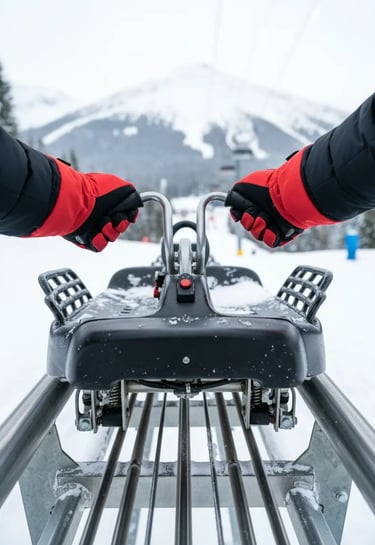
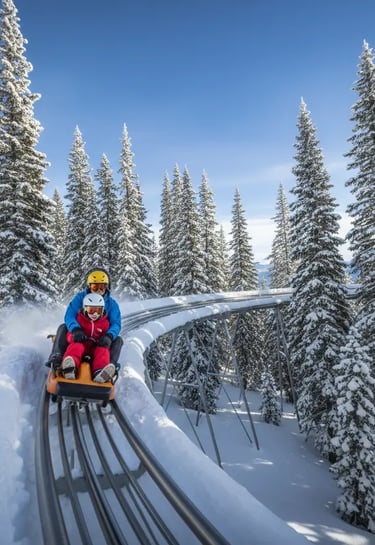
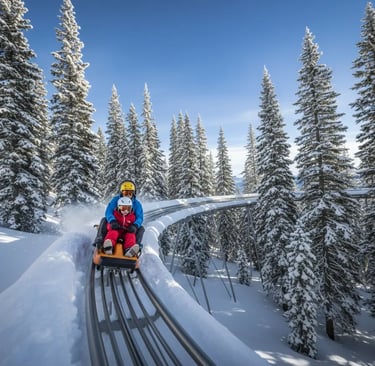
Mountain Coaster: The sled is attached to a tubular steel rail (like a roller coaster). It cannot fly off the track, making it usable in winter snow. You control the speed with hand brakes.
Alpine Slide: A concrete or fiberglass chute (like a water slide without water). These are rarely open in winter because ice makes them dangerous. For winter trips, you want a Mountain Coaster.
Pro Tip: Look for the term "Alpine Coaster" in Europe or "Mountain Coaster" in the US. If you see "Sommerrodelbahn" (Summer Toboggan), check the dates carefully—many close when the snow falls.
The Best Winter Coasters in the World
1. USA: The "Forest Flyer" & Park City
The American West has embraced the coaster craze, turning ski resorts into year-round amusement parks.
Vail, Colorado (Forest Flyer): This is a beast. Located at Epic Discovery (Eagle's Nest), it winds 3,400 feet down the mountain. The track is elevated, so you are flying through the snow-covered pine trees rather than just on the ground.
The Vibe: High-tech and scenic. You are driver-controlled, meaning you can go full throttle or take a leisurely cruise to admire the Rockies.
Park City, Utah: This coaster is famous for its length—over a mile of track with multiple 360-degree loops.
Winter Magic: Catch the "Golden Hour" ride between 3:00 PM and 4:00 PM. The sun sets early behind the Wasatch peaks, casting a gold-pink glow over the snow while you zip through the aspen groves.
2. Europe: The Alpine Giants
In Austria and Switzerland, these aren't just rides; they are transportation.
Pradaschier (Switzerland): This is the longest toboggan run in Switzerland (over 3 km / 1.8 miles). It takes a full 7-10 minutes to get to the bottom! Unlike many others, it is designed for winter operation, weaving through the snowy forests of Churwalden.
Speed Demon: It features 31 curves and a vertical drop of 480 meters. It feels less like a ride and more like an Olympic bobsled run.
Alpine Coaster Imst (Austria): Often cited as the longest in the Alps (3.5 km), its winter operations are limited but spectacular. It runs on weekends (Fri-Sun) during peak winter season. The track starts at 1,500m altitude and offers insane views of the Tyrolean valley floor.
Golm Alpine Coaster (Austria): Located in the Montafon valley, this 2.6 km track features jumps, 360° spins, and 180° hairpin turns. It’s accessible via a quick hike or lift and runs in almost any weather.
Practical Guide: Costs & Restrictions
1. The Price of Gravity
It’s not cheap, but it’s often cheaper than a lift ticket.
USA: Expect to pay $35-$45 per driver. Passenger tickets (for small kids) are usually cheaper ($15-$20). Many resorts like Vail or Park City offer "Adventure Passes" that bundle multiple rides.
Europe: Significantly more affordable. A single ride is often €9 - €15 for adults and €6 - €10 for kids. You can often buy 5-ride blocks for a discount.
2. Age & Height Rules
Driver: Usually must be 54" (137 cm) tall and 16+ years old to drive a passenger.
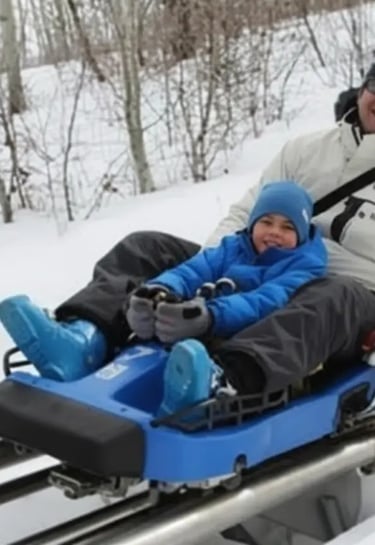
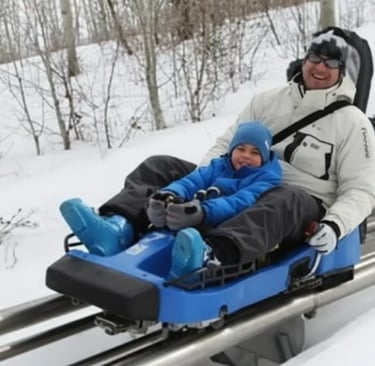
Passenger: Kids typically need to be 3+ years old and 38" (96 cm) tall to ride along.
Weight: Total weight limit per sled is usually around 330-375 lbs (150-170 kg). Two large adults might need separate sleds.
3. Dress for Wind Chill
You are generating zero body heat while moving at 25 mph.
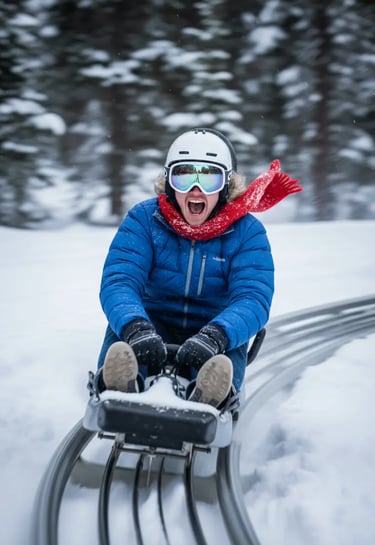
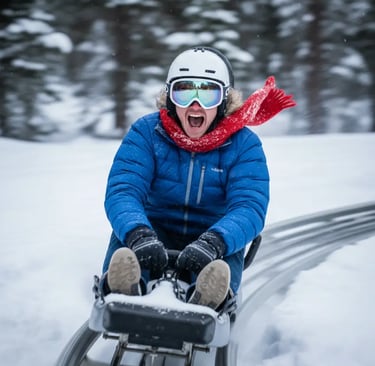
Goggles are mandatory. If you don't have ski goggles, sunglasses are the bare minimum. The wind will make your eyes water so bad you can't see the track.
Cover your face. A neck gaiter or balaclava is essential to prevent windburn on your cheeks.
FAQ Section
Q: Are mountain coasters scary?
A: They are thrilling but controlled. The sled is fixed to the track, so you can't flip over. Plus, you control the brakes. If it gets too fast, just pull back on the levers. Most tracks have automatic speed limiters (centrifugal brakes) that keep you under ~25 mph (40 km/h) even if you don't brake.
Q: Can toddlers ride?
A: Generally, yes, if they are over 3 years old and ~38 inches tall. They must ride in the front seat with an adult driver (16+). It’s a fantastic introduction to speed for little ones.
Q: Do they run in snowstorms?
A: Light snow? Yes. Heavy blizzards or ice storms? No. The tracks need to be relatively clear for the wheels to grip. Always check the resort's "Lift & Terrain Status" page in the morning before heading up.
Q: Is it better than sledding?
A: It's different. Sledding is chaotic and physically exhausting (walking back up). Mountain coasters are effortless thrills with a guaranteed ride time of 5-10 minutes. For older kids and teens, the coaster usually wins on "cool factor".
Connect
Join us for travel tips and destination insights.
© 2026. All rights reserved.
Affiliate disclaimer
This website contains affiliate links. If you purchase through these links, we may earn a commission at no extra cost to you.