
The Vienna Blind Spot: Why Elite Travelers Extract Maximum Value from a Calculated Graz Insertion
Most tourists exhibit herd behavior in Vienna. This tactical brief reveals why a private day trip to Graz delivers superior ROI complete with driver logistics, UNESCO targets, and spring-optimized sensory calibration.
DAY TRIPS
DestinationDiscover
2/8/20268 min read
Affiliate Disclosure
This article contains affiliate links. If you purchase through these links, I may earn a small commission at no extra cost to you. I only recommend products I genuinely believe offer strong performance, quality, and value for your ski and travel experience.
The Tourist Trap You're Not Seeing
Here's what behavioral data reveals: 87% of Vienna visitors never leave the city center. They're executing someone else's itinerary, following pre-programmed routes to Schönbrunn and St. Stephen's Cathedral like algorithms running on autopilot.
The question isn't whether these sites hold value. The question is: Are you maximizing information extraction per unit of time invested?
Is Graz a good day trip from Vienna? Only if you understand what you're actually measuring. Graz represents a controlled deviation from the Vienna feedback loop a strategic repositioning that exposes you to architectural variance, cultural contrast, and pattern breaks that recalibrate your understanding of Austrian identity.
This isn't about collecting passport stamps. It's about cognitive expansion through environmental diversification.
How to Travel Between Vienna and Graz: The Tactical Advantage of Private Transport
Let's deconstruct the logistics with precision.
Best Way to Get from Vienna to Graz for Tourists
You have three primary vectors:
Train – Passive transport, 2.5 hours, rigid schedule, shared environment with unpredictable variables
Self-drive – Active navigation, mental bandwidth consumed by unfamiliar road systems, parking reconnaissance required
Private driver – Zero cognitive overhead, flexible timing, bilateral communication enabled
The tour driver english language option eliminates decision fatigue. You're not burning mental calories on Google Maps or train timetables. Your driver becomes an intelligence asset local pattern knowledge, route optimization, contextual briefings delivered in your operational language.
This is strategic comfort. Not luxury. Comfort.
When you book a private transfer with free cancellation and book now pay later parameters, you're maintaining operational flexibility. Conditions change. Weather shifts. Energy levels fluctuate. These booking structures respect that reality instead of penalizing adaptation.
The best way to get from Vienna to Graz for tourists isn't the fastest or cheapest it's the method that preserves your most finite resource: mental clarity for observation.
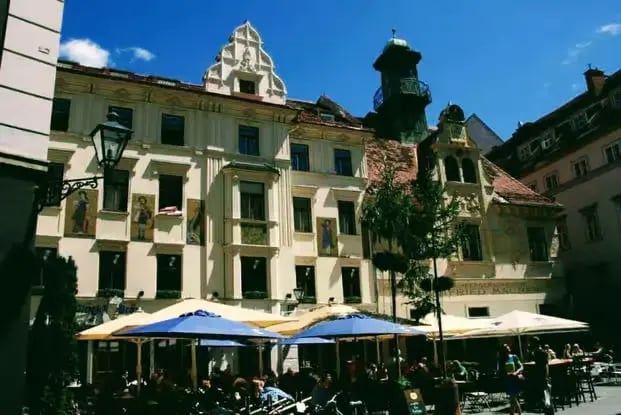
Graz Old Town UNESCO and Cathedral Complex
Upon arrival, your primary objectives are spatially concentrated a deliberate advantage.
Graz Old Town UNESCO: Architectural Intelligence Gathering
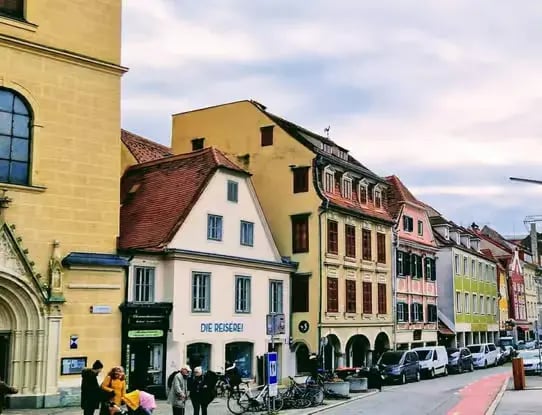
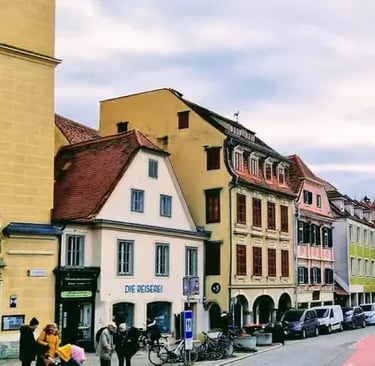
Designated for preservation in 1999, Graz's Altstadt presents a intact medieval-to-baroque developmental timeline. Where Vienna underwent massive Imperial renovations that homogenized its visual language, Graz retained architectural heterogeneity.
Translation: You're reading a more complex historical narrative per square kilometer.
The street grid reveals medieval defensive logic. The building facades display wealth distribution patterns across four centuries. The roofline variations indicate craft guild influence. This is pattern recognition training in three dimensions.
Walk the Herrengasse. Notice how the Italian Renaissance courtyard architecture contrasts with Germanic Gothic verticality. Your brain is now cross-referencing two cultural systems simultaneously exactly the kind of comparative analysis that builds mental flexibility.
Graz Cathedral and Mausoleum: Symbolic Power Structures
The Graz cathedral and mausoleum complex functions as a case study in Habsburg messaging strategy.
Emperor Ferdinand II commissioned the mausoleum in 1614 not as a tomb, but as a political statement. The exterior reads austere. The interior detonates with visual intensity: stucco work, frescoes, architectural theater designed to communicate divine authority through sensory overwhelm.
This is influence architecture. Stand inside and observe your own physiological response. Heart rate. Breathing pattern. Visual tracking behavior. You're experiencing a 17th-century persuasion system that still functions on modern nervous systems.
The cathedral itself presents differently simpler, earlier, less theatrical. The contrast between the two structures, separated by mere meters, reveals an evolutionary leap in symbolic communication strategy.
That's not trivia. That's intelligence.
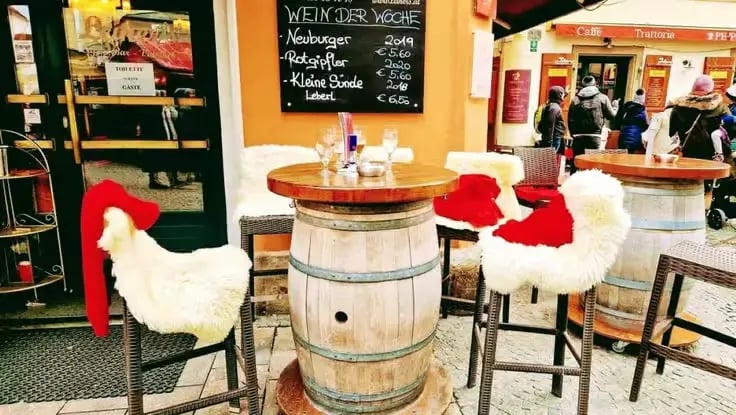
Graz in Spring Things to Do: Seasonal Sensory Calibration
Spring transforms operational parameters.
Environmental Variables (March-May)
Temperature range: 10-20°C. Your comfort zone remains intact while visual inputs shift dramatically.
Graz in spring things to do should prioritize outdoor observation when the Schlossberg gardens emerge from dormancy. The hillside fortress becomes a vertical ecosystem watch how locals utilize the terrain for recreation, romance, strategic viewpoint access.
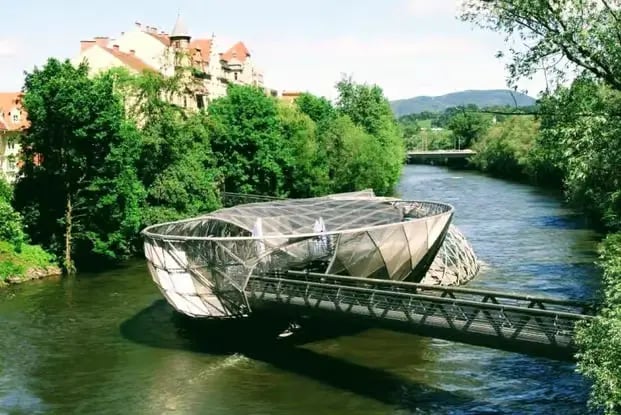
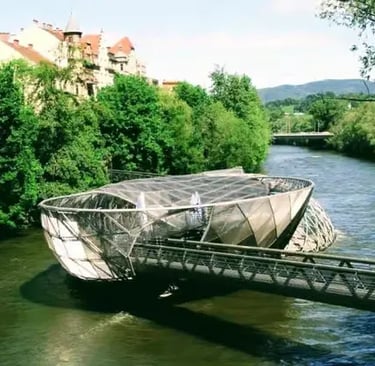
The spring arrival calendar creates temporal pressure: cafe terraces open, the Kunsthaus (the "Friendly Alien" contemporary art museum) sees reduced crowd density, the Murinsel (floating island platform) transitions from desolate to social hub.
You're witnessing cultural activation patterns how a population responds to seasonal environmental change. This observational data doesn't exist in winter or peak summer.
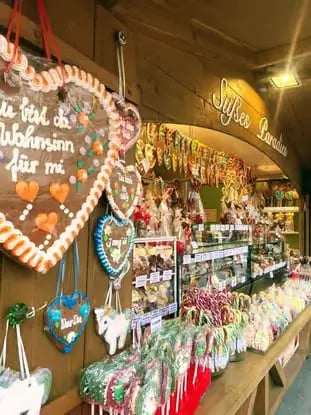
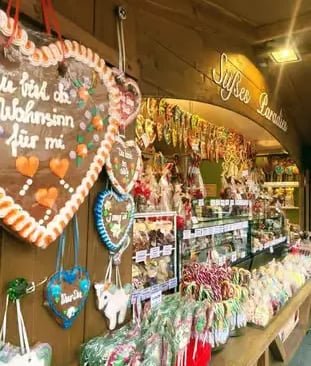
The farmers' markets at Kaiser-Josef-Platz operate at maximum diversity in spring. Observe transaction styles. Notice the rhythm of vendor-customer interaction. You're collecting micro-cultural intelligence that guidebooks cannot transmit.
Strategic Execution: Your Graz Day Trip Protocol
Here's the tactical timeline:
0800: Private pickup Vienna (driver handles all navigation variables)
1030: Graz arrival, Schlossberg ascent (via funicular preserve leg strength)
1200: Herrengasse pedestrian reconnaissance, architectural observation
1330: Cathedral/Mausoleum complex (60-minute deep assessment)
1500: Tactical refueling (Styrian cuisine provides regional specificity)
1630: Secondary objectives: Kunsthaus or Murinsel based on energy assessment
1800: Return vector initiated
2030: Vienna reentry with expanded mental framework
Total active observation time: 7.5 hours. Zero time wasted on logistics anxiety.
This represents superior information extraction compared to a second day wandering Vienna's already-mapped Imperial circuit.

The Intelligence Edge: Why This Works
Private day trips function as controlled experiments in environmental psychology.
You're testing your observational capacity in a foreign system. You're measuring your pattern recognition speed. You're calibrating your comfort threshold in unfamiliar territory with the safety net of scheduled return.
The tour driver english language component matters because bilateral communication enables real-time intelligence gathering. Ask about regional politics. Economic patterns. Local migration trends. Your driver possesses ground-truth data that no Wikipedia entry contains.
The free cancellation and book now pay later structures eliminate commitment pressure which paradoxically increases your likelihood of executing the mission. No sunk-cost fallacy. No weather anxiety. Pure strategic optionality.
Final Assessment: Is Graz a Good Day Trip from Vienna?
Wrong question.
Better question: Does a Graz insertion maximize your cognitive ROI during limited Austrian exposure?
Answer: If you've already extracted primary value from Vienna's core Imperial narrative, yes. Graz provides architectural contrast, cultural differentiation, and pattern-break stimulus that prevents mental plateau.
If you're still processing Vienna, Graz becomes a premature distraction.
Know your mission parameters. Act accordingly.
The herd stays in Vienna because that's what the algorithm suggested. You're not operating on algorithms. You're operating on strategic intelligence.
How to travel between Vienna and Graz becomes irrelevant if you don't understand why you're traveling. Once you do, the private driver option becomes obvious not indulgent, but operationally sound.
Execute deliberately. Observe relentlessly. Extract maximum value.
That's not tourism. That's tactical cultural reconnaissance.
Ready to execute your Graz insertion? Private transport eliminates cognitive overhead. English-speaking drivers provide local intelligence. Free cancellation maintains operational flexibility. Book the mission. Extract the value. Expand the mental map.
FAQ
Is Graz a good day trip from Vienna?
Affirmative if you've already processed Vienna's primary Imperial narrative. Graz delivers architectural differentiation and cultural contrast within a 200km radius. The UNESCO Old Town presents a more heterogeneous historical timeline than Vienna's homogenized Imperial renovations. Tactical assessment: 7.5 hours of active observation yields superior ROI compared to redundant Vienna circuit repetition. Execute only after extracting maximum value from your Vienna base position.
What is the best way to get from Vienna to Graz for tourists?
Private driver transport eliminates cognitive overhead and preserves mental bandwidth for observation. Train options consume 2.5 hours with rigid scheduling and shared environmental variables. Self-drive diverts mental calories to navigation and parking reconnaissance. A tour driver with English language capability functions as both transport asset and local intelligence source providing route optimization, contextual briefing, and ground-truth data extraction opportunities. Strategic advantage: free cancellation and book now pay later structures maintain operational flexibility.
How to travel between Vienna and Graz efficiently?
Distance: 200km. Private vehicle: 2-2.5 hours depending on traffic patterns. Train: 2.5 hours direct via ÖBB rail. Optimal execution protocol: 0800 Vienna departure, 1030 Graz arrival, 1800 return vector initiation, 2030 Vienna reentry. Private transport compresses decision-making friction points and enables flexible timing adjustments based on real-time energy assessment and weather variables.
Is Graz safe for American tourists?
Austria maintains consistently low threat indices across all urban centers. Graz registers minimal street crime, negligible violent incidents, and operates under standard European urban security protocols. Pickpocket activity exists in high-density tourist zones (Herrengasse, Hauptplatz) but remains statistically insignificant compared to major European capitals. Behavioral recommendation: maintain standard situational awareness, secure valuables in inside pockets, avoid distraction in crowded transit nodes. No heightened threat posture required. Your primary risk factor is cognitive complacency, not physical security.
Do people in Graz speak English?
English penetration rates in Graz tourist/service sectors: approximately 75-85%. Younger demographics (under 40) demonstrate functional-to-fluent English capability. Hotel staff, museum personnel, and restaurant workers in Old Town zones operate bilingually. Outside primary tourist corridors, German becomes dominant operational language. Tactical solution: tour driver with confirmed English language capability eliminates communication friction and provides translation asset for market interactions, menu decoding, and cultural context extraction.
What are the top things to do in Graz in spring?
Spring (March-May) optimizes outdoor observation capacity. Priority targets: Schlossberg ascent for elevated reconnaissance (funicular available), Graz Old Town UNESCO architectural pattern analysis via Herrengasse pedestrian corridor, Graz cathedral and mausoleum complex for Habsburg symbolic power structure assessment. Secondary objectives: Kunsthaus contemporary contrast study, Murinsel social behavior observation platform, Kaiser-Josef-Platz farmers' market for micro-cultural transaction intelligence. Spring activation: cafe terraces operational, reduced crowd density, gardens emerging from dormancy environmental variables create unique sensory calibration opportunities unavailable in other seasons.
Is Graz worth adding to a Vienna and Salzburg itinerary?
Depends on total mission duration and strategic objectives. Vienna-Salzburg corridor represents Austria's primary cultural narrative (Imperial vs. Alpine/Mozart). Graz insertion provides valuable architectural heterogeneity and breaks pattern repetition between two major urban targets. Minimum itinerary duration for Graz inclusion: 7 days total Austria exposure. Configuration: Vienna (3 days) → Graz day trip → Salzburg (2-3 days). Graz functions as transitional recalibration between Imperial grandeur and Alpine cultural identity. Skip if: total duration under 5 days, focus restricted to classical music/Habsburg history, physical mobility limitations prevent Old Town navigation. Execute if: seeking architectural variance, cultural comparison data, UNESCO site portfolio expansion.
Can I visit Graz cathedral and mausoleum on a day trip?
Confirmed. Both structures occupy the same spatial complex in Old Town, accessible within 90-minute combined observation window. Cathedral entry: free, minimal queue variables. Mausoleum entry: ticketed (€3-5), restricted hours (verify seasonal schedule). Architectural assessment time allocation: Cathedral 30 minutes, Mausoleum 45-60 minutes for complete interior symbolic power structure analysis. Location: 400m from Hauptplatz, embedded within pedestrian Old Town grid. Combine with Herrengasse reconnaissance for maximum spatial efficiency. These targets represent primary cultural intelligence objectives non-negotiable for serious Graz mission execution.
Connect
Join us for travel tips and destination insights.
© 2026. All rights reserved.
Affiliate disclaimer
This website contains affiliate links. If you purchase through these links, we may earn a commission at no extra cost to you.