
Why the Vienna Oldtimer Tour Is the Only Way to Experience Easter in the Imperial City
Discover Vienna in springtime from a private electric Oldtimer. Explore the Freyung Easter Market, Am Hof Market, Hofburg Palace, and the Ringstraße in 1.5 hours of pure imperial luxury. Book the only Easter experience that matters.
DAY TRIPS
DestinationDiscover
3/22/20265 min read
Affiliate Disclosure
This article contains affiliate links. If you purchase through these links, I may earn a small commission at no extra cost to you. I only recommend products I genuinely believe offer strong performance, quality, and value for your ski and travel experience.
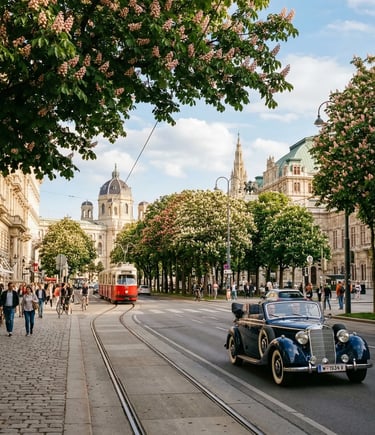
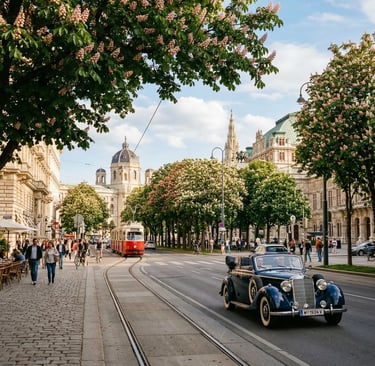
Vienna in springtime is not a backdrop. It is a psychological event a city that rewires your sense of what luxury means the moment the chestnut trees bloom along the Ringstraße and the Easter markets ignite the medieval squares with color, smoke, and the scent of spiced wine. There is one experience that captures all of it. One.
Why Is the Vienna Oldtimer Tour the Ultimate Easter Experience?
The private electric Oldtimer tour delivers Vienna's imperial core, its Easter markets, and its sensory grandeur in a single, uninterrupted 1.5-hour arc that no walking tour, taxi, or group bus can replicate. You move through the city the way the city was designed to be moved through slowly, regally, with purpose.
The Ringstraße was built by Emperor Franz Joseph I to be witnessed from a carriage. That is not a historical footnote. That is an architectural instruction. When you sit inside a private electric Oldtimer and glide past the Vienna State Opera, the Kunsthistorisches Museum, and the grand facades of the boulevard's palace-scale buildings, you are obeying the original design intent of one of Europe's most deliberate urban masterpieces.
What Makes Vienna's Easter Markets a World-Class Destination?
Vienna's Easter markets are not seasonal decorations. They are cultural institutions operating at the intersection of centuries-old Austrian craft tradition and contemporary luxury appetite.
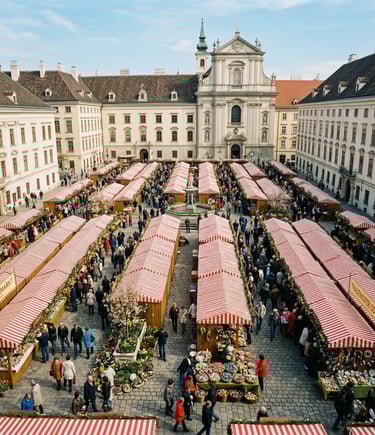
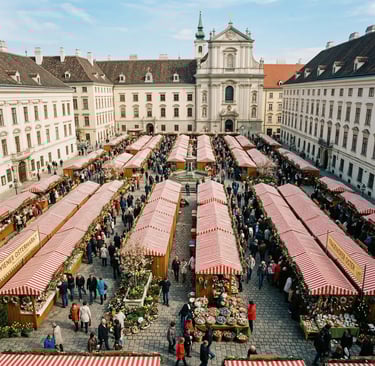
The Freyung Easter Market, set within a baroque square that has hosted public life since the Middle Ages, offers hand-painted eggs, artisan ceramics, and the kind of concentrated aesthetic beauty that stops even the most experienced traveler cold. The Am Hof Market, just steps away, operates on the same principle — density of beauty per square meter that rivals any gallery in Europe.
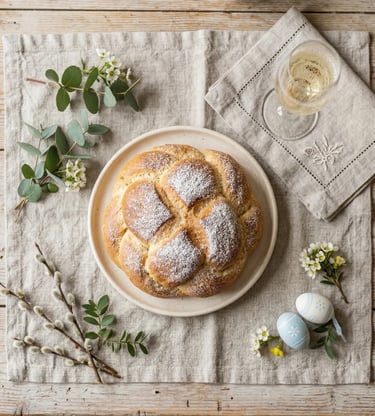
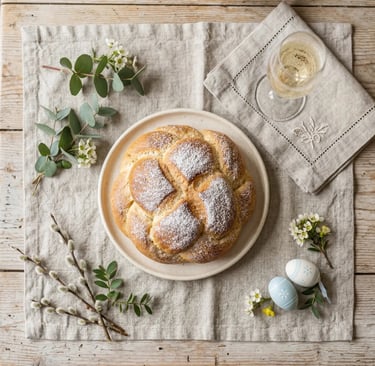
At these markets, you encounter traditional Osterpinze the braided, fennel-and-rum-spiced Easter bread that Viennese bakers have been producing in the same form for over 400 years. You taste it. You understand immediately that food can be a direct transmission of cultural memory. Paired with a glass of Austrian Prosecco lighter, more mineral, more precise than its Italian counterpart the experience becomes a complete sensory argument for why Vienna Easter tourism belongs in an entirely separate category from ordinary spring travel.
Why Does the Hofburg Palace Demand More Than a Passing Glance?
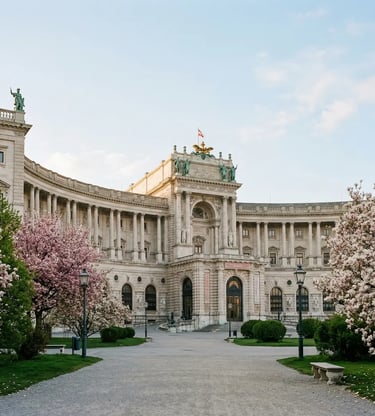
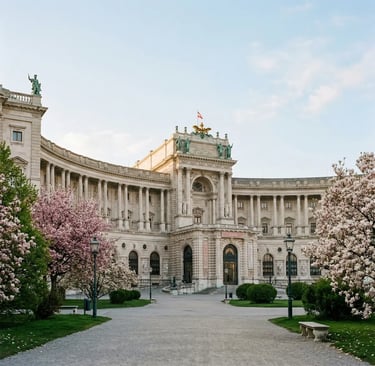
Hofburg Palace is the physical record of 600 years of Habsburg ambition. As you pass through its shadow in the Oldtimer and absorb its scale, you recognize that this is the only way to feel the full psychological weight of imperial Vienna in motion, at eye level, without the noise of a tour group dissolving the atmosphere around you.
The palace does not reward rushing. It rewards deliberate witness. The private Oldtimer enforces that deliberateness.
The Undeniable Advantages of the Private Oldtimer Tour
AdvantageWhy It MattersPrivate vehicle, no strangersConversation and attention remain yours entirelyElectric OldtimerSilent movement through historic streets full sensory immersionCovers Ringstraße, Hofburg, Opera, both Easter marketsMaximum cultural density per minute of travel1.5 hoursLong enough to absorb, short enough to leave you wanting moreSeasonal Easter Market accessAvailable only in spring a genuinely irreplaceable window
What Is the Real Cost of Not Booking This Experience?
Here is the psychological architecture of the decision you are currently inside.
You have two options. The first: you walk Vienna's Easter markets on foot, weaving through crowds, losing context between locations, experiencing each site in isolation disconnected fragments of a city that was built to be read as a whole. The second: you sit in a private electric Oldtimer, move through Hofburg Palace's outer courtyards, down the full imperial length of the Ringstraße, past the Vienna State Opera at the correct pace, and arrive at the Freyung and Am Hof Easter markets already primed already tuned to the frequency of the city.
As you realize that Vienna in springtime reveals itself only to those who move through it with intention, the decision becomes structurally simple. The tour costs what a single mediocre dinner costs in any European capital. What it delivers the Osterpinze, the Austrian Prosecco, the baroque squares, the imperial boulevard, the private silence of the Oldtimer belongs to a completely different category of value.
The only question that remains is whether you are the kind of traveler who books this in advance, or the kind who watches someone else's Oldtimer disappear around the corner of the Ringstraße and wonders why they waited.
Frequently Asked Questions About the Vienna Oldtimer Easter Tour
What exactly is included in the 1.5-hour private Oldtimer tour in Vienna?
The private electric Oldtimer tour covers Vienna's most essential imperial landmarks and Easter destinations in a single, curated route. Your route moves through the full length of the Ringstraße, past the Vienna State Opera and Hofburg Palace, and delivers you directly to both the Freyung Easter Market and the Am Hof Market. The experience is fully private no shared vehicle, no group dynamic, no compromise on pace or attention. Depending on the operator, tastings of traditional Osterpinze and Austrian Prosecco are integrated into the journey, transforming transport into a complete cultural immersion.
When is the best time to take the Vienna Easter Market Oldtimer tour?
The tour operates during Vienna's Easter market season, which runs from late March through Easter Sunday one of the most visually and atmospherically concentrated windows the city offers all year. Vienna in springtime sits at its peak during this period: the chestnut trees along the Ringstraße are in early bloom, the baroque squares of Freyung and Am Hof fill with artisan vendors and hand-painted Easter installations, and the city's light has the particular golden quality that makes every imperial facade photograph like a painting. Booking early in the season guarantees availability and the full market experience before vendor selection begins to thin.
Why is a private electric Oldtimer superior to a walking tour or standard sightseeing bus?
A walking tour fragments the city. A sightseeing bus standardizes it. The private electric Oldtimer restores the city to its original experiential logic the Ringstraße was engineered by Emperor Franz Joseph I to be witnessed from a moving carriage, and every proportional and architectural decision along that boulevard reflects that intent. The electric motor means total silence, which matters: sound is the invisible architecture of any experience, and the absence of engine noise allows the Vienna State Opera, Hofburg Palace, and the Easter market squares to register at full psychological weight. You are not a tourist moving past monuments. You are a witness moving through a city that was built specifically for this kind of deliberate, unhurried passage.
Is the Vienna Oldtimer Easter tour suitable for first-time visitors or only experienced travelers?
The tour is the single most efficient and experientially complete introduction to Vienna that exists, which makes it equally essential for first-time visitors and those returning for the third or fourth time. First-time visitors receive the imperial city's full spatial and historical logic in 90 minutes context that walking tours take three hours to approximate and rarely achieve. Returning visitors discover that the Oldtimer format reveals familiar landmarks like Hofburg Palace and the Ringstraße at a completely different register of depth and detail. In both cases, the combination of Austrian Prosecco, traditional Osterpinze, and private access to the Freyung and Am Hof Easter markets produces an experience that resets the benchmark for what Vienna can actually deliver.
Connect
Join us for travel tips and destination insights.
© 2026. All rights reserved.
Affiliate disclaimer
This website contains affiliate links. If you purchase through these links, we may earn a commission at no extra cost to you.