
Why 90% of Tourists Waste Their Vienna Trip (And How Smart Travelers Fix It in 48 Hours)
Stop wasting your Central Europe trip. Discover why elite travelers use expert-guided tours through Vienna, Bratislava, and Budapest to see more, stress less, and unlock experiences independent tourists never find. Your 48-hour cheat code starts here.
DAY TRIPS
DestinationDiscover
3/31/20264 min read
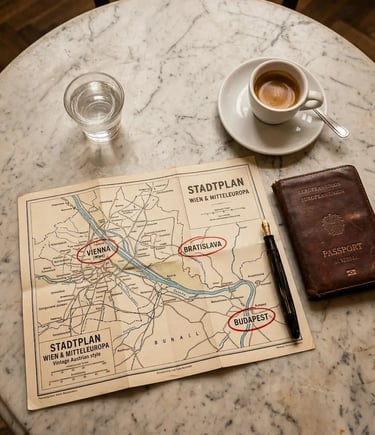
Let me be brutally honest with you.
Most people who fly thousands of miles to Central Europe spend the majority of their precious time staring at Google Maps, arguing with border crossing agents, or sitting on the wrong train while their dream itinerary quietly collapses around them.
They planned for months. They're still missing everything that matters.
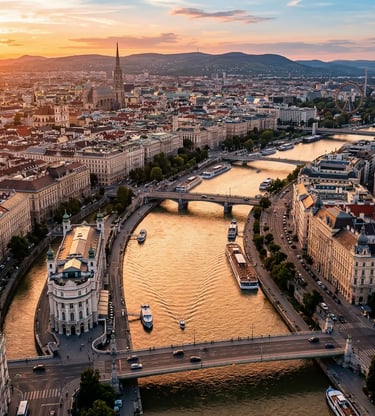
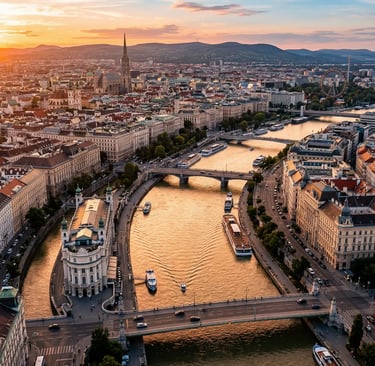
Here's what nobody tells you before you book: Vienna, Bratislava, and Budapest are not three cities. They are one singular, layered experience connected by the Danube, by Habsburg history, by a cultural current that only reveals itself when you move through all three with intention and speed. Treating them separately is like reading every third chapter of the greatest novel ever written.
The travelers who actually get Central Europe don't see more sights. They see the right sights, in the right sequence, with zero logistical friction.
The Mathematical Problem Nobody Wants to Admit
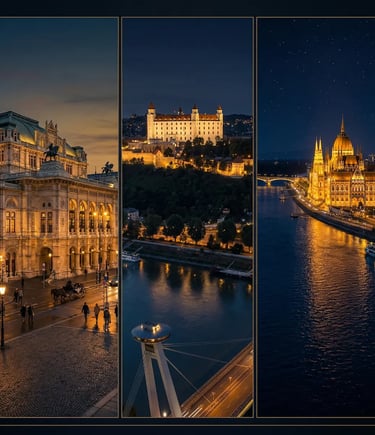
Vienna alone has over 100 museums. Budapest's thermal bath culture spans 450 years of layered Ottoman and Austro-Hungarian influence. Bratislava criminally underrated packs an old town that most tourists walk past without realizing they're inside one of Europe's most intact medieval cores.
You have 48 hours. Maybe 72.
The math is brutal. Even if you spent 20 minutes at each "must-see" landmark across all three cities, you'd need 47 hours of back-to-back transit and walking before sleeping, eating, or crossing a single border.
This is why the smartest travelers now use what I call a logistical cheat code: Central Europe guided tours engineered specifically around this three-city corridor.
What Elite Travelers Do Differently
The travelers who post those effortless "how did they do ALL of that?" trip recaps? They didn't get lucky. They outsourced every single decision that wasn't about experiencing the destination.
Here's the psychological relief that comes from handing logistics to a deeply connected local expert:
Border crossings handled entirely no scrambling for documentation order, no confusion about Schengen technicalities when moving between Slovakia and Hungary, no wasted 40-minute delays that eat your afternoon
Transportation sequenced for maximum time efficiency routes are pre-optimized so you're never backtracking or riding the scenic (slow) option when you needed the fast one
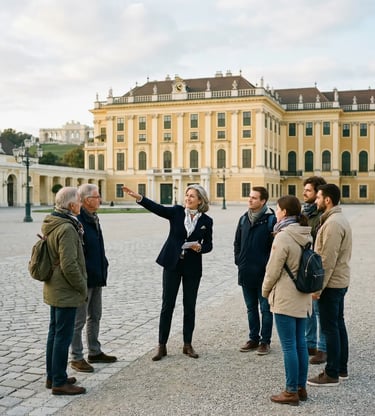
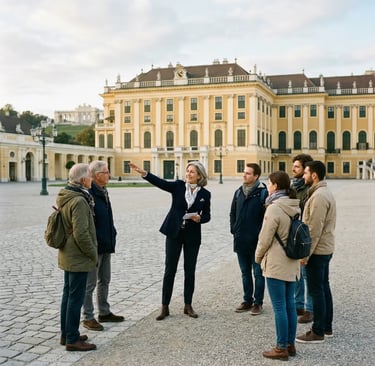
Crowd psychology used in your favor expert guides know that the Schönbrunn Palace inner rooms are ghost-quiet at 8:15 AM and a wall-to-wall nightmare by 10:30 AM; your itinerary is built around this knowledge
Hidden access and local relationships a connected guide doesn't just know what to see; they know who to call so you're not waiting in the line that tourists wait in
Decision fatigue completely eliminated neuroscience is clear: every micro-decision you make drains the mental energy you should be spending on feeling Budapest's Fisherman's Bastion at golden hour, not calculating which tram gets you there
The FOMO You Should Actually Feel
Here's the part that should sit with you: these tours have limited seats. Not as a sales tactic as a logistical reality. A guide who knows every maître d', every hidden courtyard entrance, every border officer by name cannot scale infinitely.
The travelers booking these experiences right now are not doing so impulsively. They've done the math above. They've realized that the greatest risk isn't spending money on a guided experience it's landing in Vienna with 48 hours and leaving having seen the surfaces of things.
Surfaces are free. Understanding costs something.
The Bottom Line
If you're planning a Central Europe trip and you're pricing out "saving money" by going independent run the real numbers. Calculate what an hour of your time is worth. Multiply it by every hour you'll spend confused, rerouted, or simply slow.
The gap closes fast.
The travelers who will remember Vienna, Bratislava, and Budapest forever aren't the ones who saved €80 on a guided tour. They're the ones who arrived with a cheat code in their pocket and used every single minute the way the cities were meant to be used.
Book the tour. Trust the expert. See everything.
The window is shorter than you think.
Frequently Asked Questions About Central Europe Guided Tours
How long does a guided tour covering Vienna, Bratislava, and Budapest typically take?
Most well-designed Central Europe guided tours covering all three cities are structured across two to three days. This timeframe is considered the sweet spot by experienced guides long enough to experience the cultural depth of each city, short enough to maintain energy and focus. Single-day express options exist but are best treated as introductions rather than complete experiences.
Is it really worth paying for a guided tour if I can travel independently between the three cities?
Independent travel between Vienna, Bratislava, and Budapest is entirely possible but the hidden costs add up fast. Border logistics, transportation sequencing, crowd timing, and missed access to non-public locations are all variables that a deeply connected local guide eliminates entirely. When you calculate the true value of your time and the experiences you statistically miss solo, guided tours consistently deliver higher return on your travel investment.
What is included in the transport and border crossing arrangements on these tours?
Reputable Central Europe guided tours handle all surface transport between cities, including private or semi-private vehicles, rail coordination, and full navigation of border crossing requirements between Austria, Slovakia, and Hungary. Guides experienced in this corridor know documentation expectations, crossing timing, and how to avoid the delays that routinely cost independent travelers one to two hours per border time that on a short trip is genuinely irreplaceable.
Are these tours suitable for first-time visitors to Central Europe?
Absolutely in fact, first-time visitors benefit most. Without prior knowledge of the region's geography, cultural layering, and logistical quirks, independent first-timers statistically visit the highest-traffic tourist spots and miss the experiences locals consider essential. An expert guide compresses years of regional knowledge into your available hours, meaning first-time visitors often leave with a deeper understanding of Central Europe than repeat independent travelers who have visited multiple times.
Connect
Join us for travel tips and destination insights.
© 2026. All rights reserved.
Affiliate disclaimer
This website contains affiliate links. If you purchase through these links, we may earn a commission at no extra cost to you.