
Why the Costa Brava's Most Dangerous Coastline Requires a Structured 8-Person Operation
A Certified Sea Kayak instructor leads an 8-person private tour from Barcelona to Tossa de Mar's hidden sea caves. Explore the Costa Brava's rugged coastline by kayak and snorkel, then walk the medieval walls of Vila Vella the Pearl of the Costa Brava. Includes 3-course lunch, all gear, and round-trip minivan transfer.
DAY TRIPS
DestinationDiscover
6/2/20265 min read
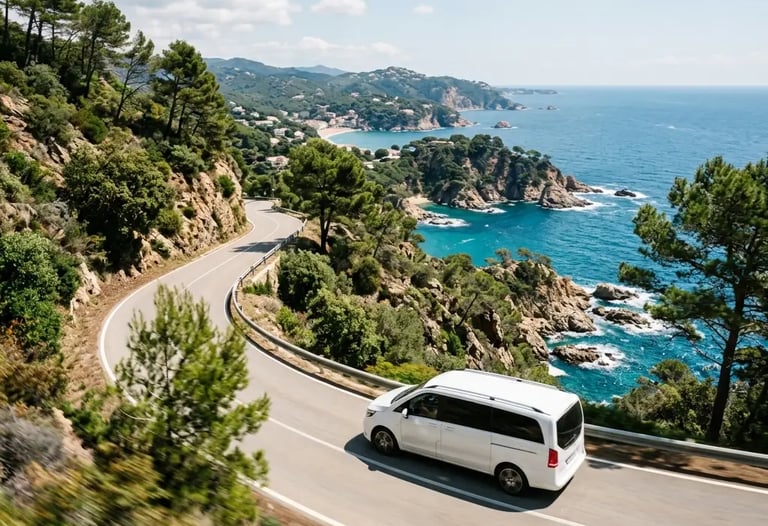

The Tactical Problem With Spain's Northeastern Seaboard
The Costa Brava is not a beach destination. It is 214 kilometers of fractured granite, submerged rock shelves, and lateral currents that have been dismantling hulls since Iberian traders first mapped them in the 6th century BC. The town of Tossa de Mar sits at one of the most geologically volatile points on this coastline, which is precisely why the Romans fortified it and precisely why freelance exploration of its marine perimeter is a miscalculation.
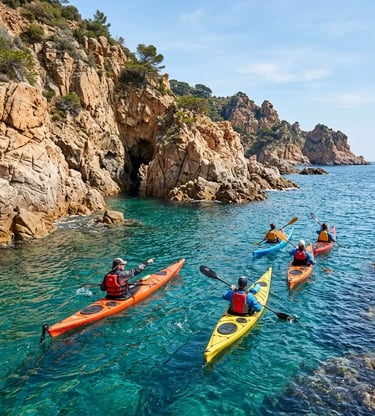
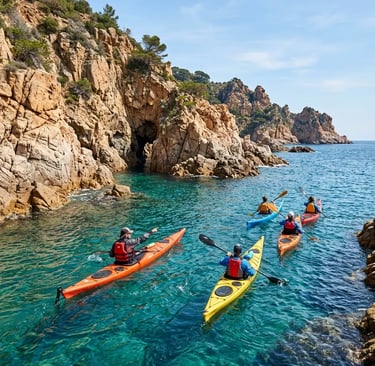
Accessing the network of concealed sea caves south of Tossa requires threading narrow channels where swell direction shifts without warning. A Certified Sea Kayak instructor is not a luxury add-on here; it is the single variable that determines whether you enter those formations safely or get pinned against a rock face by a current you never saw developing. This is the operational reality that the From Barcelona: Tossa de Mar Kayak & Snorkel Tour with Lunch (GetYourGuide t421650) is engineered to solve.
The Geology That Created the "Pearl of the Costa Brava"
Why Tossa de Mar Is Structurally Unique
Tossa de Mar earned its designation as the Pearl of the Costa Brava not through marketing, but through a geological accident. The collision of the Pyrenean orogeny with the Mediterranean basin produced a coastline where cliffs drop vertically into water that reaches snorkeling depth within meters of shore. This compression of deep water against vertical rock is what generates both the area's extraordinary marine biodiversity and its navigational hazards.
The coves surrounding Tossa are not open bays. They are narrow erosion channels carved into metamorphic rock over roughly 50 million years, creating enclosed formations invisible from the surface until you are directly above them. A Certified Sea Kayak instructor reads these formations the way a structural engineer reads load-bearing walls understanding which channels are passable at which tidal states and which will funnel swell into a compression wave.
Key Specifications and Geography
Coastline classification: High-energy, granite-dominant with metamorphic intrusions
Sea cave access window: Tidal and swell-dependent; requires real-time expert assessment
Water temperature range: 15°C–24°C depending on season and depth
Marine zone: Protected under EU Natura 2000 network directives
Transit from Barcelona: 90 km northeast via private 8-passenger Wi-Fi-equipped minivan
Active water time: 2.5 to 3 hours of guided kayak and snorkel navigation
Group ceiling: 8 participants maximum per operation
Equipment provision: All kayak, snorkel, and safety hardware provided on-site
Post-operation facilities: Secure lockers and hot showers at the staging area
Vila Vella: The Fortified Counterpoint
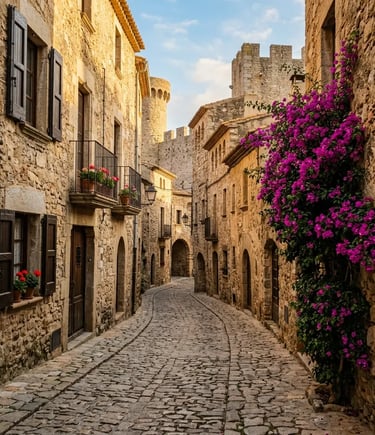
The contrast between the raw marine environment and Vila Vella is not aesthetic — it is architectural evidence of a 1,000-year argument with the same coastline. Vila Vella is the only fortified medieval town remaining intact on the entire Catalan coast. Its 12th-century walls were built not for decoration but as a direct military response to the Saracen naval raids that exploited the identical coves you will have just navigated by kayak.
Walking the perimeter of Vila Vella after three hours in the water beneath it restructures your understanding of both environments. The walls trace the exact contour of the geological features that make the coastline dangerous, because those features are what made the town defensible. The builders understood the sea caves, the blind approaches, and the current patterns and they built their fortifications accordingly.
The Debrief Protocol
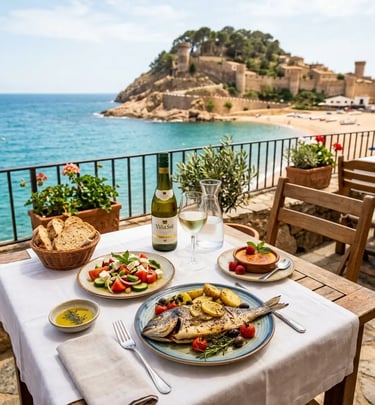
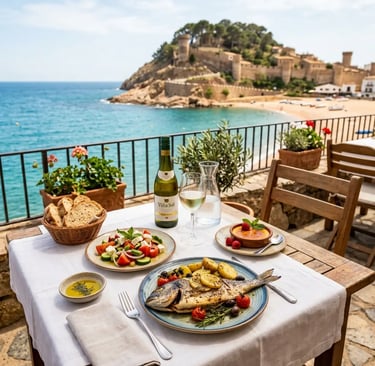
After the kayak and snorkel operation, the tour executes a full reset. Hot showers and secure lockers eliminate the logistical friction of transitioning from marine gear to civilian movement. What follows is a seated, three-course Mediterranean meal at a sea-view restaurant — not a grab-and-go concession, but a structured debrief over local cuisine with a direct sightline to the coastline you just navigated.
The remaining time is unstructured exploration of Vila Vella's walled perimeter and the old town. The private minivan then returns the group to Barcelona.
The Logistics Argument
Attempting to replicate this independently requires renting kayak equipment without local knowledge of tidal windows, navigating marine caves without a Certified Sea Kayak instructor who understands the specific current behavior of each formation, arranging separate transport along the AP-7 corridor, and locating post-activity facilities in a town you do not know. Each of these is a solvable problem individually. Combined, they represent a compounding logistical load that the 8-passenger private format of GetYourGuide t421650 eliminates entirely.
The Costa Brava does not punish the unprepared with inconvenience. It punishes them with inaccessibility the best formations simply remain hidden behind currents and rock that require expert-level navigation to breach. The structured tour exists because the environment demands it.
Frequently Asked Questions About the Tossa de Mar Kayak and Snorkel Tour
Why do you need a Certified Sea Kayak instructor to explore the Costa Brava sea caves near Tossa de Mar?
The sea caves south of Tossa de Mar sit inside narrow erosion channels where lateral currents shift based on tidal state and swell direction. A Certified Sea Kayak instructor evaluates these variables in real time, determining which formations are safely passable at the exact hour your group arrives. Without this expertise, the most spectacular caves along the Costa Brava remain physically inaccessible or outright dangerous to approach.
What is Vila Vella and why is it historically significant to this tour?
Vila Vella is the only fully intact fortified medieval town on the entire Catalan coastline, with defensive walls dating to the 12th century. Its ramparts were constructed as a direct military response to Saracen naval raids that exploited the same coves and blind approaches you navigate during the kayak portion of the tour. Walking its perimeter after the water operation gives you a structural understanding of why the town was built exactly where it stands.
How does the private minivan transfer from Barcelona to Tossa de Mar work?
An 8-passenger Wi-Fi-equipped private minivan collects your group in Barcelona and covers the approximately 90-kilometer northeast corridor to Tossa de Mar. The limited group size eliminates the delays and logistical compression of large coach operations, delivering you directly to the staging area. The same vehicle returns the group to Barcelona after the meal and free exploration period, closing the full loop without any independent transport coordination.
What happens after the kayak and snorkel session ends?
The post-water protocol begins with immediate access to secure lockers and hot showers at the staging area, removing all friction from the gear-to-civilian transition. From there the group sits down for a full three-course Mediterranean meal at a sea-view restaurant overlooking the coastline you just navigated. The remaining time is yours for unstructured exploration of Vila Vella's walled old town — widely recognized as the Pearl of the Costa Brava before the minivan departure.
Connect
Join us for travel tips and destination insights.
© 2026. All rights reserved.
Affiliate disclaimer
This website contains affiliate links. If you purchase through these links, we may earn a commission at no extra cost to you.