
Your Brain Is Lying to You About the Balkans (And Here's How to Shut It Up)
Discover why American travelers fear the Balkans and how one GetYourGuide verified tour eliminates every logistics nightmare. Albania, Montenegro, and beyond, completely stress-free.
DAY TRIPS
DestinationDiscover
3/22/20265 min read
Affiliate Disclosure
This article contains affiliate links. If you purchase through these links, I may earn a small commission at no extra cost to you. I only recommend products I genuinely believe offer strong performance, quality, and value for your ski and travel experience.
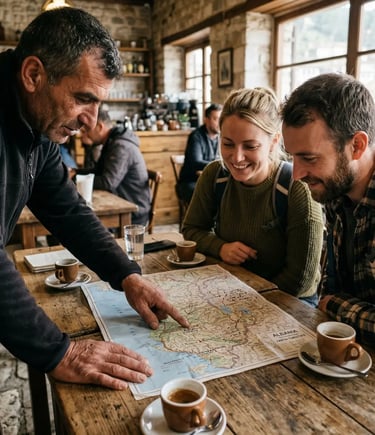
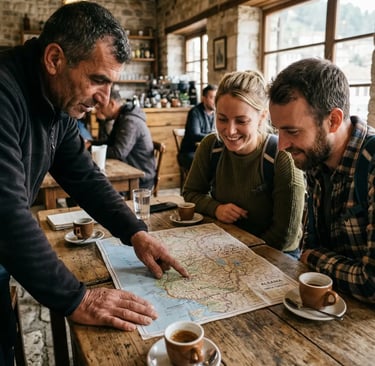
There's a specific kind of dread that settles into your chest around 2 a.m. before an international trip. Not excitement. Dread. You're mentally running logistics you don't fully understand bus schedules in languages you can't read, border crossings with rules nobody explained, taxi drivers whose intentions you can't verify.
Behavioral science has a name for this: anticipatory anxiety. Your brain isn't reacting to danger. It's reacting to uncertainty. And the Balkans Albania, Montenegro, Kosovo, North Macedonia trigger this response in American travelers more than almost any destination on earth. Not because they're dangerous. Because they feel unreadable.
The fix isn't courage. It's control.
How Do I Avoid Travel Stress in the Balkans?
The psychology here is straightforward. Anxiety spikes when your brain perceives a gap between what it needs to predict and what it can predict. Language barriers widen that gap. Unfamiliar transportation systems widen it. Not knowing whether your driver is licensed, whether your accommodation is vetted, whether you'll make the connection all of it feeds the same loop.
High-control travelers the ones who actually enjoy these trips don't eliminate uncertainty through bravery. They engineer it out of the equation before they leave the house. They hand the unpredictable variables to someone else and reclaim their cognitive bandwidth for the thing that actually matters: experiencing the place.
That's the entire value proposition of a structured guided tour. Not handholding. Control transfer. You're not being babysat. You're making a calculated decision to outsource the logistics that would otherwise hijack your nervous system every twelve hours.
What Is the Safest Multi-Country Tour From Albania?
Albania is one of the most underrated entries into the Western Balkans Shkodër's lake district, the bunker-riddled coastline, Tirana's chaotic, electric energy. But stringing it into a coherent multi-country itinerary across Montenegro and beyond? That's where most independent travelers hit their wall.
Border protocols shift. Minibus schedules are rarely posted in English. The informal economy means pricing is inconsistent, and without local knowledge, you won't know if you're getting the fair rate or the foreigner rate.
A GetYourGuide verified tour operating this corridor solves each of these friction points systematically. Verified operators on the platform carry insurance, vetted guides, and documented logistics which means every transfer, every crossing, every accommodation has been stress-tested before you step off the plane. This is what secure travel logistics in Eastern Europe actually looks like in practice: not luck, not research rabbit holes at midnight, but a system that has already absorbed the variables.
[INSERT LINK]
Is Stress-Free Balkan Travel Actually Possible for First-Timers?
Not just possible it's the only version of this trip that makes sense if you've never navigated the region before.
Here's what the neuroscience of travel satisfaction consistently shows: enjoyment tracks directly with perceived safety, not actual safety. Travelers who feel in control of their environment rate their experiences significantly higher even when the objective risk is identical to those who don't. Structure isn't the enemy of adventure. It's the foundation that makes adventure feel safe enough to actually enjoy.
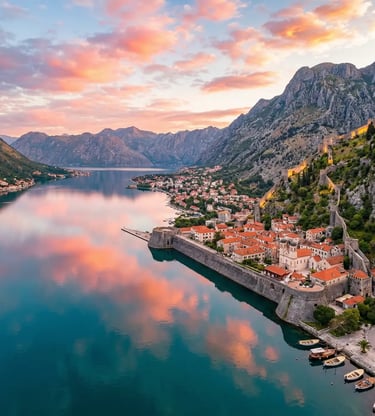
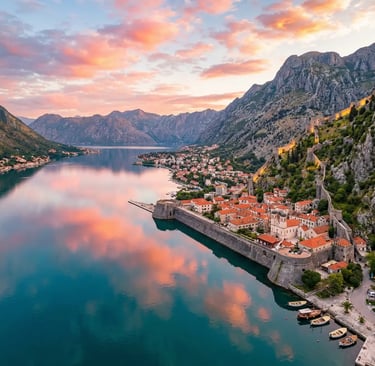
When you book a guided multi-country tour through a platform like GetYourGuide, you're not surrendering spontaneity. You're buying back the mental real estate that anxiety would have claimed. That's the energy you redirect into actually talking to locals in Kotor, actually tasting rakia in a village restaurant, actually watching the sun drop behind the Accursed Mountains without mentally rehearsing what happens if you miss the morning bus.
The Bottom Line on Stress-Free Balkan Travel
The Balkans will reward you disproportionately if you show up with your head clear. The region is raw, visually stunning, historically layered, and critically not yet overrun. But that same frontier quality means the infrastructure for independent travelers is inconsistent at best.
The smartest move you can make isn't to white-knuckle through the uncertainty. It's to recognize the anxiety for what it is a prediction gap your brain is trying desperately to close and close it deliberately, before you land.
Book the tour. Transfer the variables. Then actually be there.
GetYourGuide verified, multi-country, departure from Albania.
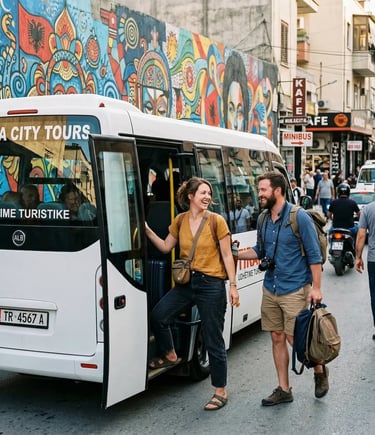
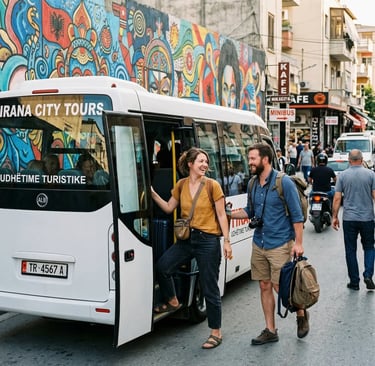
Frequently Asked Questions About Guided Balkan Tours
Is the Balkans safe for American tourists in 2025?
The Balkans are significantly safer than their reputation suggests. Albania, Montenegro, Kosovo, and North Macedonia all rank well for tourist safety, with violent crime toward visitors being statistically rare. The anxiety most Americans feel isn't rooted in genuine danger it's rooted in unpredictability. Unfamiliar languages, cash-only economies, and informal transit systems create a perception of risk that a structured, verified tour completely neutralizes. When logistics are handled by vetted local operators, the region becomes one of the most rewarding destinations in Europe.
Do I need to speak the local language to travel through the Balkans?
You don't need a single word of Albanian, Montenegrin, or Macedonian to have a seamless experience but only if your tour infrastructure is solid. English fluency among locals varies sharply by region and age group, which means independent travelers without local support regularly hit communication walls at border crossings, rural bus stations, and smaller guesthouses. A guided multi-country tour with a vetted English-speaking guide eliminates this variable entirely, so language never becomes a barrier between you and the experience you came for.
How do border crossings work on a multi-country Balkan tour?
Border crossings in the Western Balkans operate differently from Schengen-zone travel, and the rules documentation requirements, vehicle insurance, crossing hours can change with little public notice. For independent travelers, this is one of the highest-anxiety points of the entire trip. On a GetYourGuide verified tour, the operator handles all crossing logistics in advance, including vehicle documentation and timing routes around known bottlenecks. American passport holders generally cross without issue, but having a guide who knows the crossings personally transforms a stressful unknown into a routine stop.
What is the best time of year for stress-free Balkan travel?
Late spring (May–June) and early autumn (September–October) offer the most favorable conditions for touring Albania and Montenegro mild temperatures, manageable crowds, and fully operational transport and hospitality infrastructure. Peak summer brings heat and significantly higher tourist volume along the Adriatic coast, which can strain independent logistics. Shoulder season travel on a guided tour gives you the best of both worlds: reliable weather windows and the operational smoothness of a region running at full capacity, without the friction that August crowds introduce to border crossings and accommodation availability.
Connect
Join us for travel tips and destination insights.
© 2026. All rights reserved.
Affiliate disclaimer
This website contains affiliate links. If you purchase through these links, we may earn a commission at no extra cost to you.