
Split and the Dalmatian Islands: A Guide to Croatia's Most Dazzling Day on the Water
Discover the Blue Cave on Biševo island, swim at Stiniva Bay and Budikovac lagoon, explore Komiža and Hvar your complete guide to the best five-island speedboat tour from Split and Trogir, Croatia
DAY TRIPS
DestinationDiscover
5/12/20267 min read
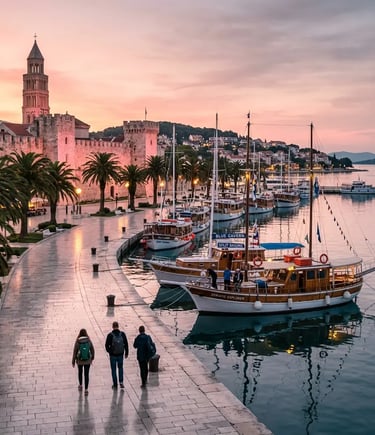
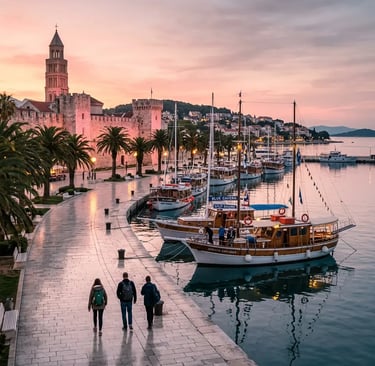
There's a moment on the Adriatic, about ninety minutes out of Split by speedboat, when the mainland disappears behind you and the open sea is all there is. The engine drops to idle, a small rocky island materializes ahead, and your skipper points at what looks like a crack in a cliff face. That crack is the entrance to the Blue Cave on Biševo and what's inside is one of the most extraordinary things you can see in Europe without buying a museum ticket.
The Cave That Glows
The Blue Cave (Modra Špilja) sits on the eastern shore of Biševo, a tiny island of barely six square kilometres about four kilometres off the coast of Vis. The cave itself is roughly 24 metres long and 12 metres wide, and you enter it in a small dinghy, ducking under an opening only about a metre and a half tall. SeaYou Croatia
Once inside, the show begins. Sunlight enters through an underwater cavity and interacts with the water and the limestone rock, undergoing refraction and diffraction. The longer wavelengths reds and yellows are absorbed by the water, while the shorter blue wavelengths scatter and bounce off the white sandy floor, flooding the entire chamber with an ethereal aquamarine glow. Objects dipped below the surface appear to turn silver. The effect is at its most vivid between roughly 11 a.m. and 1 p.m. on a sunny day, when the sun's angle drives the strongest light through the underwater entrance. Overcast skies or choppy water will dim the display, so checking the forecast the night before is wise. Dalmatia Express + 2
The visit inside the cave lasts only five to ten minutes — boats rotate in and out to manage the crowds — but it's one of those brief experiences that sticks in your memory far longer than it lasts.
The Five-Island Route
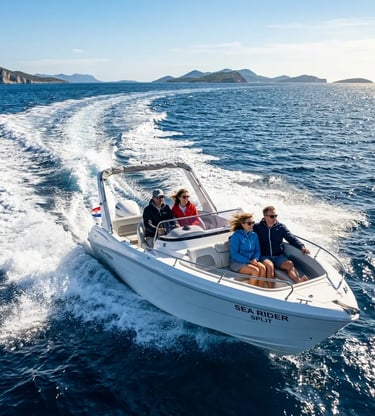
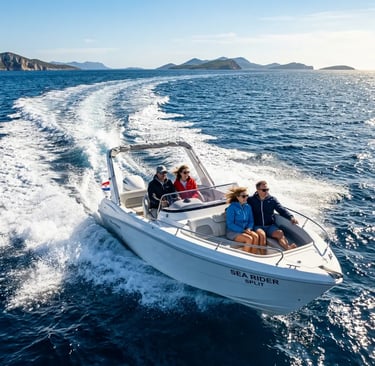
Most visitors experience the Blue Cave as part of a full-day "five-island" speedboat tour departing from Split or the nearby medieval town of Trogir. It's become the most popular boat excursion on the Croatian coast, and for good reason: it packs a remarkable variety of landscapes and swimming spots into a single day on the water.
A typical itinerary runs something like this:
The day starts early, usually around 7 or 8 a.m. from Split's waterfront. After the long run out to Biševo, you visit the cave and then loop to Komiža, a sleepy fishing village on Vis that serves as the launching point for cave visits. Komiža's historical promenade also served as a filming location for Mamma Mia 2, which gives it a certain cinematic charm though the village was quietly beautiful long before the cameras arrived. This is where most tours pause for coffee and a stroll. SeaYou Croatia
From Komiža, the boat heads to Stiniva Bay, also on Vis. Stiniva was once a cave itself; its roof collapsed long ago, leaving two massive cliffs framing a narrow pebble beach that was voted one of the best in Europe. In low season you can swim here. In high summer, the bay fills with boats and swimming isn't always practical, but the sight of those towering rock walls is worth the stop regardless. SeaYou Croatia
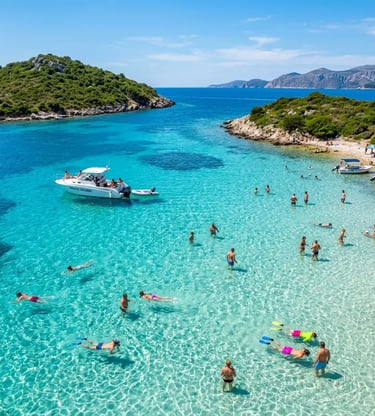
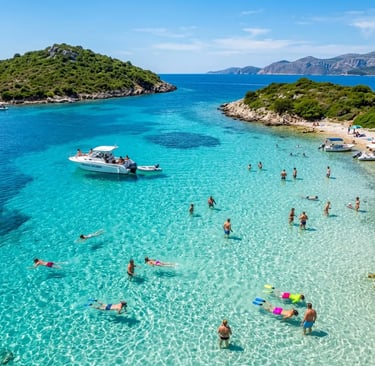
Next comes the Blue Lagoon at Budikovac, a small uninhabited island with a turquoise shallow bay that looks almost artificially perfect. This is where the snorkelling masks come out and people float in clear water surrounded by small islets, in what feels like a hidden corner of the Caribbean somehow transplanted to the Adriatic. SeaYou Croatia
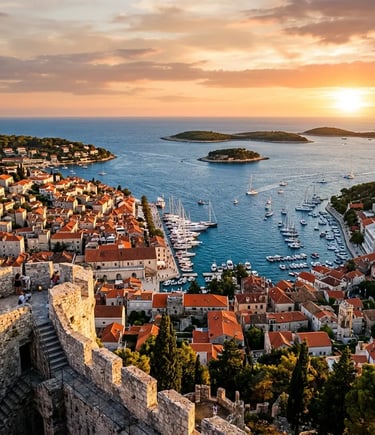
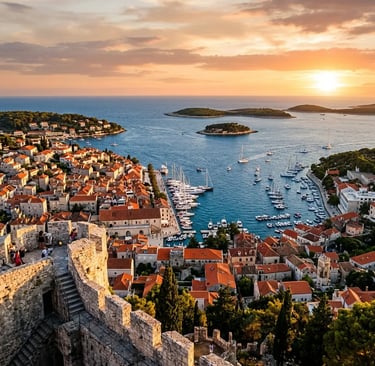
The final major stop is Hvar town. The boat typically docks in the late afternoon, giving you an hour or two to wander Hvar's marble-paved main square, climb up to the Španjola Fortress (also called Fortica) for panoramic views over the Pakleni Islands, or grab a late lunch of grilled fish at one of the harbourfront restaurants. Hvar has a reputation as a party island, but in the golden light of late afternoon, before the nightlife crowds arrive, it's simply one of the prettiest harbour towns in the Mediterranean.
Practical Details
Tour prices generally start around €100–120 per person for a group speedboat tour from Split. The Blue Cave entrance fee is separate currently around €18–24 per adult depending on the season — and is usually paid in cash on site. Private boat charters are available for those who want more flexibility, though they cost considerably more. Viator
The season runs from roughly April through October. July and August bring the biggest crowds and the longest queues at the cave entrance; for a calmer experience, aim for May, June, or September. The water is warm enough for comfortable swimming from June onward. Split Tickets
A few things worth knowing: the open-sea crossing can be rough, and the front of a speedboat in choppy conditions is not for the faint-hearted. Bring a light jacket even in summer, since the wind chill at speed is real. Sunscreen, a hat, and a waterproof phone case round out the essentials.
Why It Works
Croatia's coast has been on an upward trajectory for years now, and 2025 marked another record. The country welcomed over 21.8 million tourist arrivals and surpassed 110 million overnight stays for the first time in its history, with growth across pre-season, post-season, and the winter holidays alike. Tourism now accounts for over a quarter of Croatia's GDP, and the Split-Dalmatia region is one of the busiest corridors driving those numbers. Croatia WeekRoad Genius
But the Blue Cave tour endures not because of statistics it endures because the day genuinely delivers. You get open-water adventure, a geological wonder, swimming in improbably clear water, a bit of history in Komiža, a bit of glamour in Hvar, and the kind of sunlit memories that make you immediately start planning a return trip. It's a lot for one day, and somehow none of it feels rushed.
If you're spending any time in Split or Trogir, this is the day trip to prioritize. The cave alone is worth the early alarm.
Frequently Asked Questions About the Blue Cave and Dalmatian Islands Tour
What creates the blue light inside the Blue Cave on Biševo?
The glowing blue light is entirely natural no artificial lighting is involved. Sunlight enters the cave through an underwater opening in the rock and passes through the seawater before bouncing off the white limestone and sandy floor below. During this process, the water absorbs the longer red and yellow wavelengths while scattering the shorter blue wavelengths upward, filling the entire chamber with an intense aquamarine glow.
The effect depends heavily on the angle of the sun, which is why timing your visit matters so much. The most vivid blue illumination typically occurs between 11 a.m. and 1 p.m. on clear, sunny days when the sun is high enough to send direct rays through the underwater entrance at the optimal angle.
Overcast skies or rough seas will significantly reduce the intensity of the glow. If you dip your hand below the surface while inside, it appears to turn silver a detail that catches most first-time visitors completely off guard and makes the brief five-to-ten-minute visit feel genuinely otherworldly.
What is the best time of year to take the five-island tour from Split?
The boat tours operate from approximately April through October, covering the full Mediterranean sailing season. July and August offer the warmest water and the longest daylight hours, but they also bring peak crowds the queue of boats waiting to enter the Blue Cave can stretch to over an hour during midday in high summer.
For the best balance of good weather, swimmable water temperatures, and manageable crowds, June and September are the sweet spot. The seas are generally calmer, the Blue Cave queue moves faster, and destinations like Stiniva Bay and the Budikovac lagoon feel more peaceful without the peak-season boat traffic clogging every cove.
May and early October can also work well, especially for visitors who prioritise the cave experience and sightseeing in Hvar and Komiža over swimming. Water temperatures are cooler but tolerable, and the villages have a quieter, more local atmosphere that gets lost in the busiest weeks of summer.
How much does the Blue Cave tour cost and what should I bring?
Group speedboat tours from Split or Trogir typically cost between €100 and €120 per person, which covers the boat, skipper, guide, and stops at all five islands. The Blue Cave entrance ticket is not included in most tour prices expect to pay €18 to €24 per adult depending on the month, and bring cash since card payment is not always available at the cave entrance.
Private boat charters offer more flexibility on timing and itinerary but start at significantly higher prices, usually €800 and upward for a full-day hire. For most visitors, the group tour offers excellent value given the distance covered and the number of stops included across an entire day on the water.
Pack a light windproof jacket even in summer the speedboat generates serious wind chill, especially on the 90-minute open-sea crossing to Biševo. Sunscreen, sunglasses, a hat, swimwear, a towel, and a waterproof phone case are essential. Wear shoes you can get wet, as boarding and disembarking at rocky shores can be slippery. Bring water and snacks for the morning, though you can buy food in Komiža and Hvar.
Is Hvar worth visiting on a day tour or should I stay overnight?
The standard five-island tour gives you roughly one to two hours in Hvar town, which is enough to walk the main square, climb up to the Španjola Fortress for sweeping views over the Pakleni Islands, and sit down for a drink or a quick meal at the harbour. It is a genuine taste of the town rather than a rushed photo stop, and many visitors find it perfectly satisfying as part of a packed day.
That said, Hvar rewards a longer stay. The island has excellent restaurants, secluded beaches reachable only by water taxi, and lavender fields in the interior that bloom in June and July. The nightlife scene is among the liveliest on the Adriatic, and the old town takes on a completely different character after the day-trip boats depart in the early evening.
If your schedule allows it, a worthwhile approach is to do the five-island tour first to get an overview and then return to Hvar separately by catamaran ferry from Split for one or two nights. This way you experience both the adventure of the speedboat day and the slower, deeper rhythm of island life without trying to squeeze everything into a single outing.
Connect
Join us for travel tips and destination insights.
© 2026. All rights reserved.
Affiliate disclaimer
This website contains affiliate links. If you purchase through these links, we may earn a commission at no extra cost to you.