
Why I Skipped the Tourist Traps and Went to Shiraito Falls Instead
Skip Mt Fuji’s crowded 5th Station and visit Shiraito Falls instead an off-the-beaten-path day with private tour ease and Hakone 2026.
DAY TRIPS
DestinationDiscover
1/24/20267 min read
Affiliate Disclosure
This article contains affiliate links. If you purchase through these links, I may earn a small commission at no extra cost to you. I only recommend products I genuinely believe offer strong performance, quality, and value for your ski and travel experience.
The first thing I noticed at Mt. Fuji’s 5th Station wasn’t the mountain.
It was the noise.
A bus sighed to a stop and emptied itself in a rush—people blinking, stretching, laughing too loudly like they’d been shaken awake mid-dream. Guides lifted little flags. Cameras came out before anyone even looked up. And in that odd, modern way that travel can sometimes feel like a checklist, we were funneled toward the same handful of photo spots, the same snack counters, the same souvenir shops selling identical “FUJI” mugs and keychains arranged with military precision.
I did look up, eventually. Fuji was there, of course immense, aloof, wearing a shawl of cloud like it couldn’t be bothered to fully reveal itself. But the foreground was all elbows and engines, and the air tasted faintly like exhaust and fried batter. Somewhere nearby a loudspeaker chirped about timetables. Someone bumped my shoulder and apologized without meeting my eyes.
I remember thinking: If this is what seeing Mt. Fuji is, I might be doing it wrong.
That’s the moment the phrase I’d been typing into search bars for weeks came back to me: Off the beaten path Mt Fuji. Not as a slogan, but as a quiet plea. I didn’t want Fuji as a backdrop to a crowd. I wanted it as a presence something you felt in your chest, the way old places can rearrange you without asking permission.
So I did the mildly heretical thing. I skipped the obvious.
And I went to Shiraito Falls instead.
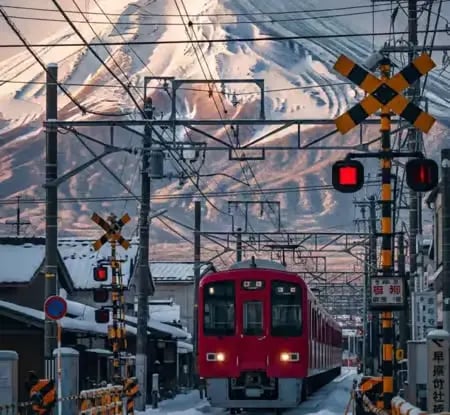
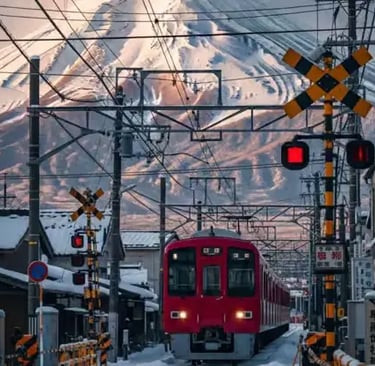
The Discovery: A National Monument Hiding in Plain Sight
Shiraito Falls is one of those places that makes you wonder how the internet hasn’t ruined it yet.
It’s a National Monument, which sounds grand and official, the sort of designation that should come with lines and ticket gates and a hundred influencer tripods. But it sits just far enough outside the main train arteries that a lot of Western travelers especially those trying to do Japan strictly by rail never quite get around to it.
And I get it. Japan trains are a dream. They’re punctual, clean, and soothing in that way that makes you want to organize your entire life into timetables. The problem is that Shiraito Falls lives slightly off that dream, tucked into the Shizuoka side like a secret the mountain keeps for itself.
It’s not hard to reach, exactly just inconvenient enough that it doesn’t end up on the average “Tokyo–Fuji–Kyoto” conveyor belt. It requires intention. The kind you don’t always have after three weeks of navigating ticket machines, station exits, and the subtle panic of realizing you’re standing on the wrong platform.
I found it by accident, really half research, half travel fatigue. I was comparing routes and reading reviews when I saw someone describe Shiraito as “the moment Japan stopped being an itinerary and became a memory.” That sentence stuck to my ribs.
So when I saw the option for a Mt. Fuji, Shiraito Falls, and Hakone Private Tour, it felt less like purchasing a day trip and more like choosing a different version of the story.
The Sensory Experience: Water Like Silk, Mist Like a Doorway
The first sign that this was not going to be another 5th Station experience was the silence on arrival.
Not total silence Japan is never truly silent but a softer world. No buses unloading in waves. No loudspeakers. Just the sound of wind moving through trees and the distant, persistent hush of water, like the earth breathing.
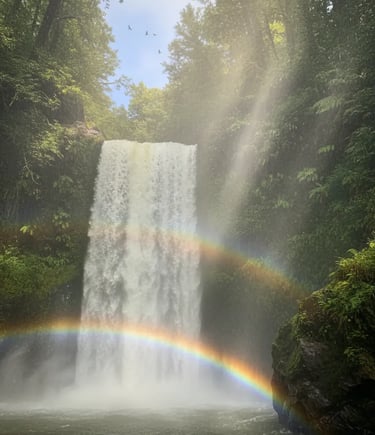
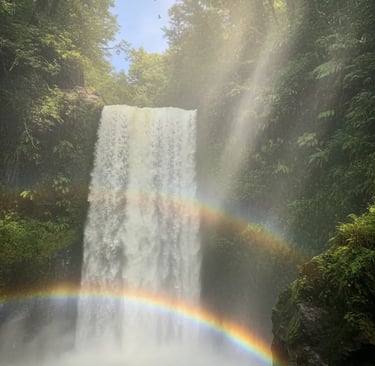
Then you walk down, and the sound grows. Not louder in an aggressive way, but fuller—layered. Water doesn’t fall at Shiraito so much as it spills, in dozens and dozens of thin streams, draped over a wide rock face like white threads. That’s what the name means, apparently: “white threads.” And for once, a poetic place name isn’t exaggerating.
Standing in front of it, I felt something I hadn’t felt at the 5th Station: small, yes—but also included. Like I’d been allowed into the scene instead of pushed to the edge of it.
Mist floated up and kissed my face. It was cool and clean and faintly mineral, the way air feels near old stone. If you stand in the right spot especially when the sun is angled just so—there’s often a rainbow caught in that mist. Not a dramatic, postcard arch, but a shy curve that appears and disappears as you move your head.
I watched one form like a secret.
And for a moment, it really did feel like “Ancient Japan.” Not because of costumes or temples or curated nostalgia but because the place didn’t seem designed for consumption. It wasn’t begging to be photographed. It simply was. Wild in a gentle way. Patient. Unbothered by whether you had cell service.
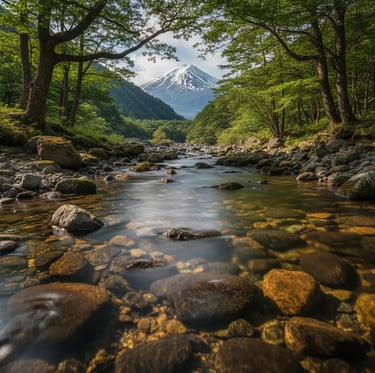
Fuji, somewhere behind it all, felt closer here than it had at the 5th Station. Not physically just emotionally. At the tourist hub, the mountain had been the excuse for commerce. Here, it felt like the source. Water filtered from its slopes. Forest rooted into its shadow. You could sense the old relationship between the land and the people who lived near it long before anyone sold “limited edition Fuji cookies.”
This, I thought, is the real comparison: Shiraito Falls vs 5th Station isn’t just about crowds. It’s about texture. One is the mountain as product; the other is the mountain as ecosystem, as spirit, as quiet witness.
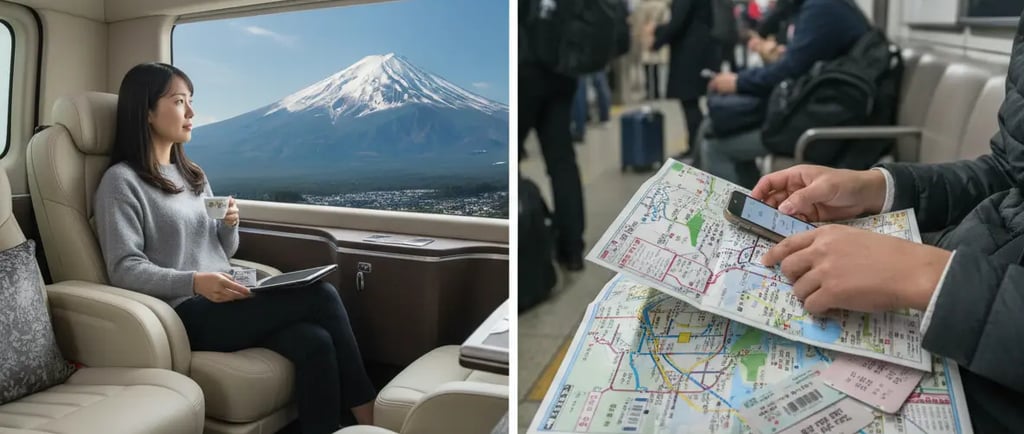
The Logistics: Why This Day Only Works With a Private Vehicle
There’s a reason most people don’t casually combine Shiraito Falls and Hakone in one day.
Look at a map and it seems close enough Shizuoka on one side, Kanagawa on the other. But Japan’s geography plays tricks. Roads curve. Transit transfers multiply. What seems like a neat triangle becomes a time-eating puzzle of buses-to-trains-to-buses, all with the constant, nagging fear of missing the one connection that makes everything collapse.
Trying to stitch Shiraito Falls (on the Shizuoka side) to Hakone (on the Kanagawa side) with public transportation isn’t impossible but it’s the kind of “possible” that turns your day into a spreadsheet. You spend more time watching clocks than watching landscapes. You hesitate at every intersection. You rush the moments you meant to savor.
That’s where the private tour earns its keep, and honestly, it’s where the argument for Private tour advantages Japan becomes less abstract and more…practical.
Because with a private vehicle, the day stops being a series of compromises.
There’s a kind of luxury an unflashy, deeply human one in not having to solve transportation while you’re trying to feel something. In being able to linger at the falls until you’ve actually had the moment, instead of checking your phone and realizing you need to sprint back uphill to catch a bus that comes every hour.
It’s also, in a weird way, a logistical masterpiece. Crossing from the Fuji area toward Hakone isn’t just hopping over; it’s threading through different regions, each with its own pace. The private car makes it smooth. It turns what would be a complicated, exhausting travel day into a single, coherent narrative like chapters that actually belong in the same book.
By the time we climbed toward Hakone, the scenery shifted: mountains folding into each other, the air changing again warmer in pockets, then cooler. Hakone has its own kind of fame, of course, but even there, arriving without the transit grind made a difference. I wasn’t showing up depleted and grumpy, ready to be disappointed by crowds.
I arrived…open.
The Verdict: Not Sightseeing Curated Exploration
The strange thing about skipping the tourist traps is that you don’t feel like you’re missing out. You feel like you’re finally arriving.
That’s what Shiraito Falls gave me: a version of Mt. Fuji that didn’t come with fluorescent lighting and checkout lines. A place where the most memorable souvenir was the sensation of mist on my skin and the sound of water threading down rock like time made visible.
And the tour itself this Mt. Fuji, Shiraito Falls, and Hakone Private Tour didn’t feel like “sightseeing” in the usual sense. It felt like curated exploration. Not curated in a stiff, controlling way, but in a thoughtful way like someone had taken the raw ingredients of the region and arranged them into a day that made emotional sense.
If you’re debating Shiraito Falls vs 5th Station, here’s my honest take: the 5th Station is easy, famous, and often crowded to the point of numbness. Shiraito is slightly inconvenient, quieter, and far more likely to give you the kind of story you’ll tell later without checking your photos for prompts.
And if you’re searching for Off the beaten path Mt Fuji, this is it not a secret hike with a hundred disclaimers, not an obscure “hidden gem” that turns out to be a café. It’s a place of real natural beauty that still feels like it belongs to the mountain more than to tourism.
I didn’t come back with a bag of souvenirs.
I came back with a memory that sounded like falling water, looked like a brief rainbow in mist, and felt somehow like stepping sideways into an older Japan.
The kind you don’t have to fight a crowd to hear.
FAQ
1) Is Shiraito Falls worth visiting compared to Mt. Fuji 5th Station?
Yes if you want a calmer, nature-first experience. Shiraito Falls offers serenity, soundscape, and scenery, while the 5th Station is often crowded and commercial.
2) How do I get to Shiraito Falls?
It’s reachable by public transport, but connections can be time-consuming. Many travelers choose a private car tour to avoid complex transfers and limited bus schedules.
3) Can I visit Shiraito Falls and Hakone in one day?
You can, but it’s difficult to do smoothly by public transportation. A private vehicle makes the Shiraito (Shizuoka) to Hakone (Kanagawa) route efficient and realistic.
4) When is the best time to see Shiraito Falls?
Spring through autumn is ideal for comfortable weather and strong water flow. On sunny days, you may even catch a rainbow in the mist.
5) How long should I spend at Shiraito Falls?
Plan for about 60–90 minutes on-site (more if you like slow walks and photos). The area is best enjoyed without rushing.
6) What are the main private tour advantages in Japan for this route?
Time efficiency, fewer transit hassles, flexible pacing, and a more “curated exploration” feel—especially when combining multiple regions in one day.
Connect
Join us for travel tips and destination insights.
© 2026. All rights reserved.
Affiliate disclaimer
This website contains affiliate links. If you purchase through these links, we may earn a commission at no extra cost to you.