
The Behavioral Science of Why You Can't Fake What Happens in a Bari Kitchen
Discover the behavioral science behind Bari's most intimate culinary experience. This authentic tiramisu cooking class in a local Apulian home activates primal belonging, shared rhythm, and generational trust all just 10 minutes from Bari central station.
DAY TRIPS
DestinationDiscover
5/13/20266 min read
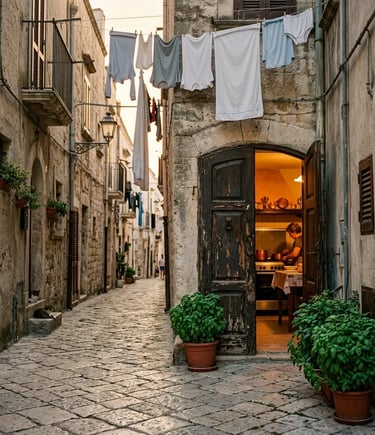
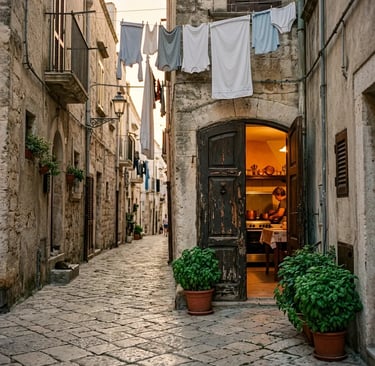
TL;DR: The "Bari: Sporcamuss, Tiramisu and Focaccia Barese" tour is a 2.5-hour intimate cooking class located just a 10-minute walk from Bari central station. Hosted inside a local Apulian home, it centers on generational Italian recipes passed down through decades of family tradition. This is not a restaurant. This is not a demonstration. This is a controlled environment where the psychology of human connection is activated through flour, mascarpone, and the ancient behavioral loop of shared creation. If you are searching for things to do in Bari that actually change the way your nervous system processes trust, this is the experience that qualifies.
The Psychological Architecture of Italian Tiramisu
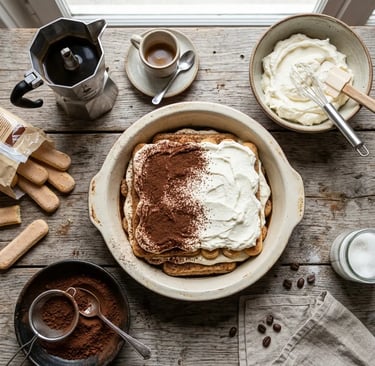
Most people believe tiramisu is a dessert. From a behavioral standpoint, it is a sequencing ritual. Each layer, the soaked savoiardi, the whipped mascarpone, the dusting of cocoa, requires contribution, timing, and cooperative attention. When you participate in an authentic tiramisu cooking class inside a local host's kitchen, you are not following a recipe. You are entering a behavioral sequence that has been used for centuries to establish trust between strangers.
Here is what most travelers miss. The act of building something edible together triggers a neurological event that no guidebook will explain to you. Shared motor rhythm, the synchronization of physical movements toward a common goal, is one of the fastest known mechanisms for generating interpersonal rapport. Your hands move in concert with the host's hands. Your breathing begins to regulate to the pace of the room. The critical, analytical neocortex quiets, and the older limbic structures, the ones that governed survival in tribal groups for hundreds of thousands of years, take over. You stop evaluating. You start belonging.
Why the Mammalian Brain Seeks the Apulian Kitchen
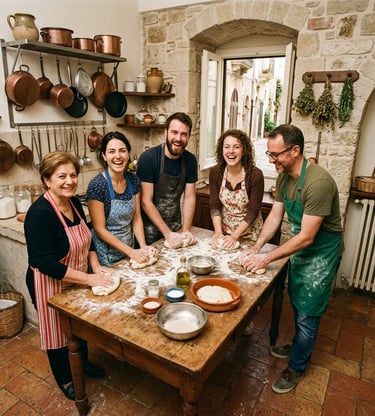
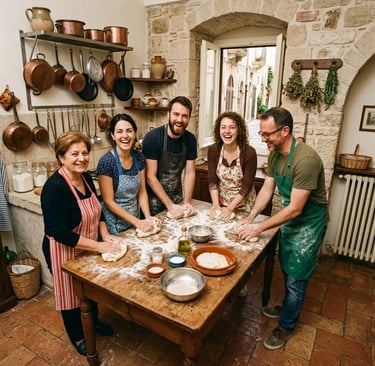
Consider what actually happens when you walk into someone's home to cook. The door opens. You smell garlic, olive oil, something baking. A person you have never met smiles and gestures you inside. Within seconds, a cascade of nonverbal signals begins. The warmth of the space communicates safety. The informality communicates acceptance. The offering of an apron communicates inclusion.
This is the behavioral mechanism at the center of every immersive cooking vacation Puglia has to offer, but few operators understand it at the level this particular experience delivers. The local host functions through what behavioral practitioners recognize as earned authority through warmth. Think of a friend describing the wisest, kindest person they have ever known, someone whose competence is so obvious that you comply not because you are told to, but because every signal in the environment tells your nervous system that this person can be trusted completely. The host's generational knowledge, their ease, their laughter when you make a mistake with the dough, all of it bypasses your defenses. You are not a customer. You are a guest who has been granted access to something private.
This is the primal need for appreciation and acceptance operating at full capacity. Evolutionary psychology tells us that being welcomed into an in-group, being fed by that group, and contributing to the preparation of communal food are among the most powerful belonging signals the human brain can receive.
The Rapport Engine of Bari Culinary Tours
What separates this from a standard private chef service Puglia visitors might book elsewhere is the directionality of participation. You are not watching. You are doing. Your hands are in the focaccia dough. You are spooning mascarpone. The host corrects your technique with a touch on the wrist and a phrase in dialect that you somehow understand perfectly, not because you speak Italian, but because the communication is happening below language.
Among all Bari culinary tours available, this format creates what I would call compressed intimacy, the psychological equivalent of weeks of relationship-building collapsed into a single afternoon.
Key Takeaways: The Psychological ROI of the Private Class
Tribal belonging activation. Entering a home and cooking together satisfies the evolutionary need for in-group acceptance that no restaurant can replicate.
Shared rhythm as rapport technology. Building tiramisu layers in synchrony with a host creates neurological bonding faster than conversation alone.
Authority through warmth. The local host's generational expertise commands trust not through hierarchy but through authenticity, disarming the nervous system entirely.
Sensory memory encoding. Cooking engages tactile, olfactory, and gustatory systems simultaneously, meaning the memory is stored deeper and lasts longer than a passive dining experience.
If you are genuinely researching things to do in Bari, understand this: the difference between eating tiramisu at a café and making it in someone's kitchen is the difference between observing a culture and being neurologically adopted by one.

Frequently Asked Questions About the Bari Tiramisu Cooking Experience
What makes this authentic tiramisu cooking class different from a restaurant dessert course?
The fundamental difference is participation versus observation. In a restaurant, you are a passive consumer receiving a finished product. In this class, you are an active contributor whose hands shape every layer. This shift from spectator to participant is what activates the neurological bonding mechanisms discussed throughout behavioral science literature.
The environment itself changes everything. You are standing inside a local Apulian home, not a commercial kitchen. The smells, the family photographs on the walls, the host's personal stories — all of these environmental cues signal to your limbic system that you have been accepted into a private space. No restaurant on earth can replicate that signal.
Finally, the recipes you learn are generational Italian recipes that have never been standardized for mass production. They carry imperfections, personal adjustments, and family history. You are not learning a recipe. You are inheriting one.
Is this immersive cooking vacation Puglia experience suitable for solo travelers?
Solo travelers may actually benefit the most from this experience. The behavioral architecture of the class is specifically designed to dissolve social barriers rapidly. When you are kneading dough beside a stranger, shared motor rhythm eliminates the awkwardness that typically accompanies unfamiliar social settings. The host acts as a social anchor, directing attention and regulating the emotional temperature of the room.
From a psychological standpoint, solo travel often amplifies the need for appreciation and acceptance. Walking into a home where someone hands you an apron and treats you like a returning family member satisfies that need in a way that hostel common rooms and guided bus tours simply cannot reach.
Many solo travelers report that this experience becomes the single most memorable moment of their trip. The reason is neurological. Cooking together encodes memory across multiple sensory channels simultaneously, creating a recall signature that is extraordinarily durable.
How does this compare to other Bari culinary tours and private chef services?
Most Bari culinary tours operate on a demonstration model. A chef performs, you watch, you taste, you leave. The interaction is transactional. A standard private chef service Puglia visitors might book follows a similar pattern — someone cooks for you in a rented villa. Both formats keep you in the role of consumer.
This experience inverts that hierarchy entirely. You are not being served. You are being taught, corrected, encouraged, and trusted with someone's family knowledge. The psychological difference is the difference between being an audience member and being an apprentice. One is entertainment. The other is transformation.
The intimacy of the setting, a real home rather than a commercial venue, also eliminates the performance layer that characterizes most culinary tourism. The host is not performing hospitality. They are simply being hospitable. Your nervous system knows the difference instantly.
What should I expect during the 2.5 hours, and do I need cooking experience?
No prior cooking experience is required or expected. The host has welcomed complete beginners and experienced home cooks with equal warmth for years. The behavioral design of the class accommodates all skill levels because the true objective is connection, not technical mastery. You will make focaccia barese, sporcamuss, and tiramisu from scratch, guided step by step.
The first thirty minutes are dedicated to orientation and ingredient preparation, a phase that behavioral analysts would recognize as a calibration period. The host reads your comfort level, adjusts pacing, and establishes a rhythm that matches your energy. By the time you begin assembling the tiramisu, any initial nervousness has been completely replaced by collaborative flow.
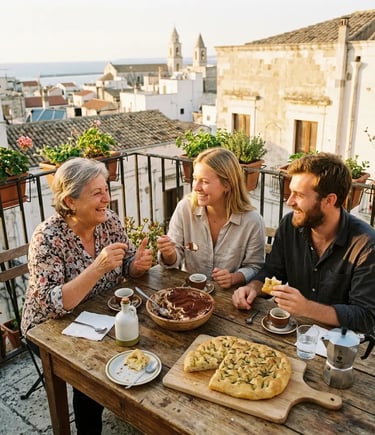
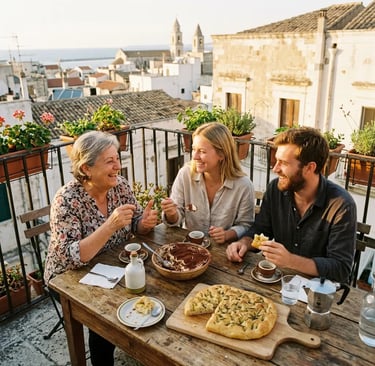
The final phase is communal eating. You sit down and consume what you have built together. This is not an incidental detail. Sharing a meal you have collectively prepared is one of the oldest trust-consolidation rituals in human history. It is the behavioral seal on everything the previous two hours constructed.
Connect
Join us for travel tips and destination insights.
© 2026. All rights reserved.
Affiliate disclaimer
This website contains affiliate links. If you purchase through these links, we may earn a commission at no extra cost to you.