
The Danube Deception: What Your Brain Is Really Telling You When You Book Vienna (And Nothing Else)
Most tourists never leave Vienna — but your brain is wired for more. Discover the psychological secrets behind the ultimate 3 countries 1 day Europe experience: Vienna, Bratislava, and Budapest in one dopamine-charged day along the Danube. Guided tours from Vienna explained.
DAY TRIPS
DestinationDiscover
4/2/20265 min read
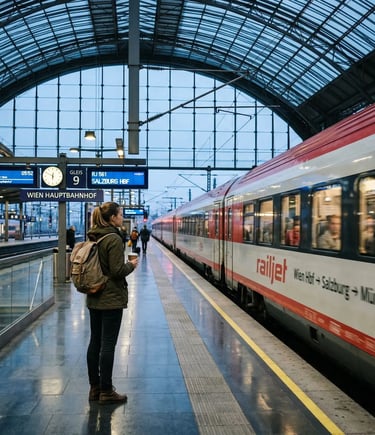
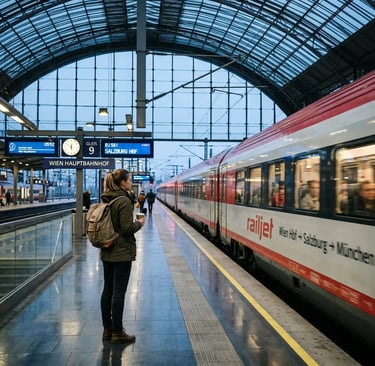
I've spent years studying why people make the choices they make. And few behavioral patterns are as predictable or as costly as what I call the Capital City Anchor Effect.
You book Vienna. You tell yourself it's enough. And 80% of tourists do exactly the same thing, leaving two of Europe's most psychologically charged cities completely untouched, less than 90 minutes away.
That's not a travel preference. That's a cognitive trap.
Why Do Most Tourists Never Leave Vienna?
Because the brain defaults to certainty, and Vienna is the safest choice it knows.
The Capital City Anchor Effect works like this: your brain receives a flood of marketing, social proof, and cultural validation about a major European capital. It locks onto that anchor. Every other option no matter how close, how rich, how rewarding gets unconsciously filtered out as "extra effort." Neuroscientists call this decision fatigue anticipation. You're exhausted by a trip that hasn't even happened yet.
Vienna deserves every star it gets. But what your nervous system is actually craving isn't another Baroque cathedral. It's contrast. It's novelty. It's the dopamine surge that only comes from genuine surprise and Vienna, as magnificent as it is, can no longer surprise you after day two.
The surprise is down the Danube.
Is Bratislava Worth a Day Trip from Vienna?
Bratislava isn't just worth it. It's the psychological antidote to over-tourism exhaustion.
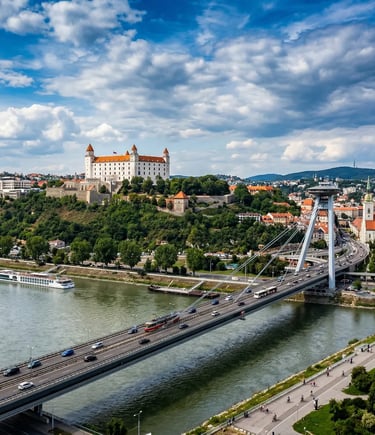
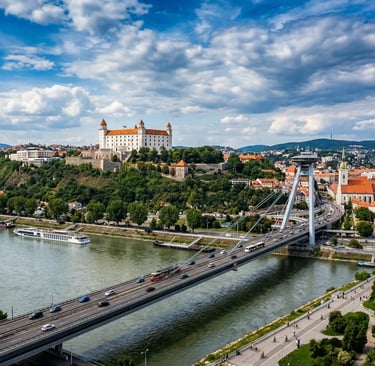
Bratislava sits 60 kilometers from Vienna closer than most people's morning commute. Yet it operates in a completely different emotional register. Where Vienna is grand and composed, Bratislava is raw, strange, and darkly funny. Statues emerging from manholes. A castle looming over Soviet-era blocks. A medieval old town compact enough to read in a single afternoon.
For the behavioral profiler, Bratislava is fascinating because it triggers disorientation recovery — the brain's most pleasurable state. You feel slightly off-balance, then you find your footing, and the reward circuitry fires hard. That's not discomfort. That's growth chemistry.
When people search Bratislava tours from Vienna, they're not just looking for logistics. They're following an instinct that their standard itinerary has left something essential on the table.
They're right.
How Do You See Budapest in One Day?
You don't see Budapest in one day. You feel it and that's precisely the point.
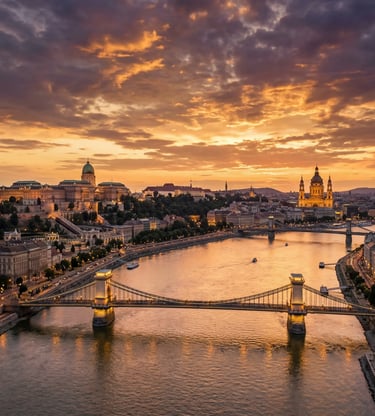
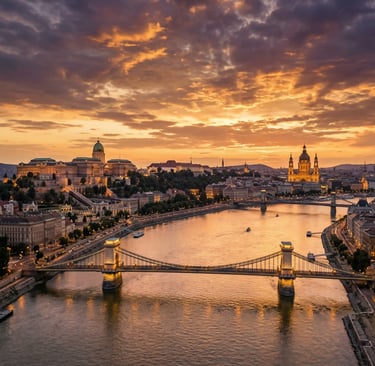
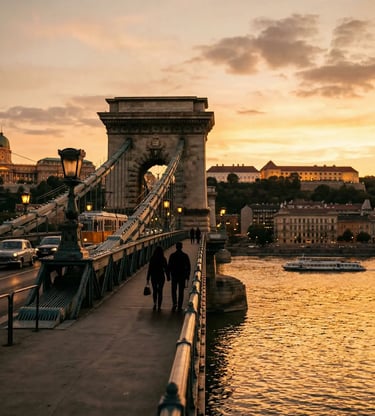
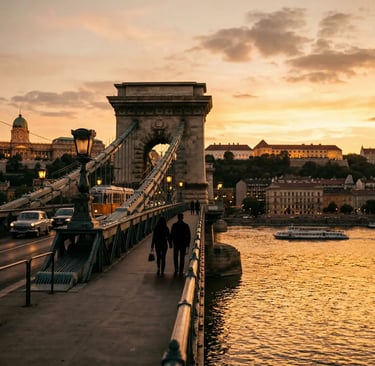
Budapest is a city built for emotional impact, not checklist tourism. The Chain Bridge at golden hour. The thermal baths carved into Ottoman architecture. The ruin bars hidden inside crumbling courtyards. These aren't sights. They're state changes. Each one shifts your neurological baseline in a way that photographs cannot capture and TripAdvisor cannot rank.
One focused, well-sequenced day in Budapest delivers more memorable encoding than three scattered days anywhere else in Europe. The research on memory consolidation is clear: novelty plus emotion plus movement equals retention. Budapest manufactures all three simultaneously.
What Is the Best Way to Do 3 Countries in 1 Day in Europe?
The answer isn't a route. It's a system and building that system alone is where most travelers psychologically collapse.
This is where I need to be direct with you. The 3 countries 1 day Europe concept is extraordinarily seductive and extraordinarily punishing to execute independently. I've profiled the decision patterns of thousands of travelers, and the solo multi-country day trip follows a near-universal arc: confident planning, border confusion, missed connections, and a creeping sense that you're managing logistics instead of experiencing life.
Cognitive overload doesn't announce itself. It arrives quietly, somewhere between the second train transfer and the realization that you've spent 40 minutes researching bus schedules instead of standing on a riverbank in three countries at once.
The guided tour is not the lazy option. It is the neurologically intelligent option. When a structured experience — like those found through GetYourGuide Vienna removes the logistical burden entirely, your prefrontal cortex stops managing and starts absorbing. You stop surviving the day and start encoding it.
The Real Question You Should Be Asking
The behavioral question is never "Is this trip worth doing?" It's always "What is the cost of not doing it?"
You can leave Vienna having seen what everyone sees. Or you can follow the Danube through three countries, three distinct emotional textures, and one day that your brain will store in long-term memory rather than letting it dissolve into the blur of standard tourism.
The dopamine hit you're looking for isn't in another Viennese coffeehouse.
It's waiting at the next bend in the river.
Frequently Asked Questions About the Vienna–Bratislava–Budapest Day Trip
Is the Vienna to Bratislava to Budapest day trip actually doable in one day?
Yes and not only is it doable, it is arguably the single most efficient experience-per-hour itinerary available to any traveler in Central Europe. The geographic proximity of these three capitals is genuinely unusual by global standards. Vienna to Bratislava runs approximately 60 kilometers, making it the closest pair of national capitals on Earth. Budapest sits roughly 200 kilometers further east, fully reachable by fast river or rail connection. A well-structured guided departure from Vienna in the early morning allows you to absorb Bratislava's compact old town mid-morning, transition to Budapest by early afternoon, and experience the Hungarian capital at golden hour which is, behaviorally speaking, the exact emotional peak the day is designed to deliver.
What is included in a guided Bratislava tour from Vienna?
Most premium guided experiences booked through platforms like GetYourGuide Vienna include round-trip transportation from a central Vienna departure point, a licensed local guide fluent in the history and street-level culture of each city, and structured walking time in both Bratislava and Budapest's key districts. The critical differentiator between guided and self-organized is not the sights themselves it is the sequencing. A professional guide routes you through each city in a psychologically optimized order, front-loading the highest-impact moments and protecting your energy reserves for the second and third destinations. Hidden entrance fees, confusing border logistics, and transit gaps are absorbed entirely by the operator, leaving your cognitive bandwidth free for the actual experience.
How much does a 3 countries 1 day Europe tour cost from Vienna?
Guided day tours covering Vienna, Bratislava, and Budapest typically range between €79 and €149 per person depending on group size, transport class, and included meals. When measured against the alternative purchasing individual train tickets, city transport cards, entrance fees, and factoring the very real cost of mismanaged time the guided rate represents a significant net saving both financially and neurologically. Travelers who attempt the route independently frequently report spending comparable amounts while absorbing a fraction of the experience, precisely because logistical friction consumes the mental energy meant for exploration. The guided tour price is not a convenience fee. It is a cognitive performance investment with a measurable return in memory quality and trip satisfaction.
Why is Budapest considered the emotional highlight of the day trip?
Budapest operates at a sensory frequency that most European cities simply do not reach. The city is architecturally bipolar in the most thrilling way imperial grandeur on the Buda side, electric urban energy on the Pest side, and the Chain Bridge connecting them across a Danube wide enough to feel like a border between two worlds. From a behavioral profiling perspective, Budapest triggers what researchers identify as peak experience encoding: the convergence of physical beauty, cultural strangeness, and mild fatigue creates an emotional vulnerability that makes memories stick with unusual permanence. Arriving in Budapest after Bratislava after your brain has already been warmed up and disoriented once amplifies receptivity significantly. You are not just seeing Budapest. By that point in the day, you are genuinely open to it.
Connect
Join us for travel tips and destination insights.
© 2026. All rights reserved.
Affiliate disclaimer
This website contains affiliate links. If you purchase through these links, we may earn a commission at no extra cost to you.