
The Quiet Itinerary Barcelona's Wine Insiders Won't Post on Instagram
Discover the 2-day private wine tour from Barcelona through Penedès and Priorat that seasoned travelers quietly prefer. Bodega Torres, Juvé & Camps, Siurana Castle, and Gratallops an insider itinerary beyond the crowds.
DAY TRIPS
DestinationDiscover
6/3/20266 min read
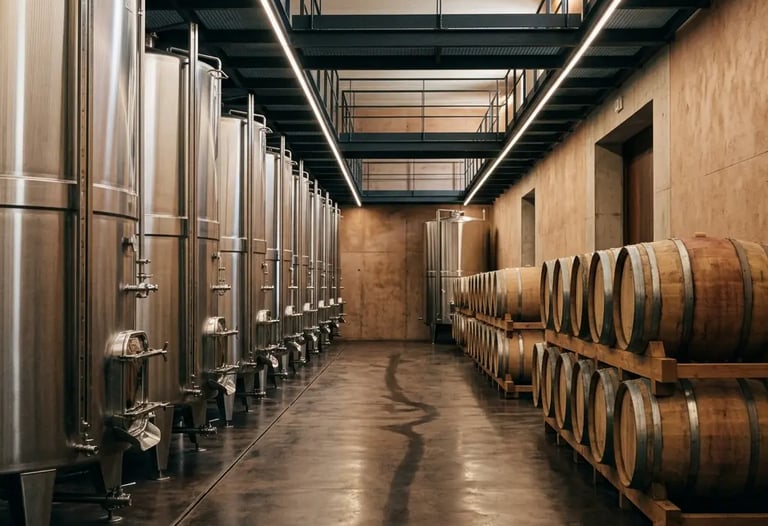
There is a particular kind of traveler who arrives in Barcelona, spends exactly one evening on Las Ramblas, and then disappears into the interior. Sommeliers know them. Private drivers know them. The tasting room managers at a handful of Catalan estates know them by first name.
What these travelers have figured out and what the algorithmic travel guides consistently miss is that the most remarkable 48 hours you can spend in Catalonia do not involve the city at all.
What the Sommeliers Actually Do on Their Days Off
A Master of Wine candidate I spoke with last autumn described it plainly. When colleagues visit Barcelona, she never takes them to a pintxos bar. She drives them to Penedès.
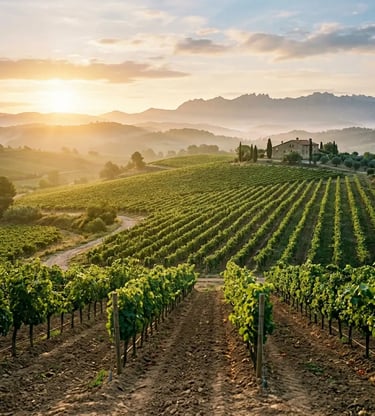
The drive is roughly one hour from central Barcelona, and it deposits you into a landscape that feels like it belongs to a different country entirely. Rolling vineyards. Stone farmhouses. Almost no tourists. This is where the serious wine education begins.
Two estates anchor the Penedès phase of this itinerary, and both were chosen for reasons that go beyond the wine itself.
Bodega Torres is not a quaint family winery. It is one of the most influential sustainability pioneers in European viticulture, with high-altitude vineyard recovery projects and carbon-capture programs that have quietly reshaped how the industry thinks about climate adaptation. The people who visit Torres tend to care about provenance, not just flavor.
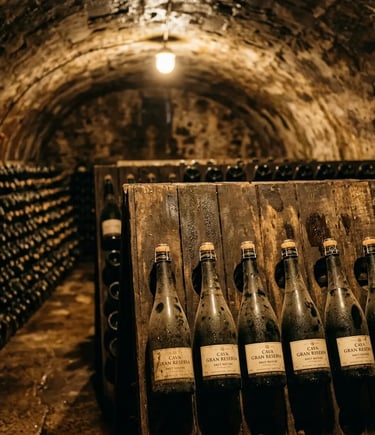
Juvé & Camps offers something different a deep, unhurried look at the traditional method of cava production, including extended bottle aging that most commercial producers abandoned decades ago. One guide there told a colleague of mine that visitors often arrive thinking cava is "Spanish Champagne" and leave understanding it is something else entirely.
The Historical Pivot Most Itineraries Miss
Here is where this route diverges from every conventional wine tour on the market.
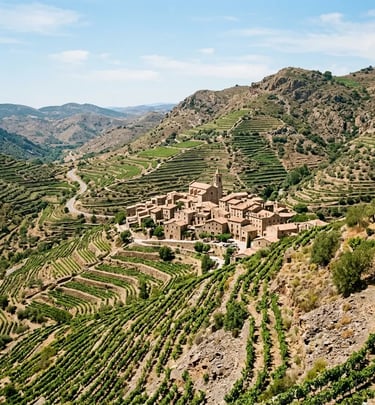
Rather than looping back to Barcelona after Penedès, the itinerary continues southeast for approximately 100 minutes into the mountains. The destination is Siurana a near-vertical medieval village perched on a limestone cliff above the Priorat valley.
The ruins of Siurana Castle carry a story that local guides tell with a kind of practiced gravity. According to legend, the last Saracen princess, facing capture during the Reconquista, rode her horse off the cliff rather than surrender. Whether the story is literal history or inherited myth, standing at that edge and looking out across the valley below changes the context of everything you taste the following day.
The night is spent at a rural hotel in Priorat no resort, no spa complex, just stone walls and silence.
Why Priorat Changes How You Think About Wine
The second day centers on Gratallops, the quiet epicenter of the Priorat Designation of Origin. The soil here is llicorella a dark, fractured slate that forces vine roots deep into the hillside and produces wines of startling concentration.
Bodega Perinet, just outside Gratallops, has become a reference point for visitors who care about architecture as much as winemaking. The building itself is a study in how modern design can be set into a mountain landscape without dominating it. The wines reflect the same philosophy: structured, restrained, and deeply specific to this terrain.
A traditional Catalan lunch closes the experience before the 110-minute drive back to Barcelona.
Why This Particular Route Works
The travelers who gravitate toward this itinerary share a few common traits. They have already visited well-known wine regions. They are skeptical of group tours. And they have learned, usually through experience, that the difference between a forgettable trip and a formative one often comes down to logistics and curation.
The trust signals matter here:
Private transport throughout no bus schedules, no rushed tastings, no competing with 40 strangers for the guide's attention
Professional expert guides with deep local knowledge of Catalan viticulture, history, and geology
A deliberate two-day pace that treats wine as culture, not content
A wine importer based in London put it to me simply after completing this route last spring: "I have done Burgundy, Barossa, Napa, Douro. This was the first time I felt like I was being shown something that had not yet been packaged for consumption."
That observation stays with me. The best travel experiences are not discoveries you make — they are introductions you receive from people who already know the terrain.
This is one of them.
Frequently Asked Questions About the Barcelona to Penedès and Priorat Wine Itinerary
Why do experienced travelers choose a private 2-day wine tour from Barcelona instead of a standard day trip?
The difference comes down to depth versus surface coverage. A single-day group tour from Barcelona typically visits one region, rushes through two tastings, and returns you to the city before you have had time to absorb anything meaningful. The 2-day private format allows the itinerary to cross two entirely distinct wine regions — Penedès and Priorat — each with its own grape varieties, soil profiles, and winemaking philosophies.
Private transport also removes the logistical compromises that define group experiences. There is no fixed departure clock forcing you out of a cellar mid-conversation. The route between Penedès and the Priorat highlands passes through landscapes that deserve unhurried stops, and a private vehicle with an expert guide makes those stops possible rather than theoretical.
Perhaps most importantly, the overnight stay in rural Priorat transforms the trip from a wine tasting into an immersion. Travelers who have visited Burgundy, Tuscany, or the Douro consistently report that the pacing of this itinerary — not the number of wineries visited — is what makes it memorable.
What makes the Priorat wine region and its llicorella soil significant for wine lovers?
Priorat holds one of only two DOQ (Denominació d'Origen Qualificada) classifications in all of Spain, a distinction it shares only with Rioja. That regulatory status reflects a winemaking tradition and terroir profile that the Spanish wine establishment considers exceptional. The region is small, steep, and intensely concentrated in both geography and output.
The defining geological feature is llicorella — a dark, fractured slate soil that breaks into thin, reflective layers across the hillsides around Gratallops. Vine roots must push deep through these fractures to find water, which naturally limits yields and produces grapes of unusual concentration. The wines that emerge from llicorella tend to carry a mineral signature that even casual tasters notice without prompting.
Estates like Bodega Perinet have built their entire identity around this soil. The architecture of the winery itself mirrors the terrain — modern lines set into the mountainside rather than imposed upon it. For visitors who care about the relationship between place and flavor, Priorat offers one of the most legible examples in European viticulture.
Who is the Penedès to Priorat wine route best suited for?
This itinerary tends to attract travelers who have already completed the more familiar wine circuits. They have done Napa, they have visited Bordeaux or the Barossa Valley, and they are looking for something that has not yet been optimized for mass consumption. The route rewards curiosity and a tolerance for quiet rather than spectacle.
Couples and small groups benefit the most from the private format. The pacing allows for genuine conversation with winemakers, unhurried lunches built around seasonal Catalan cuisine, and the kind of spontaneous detours — a viewpoint above the Priorat valley, an unscheduled stop at a village cooperative — that only happen when a knowledgeable guide is driving and the schedule belongs to you.
It is also well suited for professionals in the wine and hospitality industry who want to understand Catalan viticulture beyond the cava stereotype. The combination of Bodega Torres (sustainability and innovation at scale), Juvé & Camps (traditional method cava with extended aging), and the Priorat artisan estates creates a complete picture of what this corner of Spain is actually producing.
What is the story behind Siurana Castle and why is it included in a wine tour itinerary?
Siurana Castle sits on a limestone cliff above the Priorat valley and was the last Moorish stronghold in Catalonia to fall during the Christian Reconquista. According to local legend, the final Saracen princess — rather than accept capture — rode her horse off the cliff edge. The hoofprint said to be marked into the rock at the precipice is still pointed out by guides today, whether one takes the story as history or inherited myth.
The inclusion of Siurana is deliberate and strategic within the itinerary. It provides a historical and emotional pivot between the two wine regions. After a morning spent in the orderly, rolling vineyards of Penedès, arriving at this near-vertical medieval village resets expectations entirely. The landscape shifts from gentle agriculture to dramatic mountain terrain, preparing visitors for the very different character of Priorat wines.
There is also a practical benefit. The 100-minute drive from Penedès to Siurana passes through some of the most striking scenery in inland Catalonia. By the time you stand at the castle ruins and look out across the valley where you will spend the following day tasting wine, the geography of what you are about to drink becomes visible and tangible in a way that no tasting note can replicate.
Connect
Join us for travel tips and destination insights.
© 2026. All rights reserved.
Affiliate disclaimer
This website contains affiliate links. If you purchase through these links, we may earn a commission at no extra cost to you.