
The Definitive Milos Circuit: A Tactical Briefing on Cycladic Navigation by Private Luxury Cruise
Discover the definitive private luxury cruise in Milos, Greece. Explore Kleftiko, Sarakiniko, Poliegos, and Sykia Cave aboard a Saxdor 320 speedboat with weather-adapted routing and Jeep Wrangler transfers.
DAY TRIPS
DestinationDiscover
5/3/20265 min read
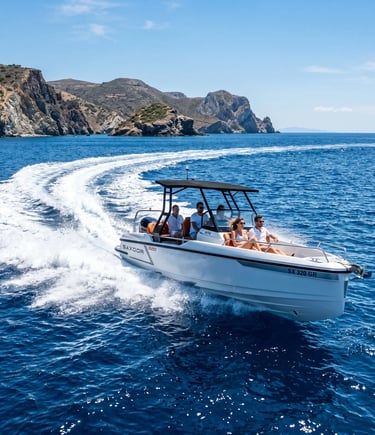
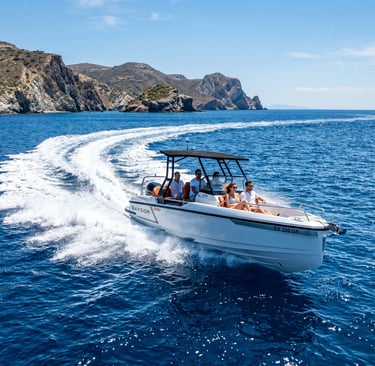
Every nautical mile around Milos tells you something. The volcanic caldera dictates the rules. The Meltemi wind enforces them. A private luxury cruise in Milos, Greece, is not a vacation activity. It is a controlled operation across one of the most geologically violent archipelagos in the Aegean Sea, and executing it at the highest level demands a vessel, a captain, and a routing protocol that leave zero margin for improvisation.
The standard circuit departs from Adamas port at 09:00 and covers approximately 45 nautical miles across an eight-hour itinerary. The route threads through three islands Milos, Kimolos, and the uninhabited wildlife sanctuary of Poliegos before returning to port. That triangle contains the highest concentration of inaccessible sea caves, volcanic formations, and protected marine zones in the entire Cycladic chain. No road reaches these sites. No ferry stops here. The only access is by sea, and the quality of that access is determined entirely by what you are standing on.
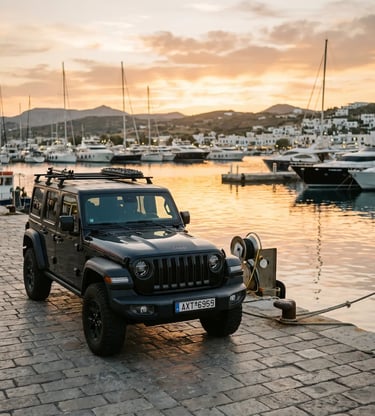
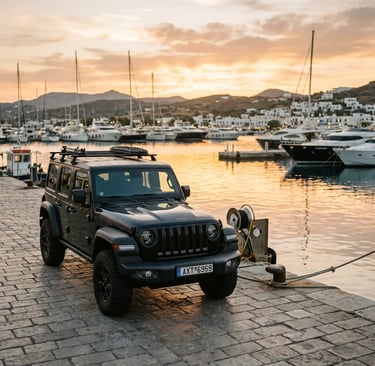
The vessel is a Saxdor 320 GTC, a luxury open-space speedboat built for offshore dominance. Twin 300-horsepower Mercury outboard engines deliver a cruising speed of 50 knots. That number is not aesthetic. It is operational. It means the boat covers the Milos-to-Poliegos crossing in under twelve minutes, compressing transit time and expanding the hours available at each anchor point. The hull design handles open-sea chop with a deep-V entry that absorbs swells other day-cruise boats cannot manage. Every guest boards via premium Jeep Wrangler port transfers from their accommodation directly to the marina, eliminating the chaos of public dock logistics before the day begins.
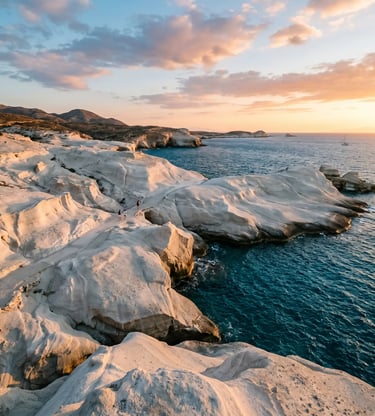
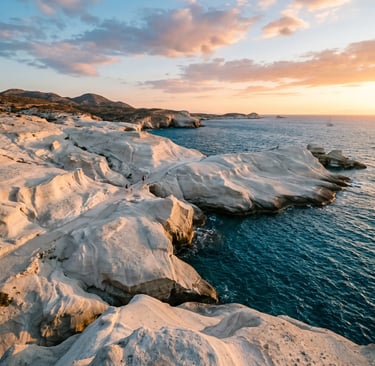
The North Milos route the default in calm conditions opens with Sarakiniko, the lunar white volcanic rock formation on the island's northern shore. The stone has been sculpted by wind and wave erosion into smooth, alien corridors that drop directly into transparent water. From Sarakiniko, the route pushes northwest to Cape Vani, the remote iron-ore headland where rust-colored cliffs meet deep blue open water. This is the least-visited coastline on Milos, and the snorkeling visibility regularly exceeds twenty meters.
The next waypoint is Kimolos, the quiet neighbor island, where the boat anchors at Prassa beach. From there, the route cuts south to Poliegos, a protected, uninhabited island with no permanent structures and no public access permits for large groups. The water surrounding Poliegos registers a transparency index among the highest in the Mediterranean.
On the return leg, the boat enters the southwest coast of Milos and reaches Kleftiko, the iconic pirate cove system. These collapsed volcanic rock arches and tunnels once served as hiding points for Aegean pirates, and they remain accessible only by sea. The captain navigates the boat directly through the narrow arch passages into sheltered turquoise pools. Adjacent to Kleftiko, the Sykia Cave presents a collapsed sea cavern open to the sky, where light enters through the fractured dome above and illuminates the water below in shifting emerald tones.
Here is where operational expertise separates a competent operator from an amateur. When strong northern Meltemi winds exceed fifteen knots a frequent summer condition in the Cyclades the North Milos coastline becomes exposed and uncomfortable. A qualified captain does not cancel. A qualified captain reroutes. The South Milos route reverses the itinerary, beginning with Kleftiko and Sykia Cave in the sheltered southern lee, then assessing conditions before committing to the exposed northern waypoints. This weather-adapted routing protocol guarantees that guests experience the highest-value sites regardless of wind direction.
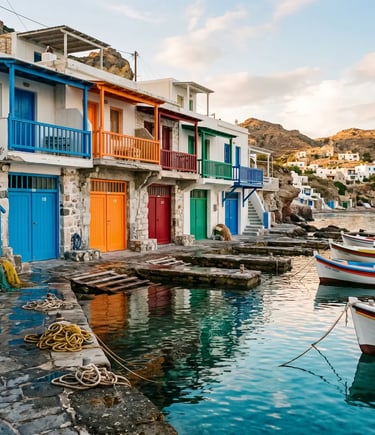
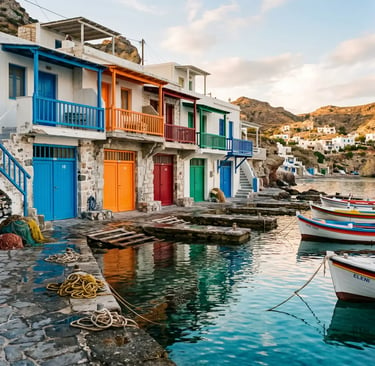
Before departure or after return, the cultural layer of Milos demands a ground-level stop at Klima village. The Syrmata traditional fishermen's boathouses built directly into the rock at water level line the narrow harbor in rows of vivid, mismatched color. Each door is painted a different shade: cobalt blue, cadmium orange, oxide red. These are not decorative choices. The colors historically allowed fishermen to identify their own storage unit from the water at distance. Above Klima, the abandoned sulfur mines at Theorichio stand as industrial relics of the island's volcanic mineral wealth, their crumbling yellow-streaked structures offering a stark visual counterpoint to the polished tourism below.
This is not a boat tour. It is a full-spectrum tactical engagement with the most complex volcanic coastline in Greece, executed aboard a vessel engineered for speed, comfort, and access, commanded by captains who read the wind before it arrives.
Frequently Asked Questions About Private Luxury Cruises in Milos
What is the route of a private luxury cruise around Milos, Greece?
The standard circuit covers approximately 45 nautical miles across an eight-hour itinerary departing from Adamas port at 09:00. The route connects three islands Milos, Kimolos, and the uninhabited sanctuary of Poliegos hitting every major coastal landmark inaccessible by road.
Key waypoints on the North Milos route include Sarakiniko, Cape Vani, Kimolos, Poliegos, Kleftiko, and Sykia Cave. Each stop is selected for geological significance, water clarity, and exclusivity. No public ferry or land vehicle reaches these sites.
The return leg traces the southwest volcanic coastline, passing through the collapsed arch system at Kleftiko and the open-dome cavern of Sykia Cave before re-entering Adamas harbor. The entire circuit is designed to maximize time at anchor and minimize redundant transit.
What type of boat is used for the Milos luxury cruise?
The vessel is a Saxdor 320 GTC, a luxury open-space speedboat purpose-built for offshore conditions in the Aegean Sea. Twin 300-horsepower Mercury outboard engines produce a cruising speed of 50 knots, making it one of the fastest private charter options in the Cyclades.
The deep-V hull geometry absorbs open-sea chop that forces smaller day-cruise boats to slow down or turn back. The open deck layout provides unobstructed 360-degree visibility for photography, swimming access, and onboard dining without the cramped cabin design of traditional sailing charters.
Every booking includes premium Jeep Wrangler port transfers from accommodation to marina, removing the friction of public transportation and ensuring the experience begins the moment you leave your hotel door.
What happens if the wind is too strong during the cruise?
Strong northern Meltemi winds are a routine summer condition in the Cyclades, frequently exceeding fifteen knots between June and September. An unqualified operator cancels the trip. A qualified captain activates the South Milos route and reroutes the entire itinerary.
The South Milos route reverses the default sequence, beginning with Kleftiko and Sykia Cave on the sheltered southern lee side of the island. These high-value sites sit in the wind shadow of the volcanic landmass, providing calm water and full access even during aggressive Meltemi episodes.
After completing the southern waypoints, the captain reassesses real-time conditions before committing to exposed northern stops like Sarakiniko and Cape Vani. This weather-adapted routing protocol guarantees that no guest loses access to the core experience due to wind.
What cultural landmarks can be visited before or after the cruise?
Klima village sits minutes from Adamas port and contains the most photographed architectural feature on Milos: the Syrmata. These traditional fishermen's boathouses are carved directly into the rock at water level, with each door painted a distinct color cobalt blue, cadmium orange, oxide red originally used for identification from the sea.
Above Klima, the abandoned sulfur mines at Theorichio expose the island's volcanic industrial past. Crumbling yellow-streaked extraction structures stand against the hillside, offering a raw visual contrast to the curated tourism infrastructure found in the main villages.
Both sites require less than ninety minutes to explore on foot and provide essential geological and cultural context for the coastline observed from the water. They transform the cruise from a scenic boat ride into a complete intelligence briefing on Milos.
Connect
Join us for travel tips and destination insights.
© 2026. All rights reserved.
Affiliate disclaimer
This website contains affiliate links. If you purchase through these links, we may earn a commission at no extra cost to you.