
Declassified: The Deep Behavioral Profile of the Primitivo Grape
Uncover the classified history of the Primitivo grape from its Croatian origins as Crljenak Kaštelanski and ancient Messapian cultivation in Puglia to its DNA link with Zinfandel. Discover why the Bari Primitivo wine tasting at Liberrima is the ultimate way to experience 3,000 years of Apulian wine history.
DAY TRIPS
DestinationDiscover
5/12/20266 min read
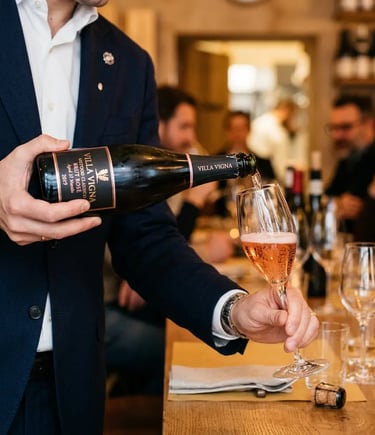
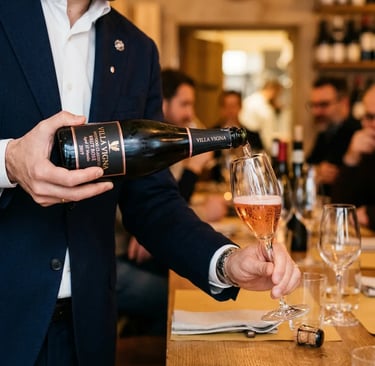
Every grape carries a history. Most carry myths. The Primitivo carries a survival dossier spanning three millennia, two continents, and a genetic identity crisis that deceived the entire wine world for over a century. I am going to walk you through the evidence, chronologically, the way an analyst reconstructs a subject's life from the earliest known data point forward. Pay close attention. The details matter.
The Ancient Operatives: Messapians, Greeks, and the Land Called Enotria
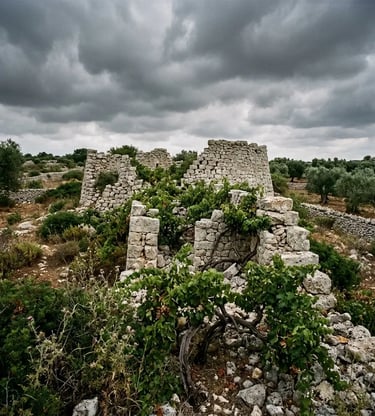
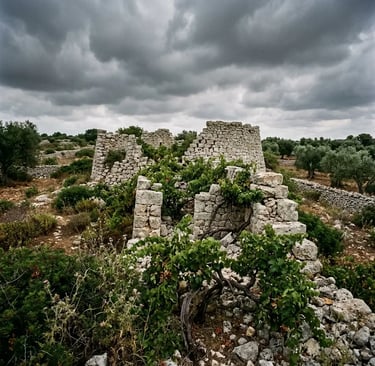
Before Rome consolidated power, the Messapians controlled the heel of the Italian boot. These pre-Roman tribes cultivated vines across what we now call Puglia with a discipline that most modern viticulturists would envy. The Messapians wine Puglia connection represents one of the oldest documented relationships between a civilization and structured grape cultivation in all of Western Europe.
Greek colonists recognized this potential immediately. They named the entire southern Italian peninsula Enotria "the land of wine." This designation carried weight. The Greeks did not assign names carelessly. They identified a region whose soil composition, microclimate, and existing viticultural infrastructure already demonstrated elite-level capacity. The Apulian wine history you think began in the modern era actually started here, roughly 1,000 BCE, when Greek traders grafted their techniques onto Messapian rootstock and created a hybrid agricultural system of extraordinary resilience.
The Genetic File: Primitivo Origin Crljenak Kaštelanski
In 2001, Dr. Carole Meredith at UC Davis cracked the case wide open. DNA profiling confirmed what no ampelographer had managed to prove through visual analysis alone: Primitivo and Zinfandel share identical genetic material. Both trace their lineage directly to a Croatian grape called Crljenak Kaštelanski, a variety so obscure that researchers discovered only nine surviving vines clinging to a garden wall near Split, Croatia.
This Primitivo origin Crljenak Kaštelanski connection rewrote the behavioral profile of both grapes overnight. Zinfandel, America's self-proclaimed "heritage grape," turned out to be an immigrant. And Primitivo, long dismissed by international critics as a rustic southern Italian workhorse, suddenly held a passport proving aristocratic Balkan lineage. The grape had operated under an alias for centuries. Classic evasion behavior.
The 18th-Century Isolation Event: Canon Indellicati and the "Primo" Vine
In the 1700s, a Catholic priest named Canon Francesco Filippo Indellicati identified a vine near Gioia del Colle that ripened conspicuously earlier than its neighbors. He isolated it, named it "Primo" first and began cultivating it with deliberate intent. This single act of agricultural selection gave the grape its modern identity and anchored its cultivation firmly in the Manduria wine region and the broader Puglia territory.
Indellicati functioned as an unwitting behavioral profiler. He observed a pattern early ripening isolated the variable, and built an entire cultivation protocol around that single dominant trait. The grape rewarded his precision. Within decades, Primitivo dominated Apulian vineyards with a concentration of flavor, sugar density, and tannic structure that no other local variety could match.
The Final Puzzle Piece: Bari Primitivo GetYourGuide
You now hold the complete dossier. You understand the origins, the genetic deception, the survival mechanisms. But reading a profile and experiencing a subject occupy two entirely different cognitive categories. You must close the loop.
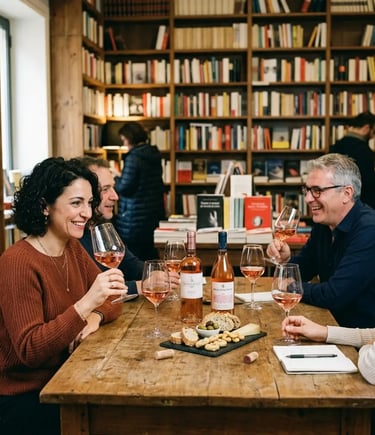
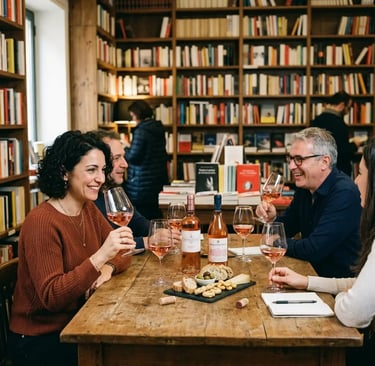
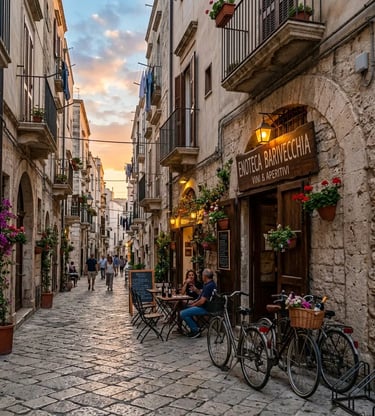
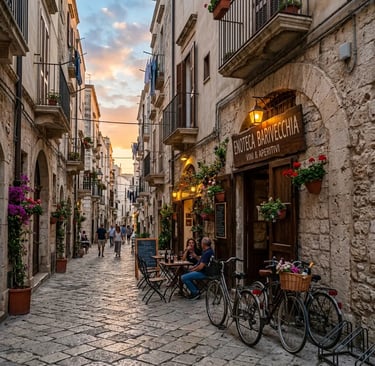
The Liberrima experience in Bari delivers exactly this closure. Hosted inside a functioning bookstore itself a deliberate environmental cue designed to prime analytical thinking this tasting pairs the full Primitivo behavioral spectrum with 2 types of charcuterie and 2 cheeses, each selected to isolate specific flavor responses. The experience costs approximately $63–$70, a negligible investment against the depth of intelligence you acquire.
Here is your non-negotiable requirement: taste the 32-month aged Metodo Classico Brut Rosé. This is not a casual beverage selection. This particular expression forces the grape to reveal behaviors that standard vinification conceals secondary fermentation strips away the obvious fruit-forward camouflage and exposes minerality, yeast-driven complexity, and the ancient terroir fingerprint that connects directly back to those Messapian hillsides. Tasting it constitutes the only method to fully grasp the Apulian behavioral profile encoded in this grape's DNA.
Search Bari Primitivo GetYourGuide. Book the Liberrima session. Arrive with the chronology in your mind. Let the grape confirm every data point on your tongue.
The dossier closes when you do.
Frequently Asked Questions About Primitivo Wine History and Bari Tasting
What is the true origin of the Primitivo grape?
The Primitivo grape traces its genetic roots directly to Croatia, where researchers identified it as Crljenak Kaštelanski. Dr. Carole Meredith at UC Davis confirmed this lineage through DNA profiling in 2001, establishing an irrefutable connection between Primitivo, Zinfandel, and this rare Croatian ancestor. Only nine surviving vines of Crljenak Kaštelanski existed at the time of discovery near Split, Croatia.
The grape arrived in southern Italy centuries ago, where the ancient Messapians and Greek colonists cultivated it across the region they called Enotria the land of wine. This deep Apulian wine history predates Roman civilization and positions Puglia as one of the oldest structured winemaking territories in all of Europe.
Canon Francesco Filippo Indellicati formally isolated the grape in the 18th century near Gioia del Colle. He named it "Primo" for its early ripening behavior, and this single act of selection anchored Primitivo permanently within the Manduria wine region and the broader Puglia landscape.
Are Primitivo and Zinfandel the same grape?
Yes. DNA analysis proved that Primitivo and Zinfandel share identical genetic material. Both descend from the Croatian variety Crljenak Kaštelanski, making them the same grape cultivated under different names on different continents. This discovery shocked the wine world and forced a complete rewrite of both grapes' accepted histories.
However, terroir creates behavioral divergence. Primitivo grown in the iron-rich, limestone soils of Puglia produces a distinctly different flavor profile than Zinfandel cultivated in California's warmer inland valleys. The Apulian expression tends toward darker fruit, higher natural sugar concentration, and a more mineral-driven tannic structure shaped by millennia of adaptation.
Understanding this genetic identity eliminates confusion and allows tasters to appreciate how environment sculpts a single organism into two seemingly different entities. The grape operates identically at the DNA level, but its regional expression reveals the profound influence of soil, climate, and human cultivation decisions accumulated over centuries.
What does the Bari Primitivo wine tasting at Liberrima include?
The Liberrima experience in Bari delivers a curated tasting session inside a functioning bookstore, creating an environment designed to sharpen analytical engagement. The session pairs multiple Primitivo expressions with 2 types of charcuterie and 2 cheeses, each selected to isolate and highlight specific flavor dimensions of the grape.
The standout pour is the 32-month aged Metodo Classico Brut Rosé, a secondary-fermentation expression that strips away the grape's typical fruit-forward profile and exposes deep minerality and yeast-driven complexity. This particular wine connects the taster directly to the ancient terroir fingerprint of the Puglia region in a way that standard vinification cannot achieve.
The full experience costs approximately $63–$70 per person. You can find and book this tasting by searching Bari Primitivo GetYourGuide, which lists the session with full details, availability, and guest reviews.
Why is Puglia considered the heartland of Primitivo production?
Puglia earned this status through sheer geological and historical advantage. The Messapians established structured viticulture in this region over 3,000 years ago, and Greek colonists amplified that foundation by introducing advanced winemaking techniques. No other Italian region carries this depth of continuous viticultural heritage tied specifically to Primitivo's ancestral varieties.
The Manduria wine region in particular offers ideal growing conditions — extreme sun exposure, minimal rainfall during ripening, and ancient soils rich in iron oxide and limestone. These environmental factors push Primitivo toward maximum phenolic concentration and sugar density, producing wines of exceptional body and aromatic complexity that no other terroir replicates with the same intensity.
Modern Puglia now produces more wine by volume than any other Italian region, and Primitivo stands as its flagship variety. The combination of ancient rootstock heritage, optimized terroir, and generations of refined cultivation knowledge makes Puglia not merely a production center but the definitive behavioral homeland of this grape.
Connect
Join us for travel tips and destination insights.
© 2026. All rights reserved.
Affiliate disclaimer
This website contains affiliate links. If you purchase through these links, we may earn a commission at no extra cost to you.