
Why Skipping the Penedès and Priorat Wine Tour From Barcelona Is the Most Expensive Mistake You Will Make in Spain
This 2-day Penedès and Priorat wine tour from Barcelona includes Bodega Torres, Juvé & Camps cava, Siurana Castle, Gratallops slate terraces, and a traditional Catalan lunch at Bodega Perinet.
DAY TRIPS
DestinationDiscover
6/3/20266 min read
You have probably already mapped out La Sagrada Família, reserved a table at a tapas bar in El Born, and bookmarked the Gothic Quarter. You have done what most travelers do. And that is precisely the problem.
There is a particular kind of regret that only surfaces after a trip ends, the slow realization that you spent thousands of dollars reaching one of the most storied wine regions on earth and never once set foot on the soil that defines it. Catalonia is not just Barcelona. The ancient terroir of Penedès and Priorat has shaped the cultural identity of this land for centuries, and walking through Barcelona without tasting what grows an hour beyond its borders is like touring the Louvre with your eyes half shut. You saw the frame but missed the painting.
This is not a dramatic claim. It is a structural flaw in how most people plan their Barcelona itineraries. And the 2-day Penedès and Priorat wine tour exists specifically to correct it.
Day One. Penedès, Cava, and a 1,000-Year-Old Fortress
The tour begins with a 1-hour drive from Barcelona into the rolling green heart of the Penedès wine region. The first stop is Bodega Torres, one of Spain's most recognized wineries and a global sustainability pioneer in viticulture. This is not a casual tasting room visit. Torres has led the conversation on carbon-neutral winemaking for decades, and the guided experience reflects that depth.
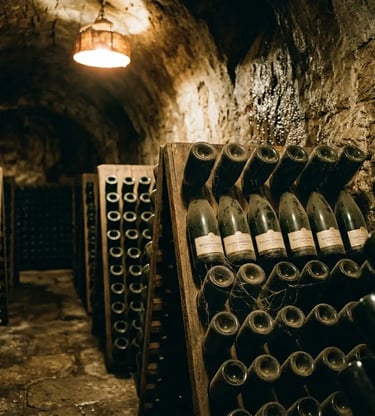
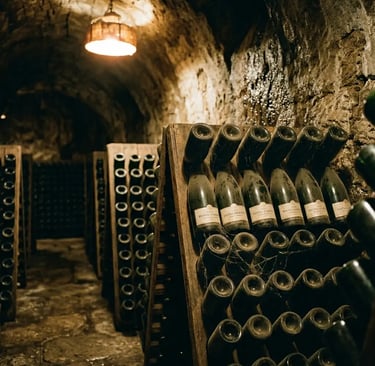
From there, the itinerary moves to Juvé & Camps, a family-owned estate producing premium cava using the traditional second fermentation method, the same technique that gives Champagne its fine, persistent bubbles. What separates this from a surface-level winery tour is the precision of access. These are not open-door, walk-in venues. The tour secures entry that independent travelers rarely arrange on their own.
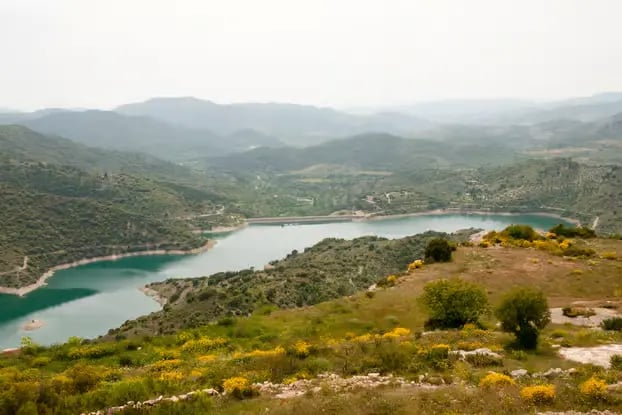
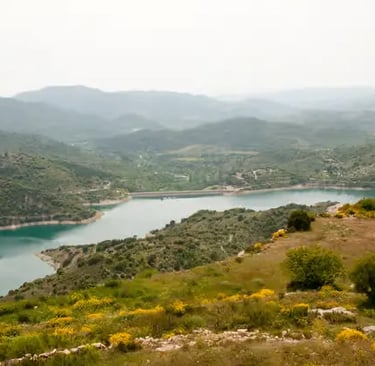
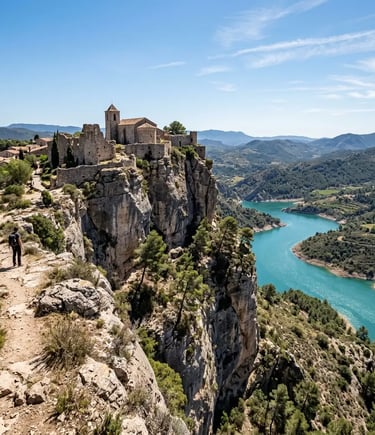
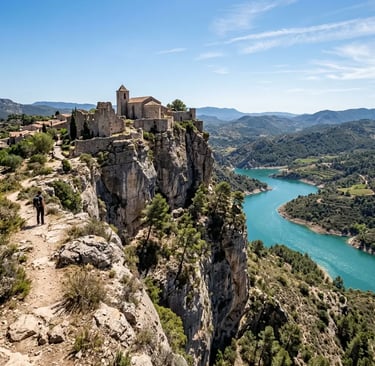
The afternoon shifts from wine to history. A 100-minute drive south brings you to Siurana Castle, a medieval fortress perched on a sheer cliff face overlooking a turquoise reservoir. This was the last Moorish stronghold in Catalonia, surrendered in 1153, and the panoramic views from its edge are among the most dramatic in all of Spain. The day closes with an overnight stay in the Priorat wine region, where the only thing between your room and the nearest vineyard is a short walk through evening air that smells like rosemary and warm slate.
Day Two. Priorat Slate, Gratallops, and a Farewell Lunch You Will Not Forget
Morning begins in Gratallops, the spiritual center of the Priorat Qualified Designation of Origin, one of only two DOCa classifications in all of Spain. Here, the tour moves on foot across the llicorella slate terraces, the crumbled, mineral-rich soil that gives Priorat wines their unmistakable depth and dark-fruit intensity. Walking these terraces changes the way you understand wine. You stop thinking of it as a beverage and begin seeing it as geology in a glass.
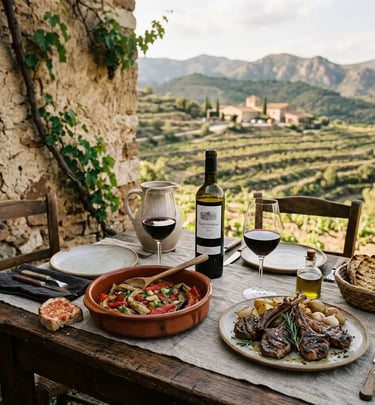
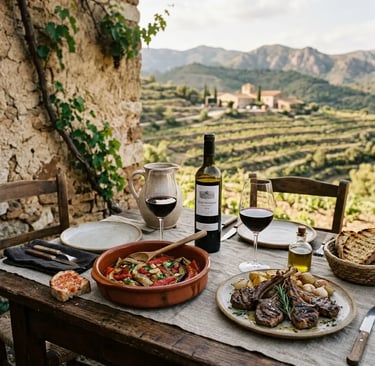
The final tasting takes place at Bodega Perinet, a boutique estate producing small-lot wines from old Garnacha and Cariñena vines. The visit is followed by a traditional Catalan lunch featuring escalivada, the slow-roasted pepper and eggplant dish that defines the regional table, alongside grilled lamb seasoned with local herbs. This is the kind of meal that turns into a memory you reference for years.
The 110-minute return drive to Barcelona closes the loop, but the shift in perspective stays open. You will walk through the city that evening seeing Catalonia differently, not as a postcard of modernisme architecture, but as a living culture rooted in land, vine, and deep time.
What Makes This Tour the Rational Choice
Most travelers hesitate because of logistics or commitment. This tour removes both obstacles. Free cancellation is available up to 24 hours before departure, and a reserve now, pay later option means you lock in your spot without immediate cost. The friction is gone. The only thing left is the decision.
And here is the uncomfortable truth that makes that decision simple. You are already going to Barcelona. The flight is booked. The hotel is reserved. The money is spent. The only question left is whether you will experience the full depth of what Catalonia actually is, or return home with the quiet awareness that you came close to something extraordinary and chose not to reach for it.
The dissonance does not come from going on this tour. It comes from knowing it existed and deciding it could wait.
Frequently Asked Questions About the 2-Day Penedès and Priorat Wine Tour From Barcelona
What does the 2-day Penedès and Priorat wine tour from Barcelona include?
The tour covers two of Catalonia's most significant wine regions across a carefully structured two-day itinerary. Day one begins with a 1-hour drive from Barcelona to Penedès, where you visit Bodega Torres, a globally recognized sustainability pioneer, followed by a premium cava tasting at Juvé & Camps, known for its traditional second fermentation method. The afternoon includes a 100-minute scenic drive to Siurana Castle and an overnight stay in the heart of Priorat.
Day two focuses entirely on the Priorat Qualified Designation of Origin. You walk the llicorella slate terraces in Gratallops on foot, experience a final tasting at Bodega Perinet, and sit down for a traditional Catalan lunch featuring escalivada and grilled lamb before the 110-minute return to Barcelona. Every stop on the itinerary is pre-arranged and included in the tour price.
This is not a surface-level bus tour with brief photo stops. The structure gives you sustained, guided access to estates and landscapes that most independent travelers either cannot reach or do not know to prioritize, which is what separates this experience from a standard Barcelona day trip.
Is the Penedès and Priorat wine tour suitable for people who are not wine experts?
You do not need any prior wine knowledge to get full value from this tour. The guides contextualize every tasting within the history, geography, and culture of the region, so the experience builds understanding naturally as you move through it. Walking on the llicorella slate in Gratallops, for example, makes the mineral character of Priorat wine something you can see and feel before you ever taste it in a glass.
The structure is designed to be sensory and narrative-driven rather than technical. You learn through place, not vocabulary. Torres and Juvé & Camps both offer guided walkthroughs that ground every tasting in the winemaking process itself, from vine to bottle, so you leave with an intuitive sense of what makes these wines distinctive without needing a sommelier background.
If anything, this tour tends to be more rewarding for curious travelers than for advanced wine professionals. The focus on terroir, landscape, and Catalan food culture means the experience functions as a cultural immersion, not a certification course.
What is the cancellation and booking policy for this wine tour?
The tour offers free cancellation up to 24 hours before the scheduled departure, which means you can secure your dates without financial risk. There is also a reserve now and pay later option, allowing you to lock in availability immediately and defer payment until closer to your travel window.
This flexibility matters more than most travelers realize at the planning stage. Wine tours with exclusive estate access, particularly those including Bodega Torres and Juvé & Camps, tend to fill weeks in advance during peak season between May and October. Booking early with the pay-later option protects your spot without requiring you to commit funds before the rest of your Barcelona itinerary is finalized.
There is no penalty for changing your mind within the cancellation window. The policy is structured to remove hesitation, which means the only real risk is waiting too long and finding your preferred dates are no longer available.
Why is Priorat considered one of Spain's most important wine regions?
Priorat holds one of only two Qualified Designation of Origin classifications in all of Spain, sharing that distinction solely with Rioja. This DOCa status reflects the strictest quality controls in Spanish winemaking and recognizes Priorat's unique terroir as irreplaceable. The llicorella slate soil, a crumbled mineral-rich substrate found almost nowhere else, gives the region's Garnacha and Cariñena wines their characteristic depth, dark-fruit intensity, and structured tannins.
The village of Gratallops sits at the center of this designation and serves as the focal point for the tour's second day. Walking the steep, terraced hillsides here is a fundamentally different experience from visiting a flat, industrialized vineyard. The vines grow in thin crevices between fractured slate, forcing roots deep into the rock and producing small yields with extraordinary concentration of flavor.
Priorat's reputation has grown steadily since the late 1980s, when a small group of pioneering winemakers revitalized the region after decades of rural depopulation. Today it is regarded internationally as one of Europe's most compelling fine wine origins, and tasting its wines where they are grown, on the terraces above Gratallops, is an experience that no Barcelona tasting room can replicate.
Connect
Join us for travel tips and destination insights.
© 2026. All rights reserved.
Affiliate disclaimer
This website contains affiliate links. If you purchase through these links, we may earn a commission at no extra cost to you.