
The Definitive Day Trip From Matera: Polignano a Mare, Alberobello, and Locorotondo in One Flawless Itinerary
Book a Matera day trip to Polignano a Mare, Alberobello, and Locorotondo with a private Apulia transfer. Explore UNESCO Trulli, dramatic cliffs, and whitewashed hilltop villages in one flawless itinerary.
DAY TRIPS
DestinationDiscover
5/31/20266 min read


Southern Italy rewards the prepared and punishes the improviser. A single day trip from Matera into the heart of Apulia delivers three of the region's most visually extraordinary destinations but only when the logistics are handled with precision from the first kilometer.
This is the route that seasoned travelers book before anything else on their Puglia itinerary. The journey begins in Matera's ancient Sassi district in Basilicata and crosses into Puglia, threading through UNESCO-protected stone villages, whitewashed hilltop towns, and cliff-carved coastline along the Adriatic. Every transition is timed, every stop is purposeful, and every moment of the day is accounted for.
Key Takeaways:
Book a Matera day trip to cover Polignano a Mare, Alberobello, and Locorotondo in a single, structured itinerary with an Apulia private transfer.
The Trulli of Alberobello are a UNESCO World Heritage Site featuring thousands of conical limestone dwellings found nowhere else on earth.
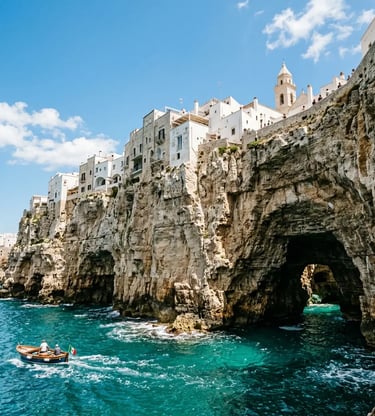
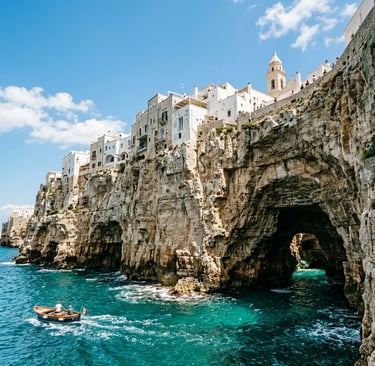
Polignano a Mare cliffs drop vertically into turquoise Adriatic waters, offering one of the most photographed coastlines in all of Italy.
A Locorotondo guided tour reveals the town's rare circular layout, pristine white architecture, and sweeping Valle d'Itria panoramas.
A private transfer eliminates the considerable stress of navigating narrow southern Italian roads, restricted traffic zones, and severely limited parking.
Why This Route Exists as a Single-Day Circuit
The geography of Puglia makes this three-stop itinerary not just possible but logical. Alberobello sits roughly 60 kilometers east of Matera, Locorotondo lies just 9 kilometers south, and Polignano a Mare occupies the Adriatic coast another 35 kilometers northeast. The triangular routing means zero backtracking.
Attempting this circuit independently introduces complications that most travelers underestimate until they are stuck in them. Restricted ZTL zones in each town center block rental vehicles without permits, parking areas fill before mid-morning in peak season, and GPS navigation regularly fails on the unmarked rural roads between destinations.
Alberobello: Walking Through a UNESCO Time Capsule
The Trulli of Alberobello are not a handful of quaint structures on a side street. Over 1,500 conical limestone dwellings blanket two hillside districts Rione Monti and Aia Piccola forming the densest concentration of prehistoric building technique still standing in Europe.
A knowledgeable guide navigates you past the tourist-saturated main road into the residential quarters where trulli function as actual homes. This is where the architecture shifts from spectacle to something deeply human, and where the best photographs exist with no crowds in frame.
Locorotondo: The White Circle Above the Valley
Locorotondo earns its name from its perfectly circular medieval plan, visible the moment you approach from the valley floor. The town's whitewashed facades and cummerse rooftops create a visual uniformity that no other hilltop village in the region replicates.
A Locorotondo guided tour positions you at the Belvedere terrace overlooking the Valle d'Itria, where trulli farmhouses dot the landscape between ancient olive groves and vineyards producing the town's acclaimed Verdeca white wine. This single viewpoint justifies the entire stop.
Polignano a Mare: Where Stone Meets Sea
The Polignano a Mare cliffs are not gentle seaside bluffs. They are sheer vertical limestone walls plunging 20 meters into crystalline Adriatic water, with the town's oldest buildings constructed directly into the rock face above.
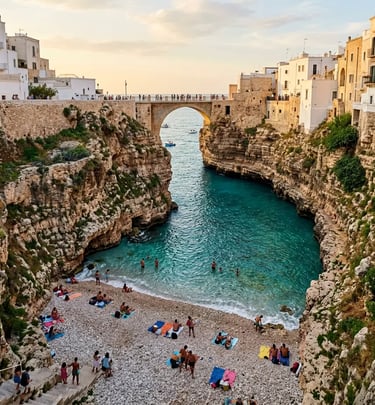
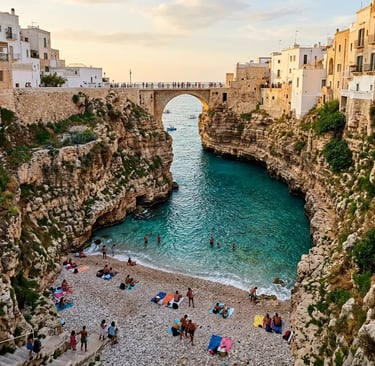
The historic center holds the Abbey of San Vito, ancient cave dwellings carved into the cliff base, and the iconic Lama Monachile beach framed between two towering rock walls. Every sight is walkable within minutes, but knowing the sequence and timing determines whether you experience it in solitude or shoulder-to-shoulder with bus tour crowds.
The Logistics That Make or Break the Day
Here is the reality that every travel forum confirms but few travelers act on in time. An Apulia private transfer with a local driver eliminates every variable ZTL access, parking, fuel, tolls, road confusion, and the exhaustion of navigating unfamiliar infrastructure after a full day of walking.
You do not book a Matera day trip like this to worry about logistics. You book it to be fully present at three destinations that most visitors only see one of, rushed, with half their energy spent on the drive.
Book the Route That Delivers All Three
The travelers who see Alberobello, Locorotondo, and Polignano a Mare in one day without stress are the travelers who secured their itinerary before arrival. This is not a journey that improves with improvisation. Confirm your departure from Matera, lock in your private transfer, and spend the day collecting experiences instead of solving problems.


Frequently Asked Questions About the Matera Day Trip to Polignano a Mare, Alberobello, and Locorotondo
How long does the full day trip from Matera to Polignano a Mare, Alberobello, and Locorotondo take?
The complete circuit typically requires between 8 and 10 hours depending on the time allocated at each destination. The driving segments between all three towns total approximately two hours when handled by a local driver familiar with the optimal routing sequence. This leaves a generous 6 to 8 hours of dedicated exploration time across the three stops.
Most professionally organized itineraries depart Matera in the early morning and return by late afternoon or early evening. The triangular geography of the route eliminates backtracking, which means every minute in the vehicle moves you forward to the next destination rather than retracing roads already covered. This efficient layout is precisely what makes the three-stop combination viable in a single day.
Travelers who book a Matera day trip with an Apulia private transfer gain the additional advantage of flexible pacing. Unlike rigid group bus tours locked into fixed schedules, a private transfer allows you to extend time at the Trulli of Alberobello if the architecture captivates you or linger at the Polignano a Mare cliffs during golden hour without watching a clock.
What makes the Trulli of Alberobello worth visiting on this itinerary?
The Trulli of Alberobello represent one of the most architecturally unique settlements on earth. These conical limestone dwellings, built entirely without mortar using a prehistoric dry-stone technique, exist in this concentration nowhere else in the world. UNESCO designated the Trulli district a World Heritage Site in 1996, recognizing both its cultural significance and the extraordinary preservation of over 1,500 individual structures.
Walking through the Rione Monti and Aia Piccola quarters reveals the difference between a tourist photo opportunity and genuine architectural immersion. The main commercial street offers souvenir shops housed inside trulli, but the residential lanes behind it expose the living reality of families still occupying these 14th-century structures. A guided visit ensures you reach these quieter zones where the atmosphere shifts from commercial to deeply authentic.
The trulli also serve as the visual anchor of the entire Valle d'Itria landscape visible later from Locorotondo. Understanding their construction and history at ground level in Alberobello transforms the panoramic view from Locorotondo's Belvedere terrace into something far more meaningful than a scenic overlook.
Is a Locorotondo guided tour necessary or can I explore independently?
Locorotondo's compact circular layout creates the illusion that independent exploration is sufficient. The town is small, walkable, and visually immediate from the moment you enter. However, the layered historical and cultural context embedded in its architecture, urban planning, and agricultural traditions is entirely invisible without expert narration guiding your attention.
A Locorotondo guided tour reveals details that no signage or travel app communicates. The town's distinctive cummerse rooftops a pointed gable design unique to this municipality carry specific structural reasoning tied to rainwater collection. The circular street plan itself was a medieval defensive strategy, and the whitewashed facades serve a functional cooling purpose beyond aesthetics. These layers transform a 30-minute photo walk into a 60-minute intellectual experience.
The Belvedere terrace viewpoint overlooking the Valle d'Itria is the single most rewarding panorama on the entire day trip. A guide positions you at the optimal vantage point and identifies the scattered trulli farmhouses, ancient olive groves, and Verdeca vineyards spreading across the valley floor below. Without this context, the view is beautiful but anonymous.
What should I know about the Polignano a Mare cliffs before visiting?
The Polignano a Mare cliffs are sheer vertical limestone formations dropping approximately 20 meters directly into the Adriatic Sea. Unlike gradual coastal slopes found elsewhere along the Italian shoreline, these cliffs create a dramatic wall of rock with the town's oldest medieval structures built directly into and onto the cliff edge. The visual impact is immediate and overwhelming from multiple vantage points within the historic center.
The most iconic viewpoint frames the Lama Monachile cove beach, a narrow strip of pebbled shoreline wedged between two towering cliff walls that form a natural corridor to the sea. Timing your arrival correctly determines whether you photograph this scene in relative solitude or compete with hundreds of visitors for position along the bridge railing above. Morning arrivals before 10 AM or late afternoon visits after 4 PM consistently deliver the best experience.
Beyond the cliffs, the historic center holds the Abbey of San Vito and a network of ancient cave dwellings carved directly into the rock base beneath the town. These grotto spaces, once inhabited by early coastal settlers, are accessible on foot within minutes of the main piazza. An organized Apulia private transfer ensures you arrive at the optimal window and navigate the town's one-way pedestrian flow in the correct sequence.
Connect
Join us for travel tips and destination insights.
© 2026. All rights reserved.
Affiliate disclaimer
This website contains affiliate links. If you purchase through these links, we may earn a commission at no extra cost to you.