
Mastering the Balkans: Why Every Serious Traveler Stops Improvising and Starts Executing
Discover why solo navigation through the Balkans is a tactical mistake. This 6-day, 5-country guided tour from Tirana handles every logistical and cultural complexity so you travel smarter, not harder.
DAY TRIPS
DestinationDiscover
3/18/20265 min read
Affiliate Disclosure
This article contains affiliate links. If you purchase through these links, I may earn a small commission at no extra cost to you. I only recommend products I genuinely believe offer strong performance, quality, and value for your ski and travel experience.
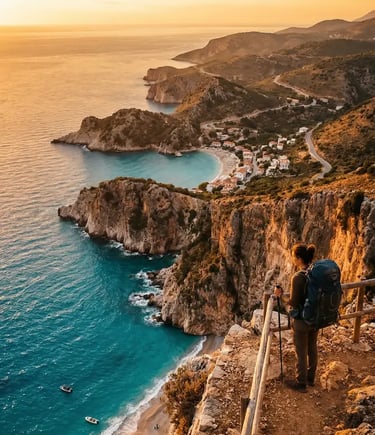
The Balkans don't punish the unprepared slowly. They do it immediately at the border crossing you didn't know required a specific entry stamp, in the city where your card won't work, on the road where Google Maps confidently sends you the wrong direction through three countries. This region is one of Europe's most strategically complex travel corridors, and most people walk into it with nothing but optimism and a hostel booking.
That's not a travel strategy. That's a liability.
The 6-day, 5-country GetYourGuide tour departing from Tirana is built differently. It's designed the way intelligent movement through high-friction environments should be designed with logistics handled, cultural context embedded, and decision fatigue eliminated before it starts.
Key Takeaways
Safe travel in the Balkans requires understanding informal border protocols, currency fragmentation, and regional trust dynamics that no travel blog fully maps
Multi-country movement across Albania, Kosovo, North Macedonia, Montenegro, and Bosnia & Herzegovina involves five separate bureaucratic systems coordination is not optional
Guided tours from Albania anchored in Tirana offer the only logical starting point for this specific corridor's geographic flow
Effortless multi-country itineraries don't happen by accident they're engineered through pre-negotiated logistics, vetted accommodation chains, and local ground knowledge
Attempting this route unguided is one of the most common and costly tactical errors a traveler can make in Southeast Europe
The Terrain You're Actually Navigating
Understand this clearly: the Balkans are not a monolith. They are a compression of distinct ethnic identities, contested histories, and economic systems that transition sharply sometimes within a single mountain range. Albania operates on the lek. Kosovo runs on euros despite not being an EU member. North Macedonia uses the denar. Montenegro also uses euros. Bosnia & Herzegovina operates on the convertible mark, pegged to the euro but exchanged nowhere conveniently.
That's five countries with four currencies, each with its own border temperament, each with unwritten social protocols that determine whether a local sees you as a respectful guest or an oblivious outsider. The traveler who hasn't done this before will spend the first two days absorbing friction that an experienced guide eliminates in the first two hours.
What Balkan Travel Logistics Actually Demand
The infrastructure gap between Western Europe and the Western Balkans is real and consequential. Bus schedules are inconsistent. Private transfers require local language negotiation. Border crossings between Kosovo and Serbia even traveled indirectly carry political sensitivities most travelers don't anticipate. Rural roads between Montenegro's interior and the Adriatic coast require knowledge of seasonal closures and local driving culture that GPS cannot provide.
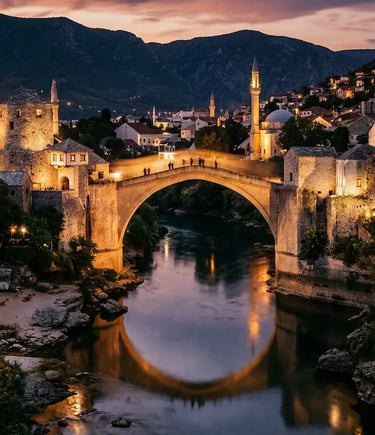
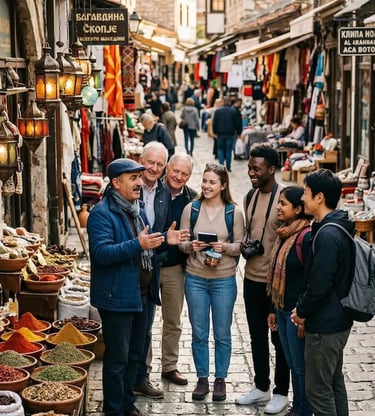
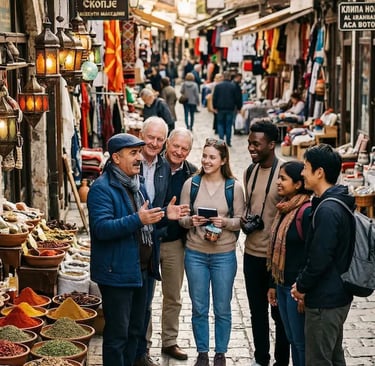
This is where the GetYourGuide tour earns its value immediately. Balkan travel logistics the actual moving parts are pre-solved. The routing from Tirana through Pristina, across Skopje, into Kotor, and through Mostar follows the corridor's natural geographic and cultural logic. Every transition is managed. Every entry point is anticipated.
You are not improvising. You are executing.
The Cultural Intelligence Layer
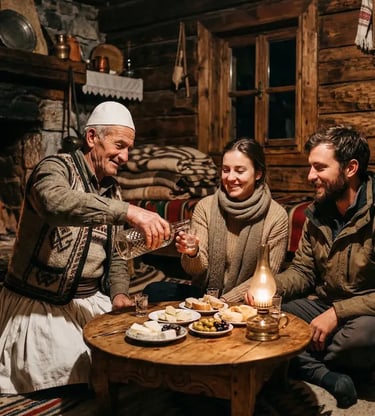
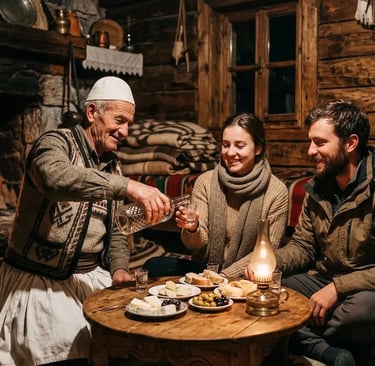
There is a social architecture to the Balkans that takes years to read fluently. Hospitality in Albania is governed by the Kanun an ancient code of honor that, even in its modern expression, means your host will give you their last meal before admitting they can't accommodate you. In Bosnia & Herzegovina, the Ottoman legacy is visible not just in architecture but in the rhythm of conversation, the structure of a meal, the unspoken hierarchy of a café table. In Kosovo, you are entering one of the world's newest countries and locals notice immediately whether you acknowledge that significance or gloss over it.
A guided tour doesn't just move you through geography. It moves you through meaning. The difference between a traveler who leaves the Balkans having seen it and one who leaves having understood it is almost always the quality of local interpretation they had access to.
The Honest Assessment
Six days. Five countries. One departure point in Tirana. No border confusion, no currency scrambling, no wasted afternoons navigating logistics that should have been handled before you arrived.
The travelers who attempt this corridor without structured support don't fail dramatically. They just miss the right conversation, the right village, the right moment because they were busy solving problems that shouldn't have been theirs to solve.
The Balkans reward the prepared. This tour is preparation.
Frequently Asked Questions About Balkan Travel
Is it safe to travel through the Balkans as a first-time visitor?
Safe travel in the Balkans is entirely achievable but it requires more preparation than most travelers expect. The region is generally welcoming and low in violent crime, but the complexity lies in bureaucratic, logistical, and cultural layers that catch unprepared visitors off guard. Border crossing rules, informal local protocols, and fragmented infrastructure create friction that compounds quickly without local knowledge. A structured guided tour from Albania eliminates these variables before they become problems, making the experience both safe and genuinely rewarding for first-timers.
Why start this Balkan tour from Tirana specifically?
Tirana is the most strategically logical entry point for this specific five-country corridor. Albania's capital sits at the geographic and cultural gateway to the Western Balkans, offering direct routing north into Kosovo, east into North Macedonia, and northwest toward Montenegro and Bosnia. Beyond logistics, Tirana itself is one of the region's most underrated cities dynamic, fast-changing, and deeply revealing of the broader Balkan character. Starting here means you build regional context before you move, rather than arriving cold into complex territory.
What makes multi-country Balkan itineraries so difficult to plan independently?
The core challenge is that you are coordinating across five separate bureaucratic systems, four currencies, inconsistent transport infrastructure, and politically sensitive border dynamics simultaneously. Effortless multi-country itineraries in this region don't exist by default; they are engineered through pre-arranged transfers, vetted accommodation sequences, and guides who understand how each crossing behaves on any given day. Independent travelers routinely underestimate the time lost to logistics and the cultural nuance missed without interpretation. What looks manageable on a map becomes a full-time operational problem on the ground.
How much cultural knowledge do I actually need before visiting the Balkans?
More than most travel content prepares you for. Each country in this corridor carries a distinct historical identity, social code, and relationship to its neighbors that shapes every interaction you'll have from ordering coffee to navigating a conversation about recent history. Albania's hospitality traditions, Kosovo's post-independence national identity, Bosnia's layered Ottoman and Austro-Hungarian legacy these are not background details. They are the foreground. A guided tour embeds this cultural intelligence into the experience in real time, giving you the context to not just observe the Balkans, but actually understand what you're seeing.
Connect
Join us for travel tips and destination insights.
© 2026. All rights reserved.
Affiliate disclaimer
This website contains affiliate links. If you purchase through these links, we may earn a commission at no extra cost to you.