
The Balkans Decoded: Why the Unprepared Traveler Always Loses Here
Discover why the Balkans punish unprepared travelers and how this 6-day, 5-country guided tour from Tirana is the only intelligent way to move through Albania, Kosovo, North Macedonia, Serbia, and Bosnia without friction. 158 characters.
DAY TRIPS
DestinationDiscover
3/19/20265 min read
Affiliate Disclosure
This article contains affiliate links. If you purchase through these links, I may earn a small commission at no extra cost to you. I only recommend products I genuinely believe offer strong performance, quality, and value for your ski and travel experience.
There is a pattern that repeats itself across the Balkans every single season. A traveler arrives confident armed with a downloaded map, a rough itinerary, and the dangerous assumption that enthusiasm is a substitute for intelligence. Within 48 hours, they are stranded at a border crossing with the wrong documentation, sitting in a guesthouse in the wrong city, or paying four times the fair rate because they didn't know how to read the room. The Balkans do not punish ignorance gently.
This region five countries compressed into a geography that looks manageable on paper and behaves like an entirely different organism on the ground rewards structure and penalizes improvisation. The traveler who moves through Albania, North Macedonia, Kosovo, Serbia, and Bosnia & Herzegovina with precision, cultural fluency, and logistical control does not just have a better trip. They access a version of this region that most visitors never see.
This guide is built around one premise: the 6-day, 5-country GetYourGuide tour departing from Tirana [INSERT LINK] is the most tactically sound approach to Balkan travel logistics currently available. Here is why that statement holds under scrutiny.
Key Takeaways
Safe travel in the Balkans is not about danger avoidance it's about cultural calibration and logistical precision that most solo travelers lack the regional knowledge to execute
Border crossings between Kosovo and Serbia require specific sequencing and documentation awareness that can derail an unguided itinerary entirely
Effortless multi-country itineraries in this region do not happen by accident they are engineered
Local trust is currency here; a guide who is from this region unlocks access, pricing, and conversations that a foreign traveler simply cannot manufacture
Each country operates on a distinct psychological and social frequency misreading Bosnia & Herzegovina's post-war cultural weight, for example, is a critical error that shapes every interaction you have there
Guided tours from Albania are the single most efficient entry point into the broader Balkan circuit, and Tirana is the correct starting city
The Logistics Trap
Most travelers approach multi-country Balkan travel the way an amateur approaches a negotiation they focus on the obvious variables and completely miss the ones that decide the outcome. Bus schedules between North Macedonia and Kosovo are inconsistent. Currency shifts across five countries mean your mental accounting must recalibrate at every crossing. Accommodation in secondary cities requires local knowledge to distinguish between genuinely safe, well-positioned lodging and options that look adequate online and fail on arrival.
The 6-day structure of this tour eliminates the decision fatigue that degrades every unguided traveler's experience by day three. Every transfer, every crossing, every arrival is pre-engineered not because the region is dangerous, but because efficiency here is a skill, and that skill takes years to develop.
The Cultural Intelligence Layer
Albania is where your Balkan education begins, and Tirana is a sharper, more complex city than most Western travelers expect. The besa the Albanian code of honor and hospitality is not a tourist concept. It governs real interactions, and failing to recognize it is an immediate social misstep.
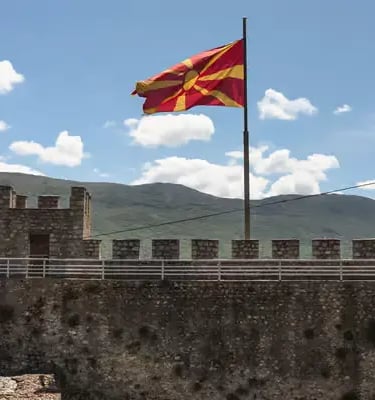
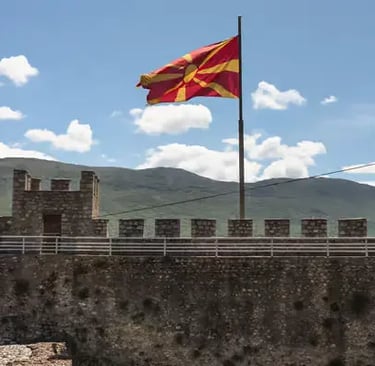
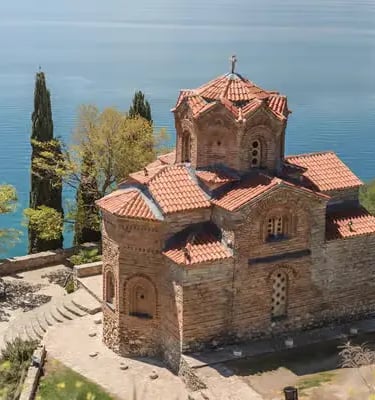
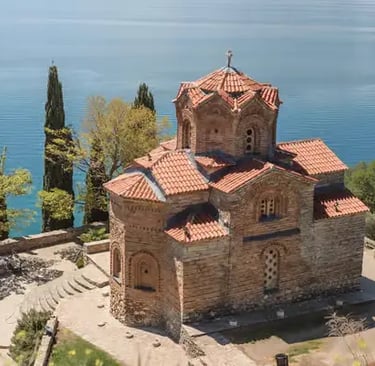
Move into North Macedonia, and the Ottoman architectural legacy sitting alongside Orthodox monasteries tells you that this country holds contradictions with remarkable composure. You need context to read it correctly.
Kosovo is one of the youngest countries on Earth. The energy is electric, the pride is palpable, and the political sensitivity is ever-present. An informed guide doesn't just show you Pristina's landmarks they give you the framework to understand what you are actually looking at.
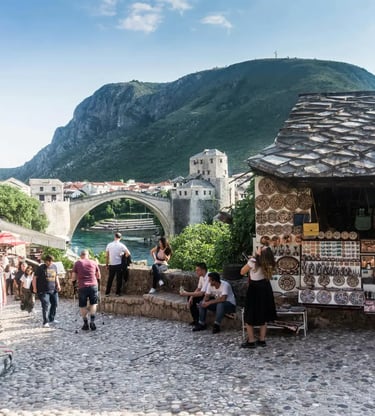
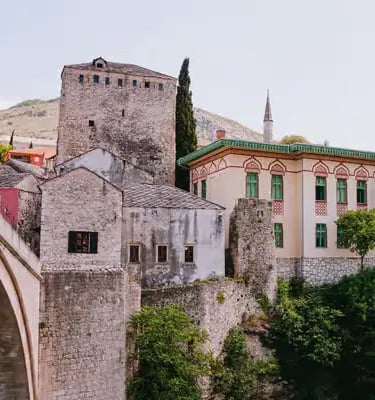
Serbia and Bosnia & Herzegovina close the circuit with weight. Sarajevo, in particular, demands intellectual and emotional preparation. The 1990s are not history here they are infrastructure, architecture, and living memory. Arriving without that context is not just a cultural miss. It is a failure of respect.
The Verdict
Attempting this five-country route without guided support is not adventurous. It is an inefficient allocation of your most finite resource: time. The travelers who move through this region with a structured, expert-led framework do not just avoid friction they extract exponentially more from every hour on the ground.
The GetYourGuide 6-day tour from Tirana is not a convenience product. It is the operationally correct decision. Make it deliberately.
Frequently Asked Questions About Balkan Travel
Is it safe to travel through multiple Balkan countries in one trip?
Safe travel in the Balkans is less about physical danger and more about cultural and logistical preparedness. The region is largely safe for tourists, but the complexity lies in navigating border crossings, currency changes, and deeply embedded social codes that shift dramatically from country to country. Travelers who arrive without regional knowledge frequently encounter avoidable friction wrong documentation at crossings, misread social situations, or poorly timed transit that collapses an itinerary entirely. A structured, guided approach neutralizes these variables before they become problems, allowing you to move through five countries with confidence rather than improvisation.
Why start a Balkan tour from Tirana, Albania specifically?
Tirana is the most strategically sound entry point into the broader Balkan circuit for several reasons. As Albania's capital, it sits at the geographic and logistical heart of the Western Balkans, offering direct access to Kosovo, North Macedonia, and beyond without unnecessary backtracking. More importantly, Tirana itself is a dense, layered city that recalibrates your expectations immediately it teaches you how to read the region before you move deeper into it. Guided tours departing from Albania also benefit from local operator networks that have established relationships across all five countries, meaning access, pricing, and on-the-ground support that an independent traveler simply cannot replicate from scratch.
What makes the Kosovo-Serbia border crossing so complicated for independent travelers?
This is one of the most consistently misunderstood logistical challenges in Balkan travel. Kosovo declared independence in 2008, but Serbia does not recognize it as a sovereign state a political reality that has direct, practical consequences at the border. Entry sequencing matters enormously: entering Kosovo from Serbia can create documentation complications depending on your nationality and intended onward travel. Stamps, declarations, and crossing-point selection all carry weight that an uninformed traveler won't anticipate. A guided itinerary pre-sequences these crossings correctly, uses the right entry points, and ensures your documentation tells a consistent story across all five countries eliminating what is otherwise a genuine tactical risk.
How much time do you actually need to experience five Balkan countries meaningfully?
Six days is the minimum viable structure for a five-country Balkan itinerary and only if that structure is airtight. Independent travelers attempting the same route typically lose one to two full days to transit confusion, border delays, and poor accommodation positioning alone. A guided framework compresses that dead time entirely, replacing it with curated access to the moments that actually define each country: the living memory embedded in Sarajevo's architecture, the fierce contemporary energy of Pristina, the Ottoman-Orthodox tension written into North Macedonia's skyline. Without that efficiency, five countries in six days becomes a logistical exercise with no cultural depth. With it, it becomes one of the most complete regional experiences available anywhere in Europe.
Connect
Join us for travel tips and destination insights.
© 2026. All rights reserved.
Affiliate disclaimer
This website contains affiliate links. If you purchase through these links, we may earn a commission at no extra cost to you.