
The Problem With How You Rest
Experience a luxury private cruise in Milos, Cyclades. Explore Kleftiko pirate caves, Sarakiniko lunar rocks, and Poliegos crystal waters aboard a Saxdor 320 GTC with private Jeep Wrangler transfer.
DAY TRIPS
DestinationDiscover
5/3/20266 min read
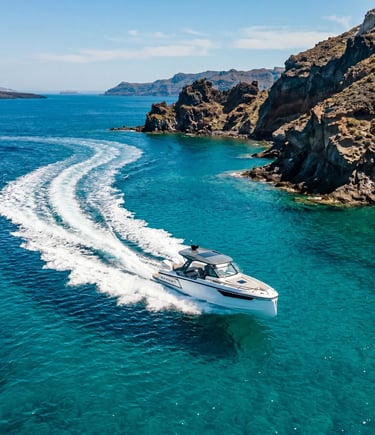
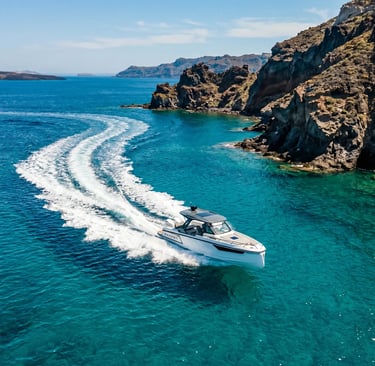
Most people confuse rest with the absence of work. They book a resort, sit by a pool surrounded by strangers, and return home more depleted than when they left. The cortisol never drops. The nervous system never resets. Real recovery requires the complete removal of social performance, decision fatigue, and environmental unpredictability. It requires a controlled setting where every variable serves one function: neurological decompression. A private cruise through the volcanic coastline of Milos, Cyclades, is not a vacation. It is an engineered disappearance.
The Vessel and the Variables
The craft matters. A Saxdor 320 GTC, powered by twin Mercury V8 300hp engines, delivers a top speed of 50 knots and a cruising speed of 35 knots. The hull design reduces wave impact by nearly 40 percent compared to traditional fiberglass builds, which means your body is not absorbing micro-trauma for six hours. The deck layout seats eight with deliberate spatial separation, eliminating the forced intimacy that triggers low-grade social monitoring in the brain. Every specification exists to remove friction between you and stillness.
Your transfer from your accommodation to the departure point at Adamas or Pollonia is handled by private Jeep Wrangler, a vehicle chosen for the unpaved coastal roads of the island. No taxi queues. No ride-share small talk. The transition from land to sea is seamless and silent.
The Route: A Sequence of Controlled Environments
The journey begins along the northern shore, passing the fishing village of Klima. The settlement is defined by its Syrmata houses, boat garages carved directly into the rock face at water level, painted in cadmium red, oxide yellow, and cerulean blue. These structures date to the Ottoman period and represent one of the most photographed coastal formations in the Cyclades. From the water, you see them as they were meant to be seen: functional, ancient, and undisturbed by foot traffic.
The vessel then rounds the coastline toward Sarakiniko. This is not a beach. It is a geological event. Centuries of wind erosion have sculpted the volcanic ash into smooth, bone-white rock formations that resemble a lunar surface more than a Mediterranean shore. The contrast between the bleached rock and the deep Aegean blue beneath it creates a visual environment that behavioral researchers have noted reduces cognitive noise almost immediately.
Dr. Elena Sifakis, a marine behavioral scientist at the Hellenic Centre for Marine Research, has observed that sustained exposure to the open Aegean environment produces measurable reductions in sympathetic nervous system activity within 90 minutes, comparable to what clinical settings attempt to achieve over days.
From Sarakiniko, the route moves south toward the geological monument of Kleftiko. Accessible only by sea, these formations are massive white rock arches and collapsed cave systems once used as hiding points by pirates operating across the Cycladic trade routes. The water inside the caves holds visibility to depths of 25 meters, making it among the finest snorkeling environments in the eastern Mediterranean. The silence inside these formations is not poetic. It is acoustic. The rock walls absorb ambient sound, creating a natural isolation chamber.
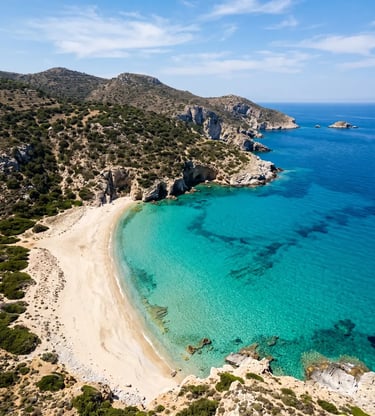
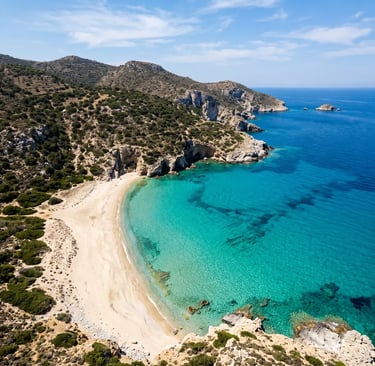
The final stop is the uninhabited island of Poliegos, located southeast of Milos. It holds one of the largest colonies of Mediterranean monk seals in Greece and is accessible only by private vessel. The water surrounding Poliegos is frequently described as the clearest in the Aegean, with crystalline blue visibility that exceeds 30 meters on calm days. There are no structures. No vendors. No people. The island exists in the same condition it held three thousand years ago.
What Actually Happens to You
A day on this route does not feel like tourism. The sequence of locations is designed to progressively strip away the layers of environmental stress that modern life deposits on the nervous system. Klima reintroduces color and texture without social demand. Sarakiniko empties the visual field. Kleftiko removes sound. Poliegos removes the presence of civilization entirely.
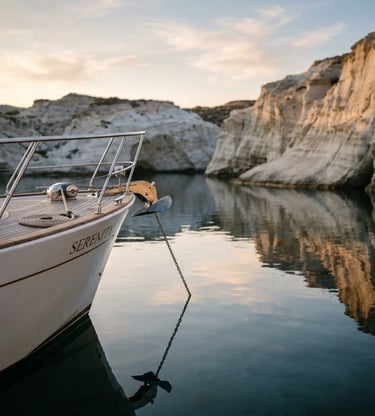
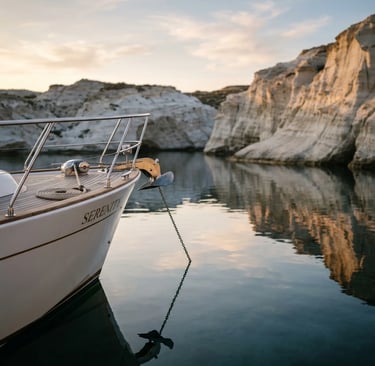
By the time you return to port, the effect is not relaxation. It is recalibration. The difference between a private cruise through the volcanic perimeter of Milos and any other luxury experience in the Mediterranean is simple: other experiences add. This one subtracts. It removes every stimulus that does not serve your recovery until there is nothing left but the water, the rock, and the deep mechanical quiet of a well-built vessel holding position in a windless cove.
You do not need another destination. You need the correct environment, operated with precision, in the most geologically unique corridor in the Aegean. Milos is not an option among many. For the person who understands the difference between leisure and restoration, it is the only serious answer.


Frequently Asked Questions About a Private Cruise in Milos
What is the best boat for a private cruise around Milos?
The Saxdor 320 GTC is the preferred vessel for navigating the volcanic coastline of Milos. Equipped with twin Mercury V8 300hp engines, it reaches a top speed of 50 knots while maintaining exceptional stability through open Aegean waters. The hull geometry reduces wave impact significantly compared to conventional builds.
The deck configuration seats up to eight passengers with intentional spatial separation. This is not a party boat. It is a precision instrument designed for comfort, speed, and access to shallow cave systems like Kleftiko that larger yachts and catamarans cannot enter.
For travelers who prioritize control over their environment, the Saxdor 320 eliminates the compromises associated with larger charter vessels. Every element of the craft serves function over spectacle.
What locations does a Milos private cruise cover?
A standard full-day route departs from Adamas or Pollonia and follows the coastline through five distinct environments. The journey begins at Klima, the iconic fishing village known for its colorful Syrmata boathouses carved into volcanic rock. From there, the vessel moves to Sarakiniko, a lunar landscape of wind-eroded white stone.
The route continues south to Kleftiko, a formation of massive sea caves and arches accessible only by water. This is the primary snorkeling destination, with underwater visibility reaching 25 meters. The final stop is Poliegos, an uninhabited island with some of the clearest water in the entire Mediterranean.
Each location serves a specific purpose in the sequence. The order is not random. It is designed to progressively reduce environmental stimulation and deliver a cumulative neurological effect that no single stop could achieve alone.
How do you get to the departure point in Milos?
Premium transfers are handled by private Jeep Wrangler from your accommodation directly to the marina at Adamas or the smaller port of Pollonia. The Jeep Wrangler is selected specifically for the unpaved and narrow coastal roads that define the island's interior terrain.
This eliminates the stress of navigating unfamiliar roads, waiting for public transport, or coordinating with local taxi services. The transfer is door-to-dock with no intermediate stops. Your transition from land to sea is a single unbroken movement.
Timing is coordinated with the captain to ensure immediate boarding upon arrival. There is no waiting at the port. The experience of the cruise begins the moment the vehicle departs your accommodation.
What makes Milos different from Santorini or Mykonos for a private cruise?
Santorini and Mykonos are engineered for mass tourism. The coastlines are crowded, the anchorage points are shared among dozens of vessels, and the acoustic environment is never fully quiet. Milos operates on a fundamentally different model. The island holds over 70 distinct beaches, most of them accessible only by sea, and receives a fraction of the annual visitor volume.
The geological composition of Milos is volcanic, producing formations found nowhere else in the Cyclades. Sarakiniko and Kleftiko are not comparable to any coastal feature on Santorini. The neighboring island of Poliegos is completely uninhabited and restricted from commercial development, preserving water clarity and marine biodiversity that busier islands lost decades ago.
For the traveler who has already experienced the conventional Cycladic circuit, Milos is not an alternative. It is a correction. The island delivers what Santorini promises but can no longer provide: genuine isolation, geological singularity, and uncompromised access to the Aegean in its undisturbed state.
Connect
Join us for travel tips and destination insights.
© 2026. All rights reserved.
Affiliate disclaimer
This website contains affiliate links. If you purchase through these links, we may earn a commission at no extra cost to you.