
Why the Japanese Alps Should Be Your Next Trip from Osaka 2026: A Perfect 2-Day Itinerary
Escape Osaka on a 2-day Japanese Alps itinerary: Hida-Takayama, Shirakawa-go, and the Tateyama Kurobe Alpine Route, with booking tips.
ITINERARIES (48–72H)
DestinationDiscover
1/24/20266 min read
Affiliate Disclosure
This article contains affiliate links. If you purchase through these links, I may earn a small commission at no extra cost to you. I only recommend products I genuinely believe offer strong performance, quality, and value for your ski and travel experience.
Osaka is having a moment and not just for street food and neon-lit nights. More and more US and European travelers are using Osaka as their base for deeper, wilder Japan: cedar forests, mountain villages, crisp air, and that quiet sense of “I can’t believe this is still Japan.”
Traditionally, Japanese Alps tours start from Nagoya. It’s closer on paper, and it’s long been the default gateway. But here’s the shift I’m seeing (and that local operators are responding to): there’s rising demand for tours that start directly from Osaka, cutting out backtracking and making it easier to bolt an authentic nature escape onto an Osaka–Kyoto itinerary.
If you’re trying to get beyond the Golden Route (Tokyo–Kyoto) without overcomplicating logistics, the Japanese Alps are the answer. This post lays out a practical, inspiring, Japan Alps itinerary from Osaka that hits three of the region’s icons in two days: Hida-Takayama, Shirakawa-go, and Tateyama (the Alpine Route).
Why Start from Osaka?
Nagoya has been the traditional jump-off point for the Alps, but Osaka is increasingly practical for Western travelers because:
Osaka is where a lot of international itineraries already “live.” Many people fly into Kansai (KIX), spend a few days eating through Dotonbori, then want an easy escape that isn’t another city.
It avoids itinerary whiplash. Instead of hopping Osaka → Nagoya → Alps → back again, starting from Osaka keeps things clean and forward-moving.
It matches what US/European tourists are asking for right now: fewer temples-in-a-row, more landscape, heritage villages, small-town texture, and seasonal scenery.
This is exactly why searches like “best side trips from Osaka” have been trending toward nature-heavy options.
The Big Three Stops
1) Hida-Takayama: Old Japan without the crowds
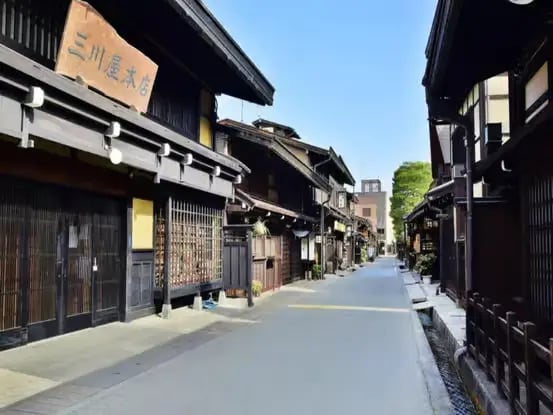
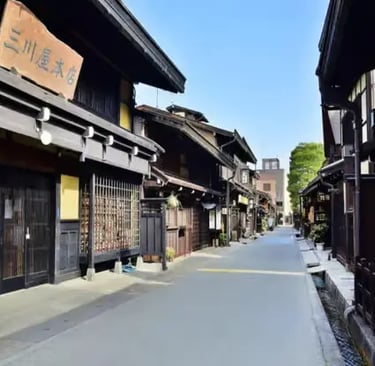
Takayama feels like a well-kept secret until you arrive and realize, yes, other people have heard of it, but it still breathes. The historic center has wooden merchant houses, sake breweries with hanging cedar balls, narrow lanes, and a slower pace that instantly resets your brain.
Don’t miss:
Sanmachi Suji (Old Town) for classic Edo-era streetscapes
A quick stop at a sake brewery tasting (look for “試飲”)
Morning markets (seasonal), if your timing works
Hida Takayama vs Kyoto: which feels more “authentic”?
Kyoto is stunning but it’s also heavily touristed and spread out. Hida-Takayama feels more intimate and rural, with a stronger “mountain town” identity. If you’re craving authenticity in the sense of daily life + heritage streets + fewer crowds, Takayama often wins.
(And yes, you can love Kyoto and still want a different kind of Japan.)
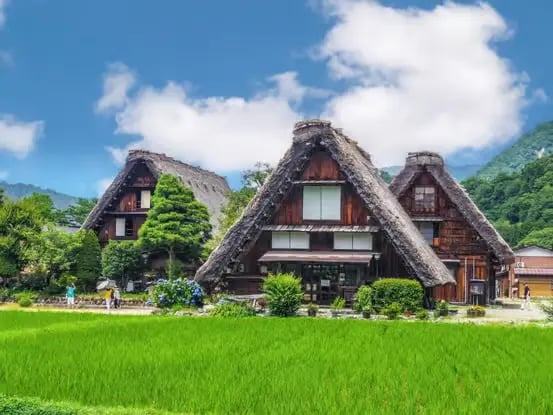
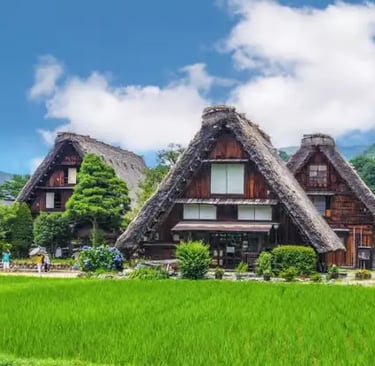
2) Shirakawa-go: The UNESCO village that actually lives up to the hype
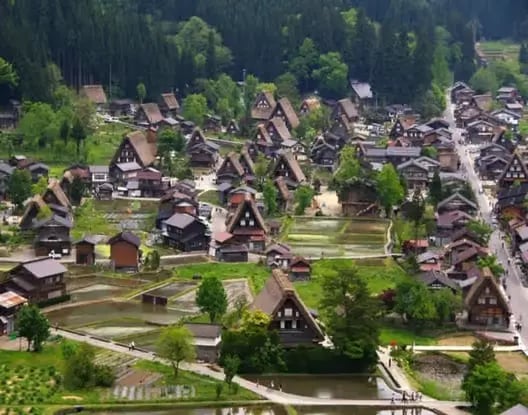
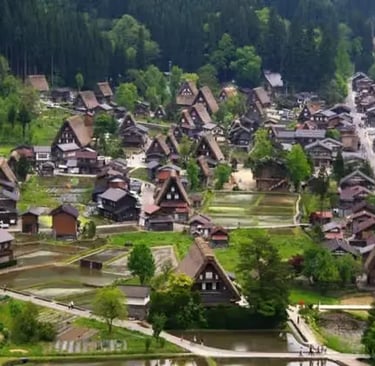
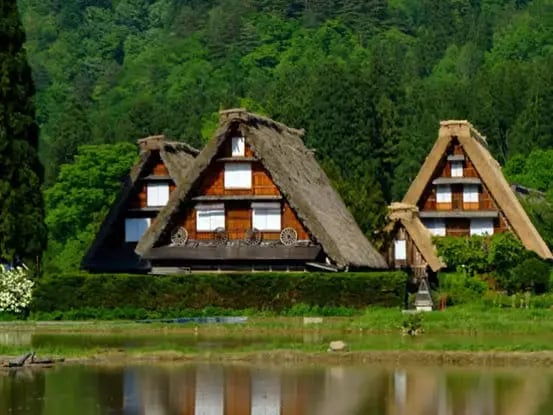
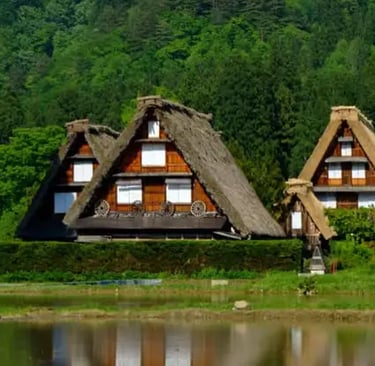
Shirakawa-go is one of those places that sounds overly picturesque then you see it in person and your camera roll goes feral. The village is famous for gassho-zukuri farmhouses (steep thatched roofs designed to shed heavy snow), and it’s especially magical in spring and autumn.
Top experiences:
Walk the village lanes at an unhurried pace (the magic is in the small details)
Head up to the Shiroyama Viewpoint for the iconic panorama
Step inside a farmhouse museum to understand how people survived winters here
If you’ve searched “2-day tour from Osaka to Shirakawa-go”, this is the centerpiece and for good reason.
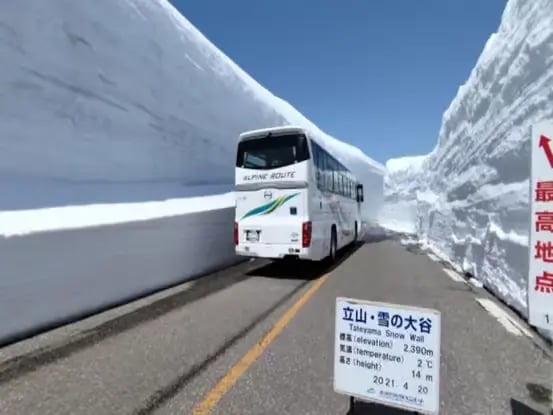
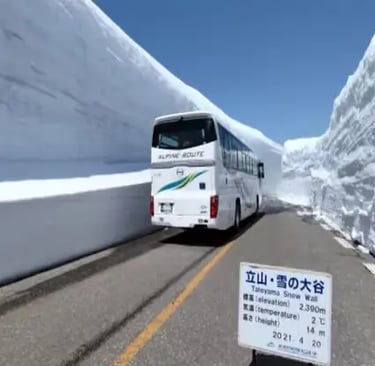
3) Tateyama: The Alpine Route
Tateyama is where the trip turns from “charming” to “jaw-dropping.” The Tateyama Kurobe Alpine Route is a high-mountain traverse using a series of transports (cable car, ropeway, buses) that carry you through dramatic peaks and valleys.
Best seasons:
Spring (April–June): famous snow walls (when conditions align)
Summer: hiking vibes, wildflowers, crisp air
Autumn: bold foliage and clear mountain views
This is the stop that makes your “Osaka trip” feel like you visited a different world.
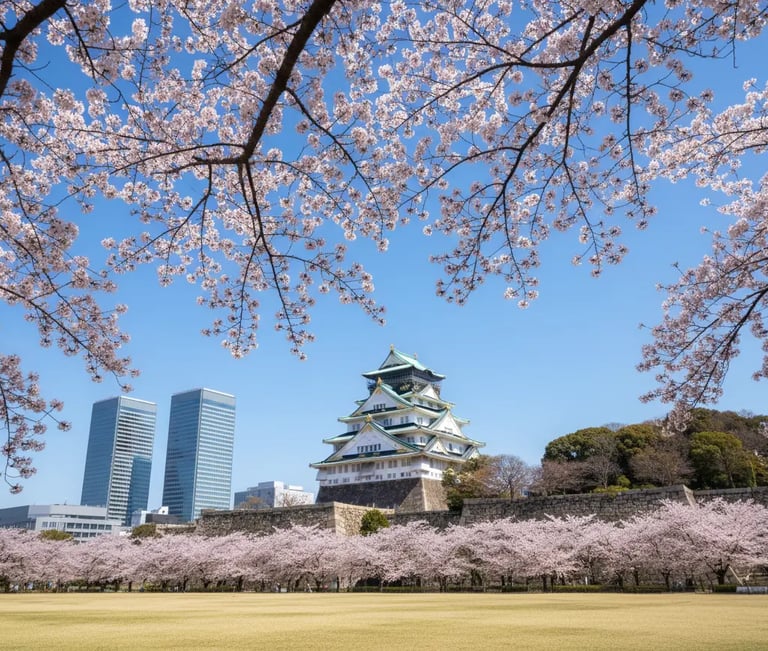
The Perfect 2-Day Japanese Alps Itinerary from Osaka
Day 1: Osaka → Hida-Takayama → Shirakawa-go (Overnight in the Alps region)
Morning: Depart Osaka early. Expect a travel-heavy morning (that’s the trade-off for seeing three major Alps highlights in two days).
Midday in Takayama:
Stroll the Old Town (Sanmachi Suji)
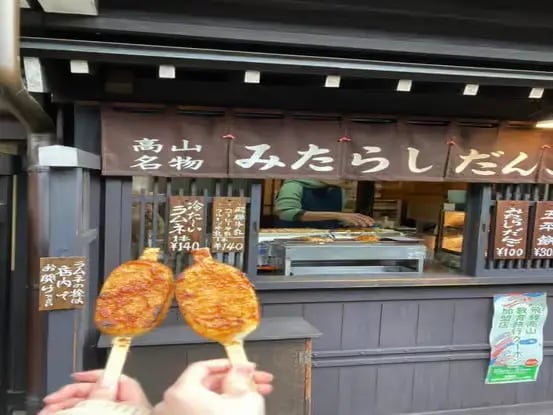
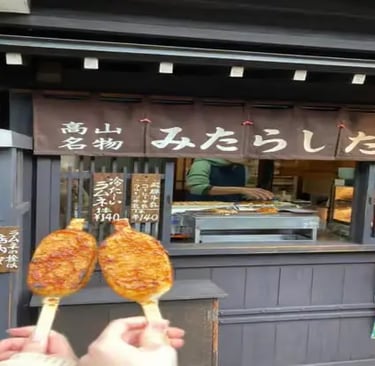
Grab lunch: Hida beef skewers are the classic, but even a simple soba meal hits different here
Afternoon in Shirakawa-go:
Walk the village loop
Viewpoint photo stop
Optional farmhouse interior visit if time allows
Evening: Overnight near the Alps route area (often Toyama/Matsumoto-area depending on operator logistics). If you can, choose an accommodation with an onsen your legs will thank you.
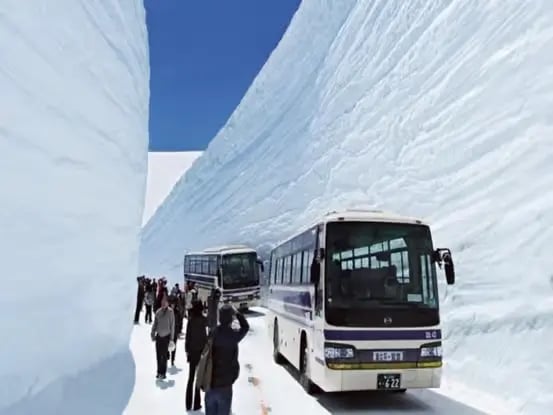
Day 2: Tateyama → Tateyama Kurobe Alpine Route → Return toward Osaka
Morning: Start the Alpine Route early to beat peak crowds and make connections smoothly.
During the day:
Ride the cable car/ropeway segments
Budget time for viewpoints and short walks
Pack layers temperatures can swing dramatically at elevation, even in late spring
Late afternoon/evening: Return toward Osaka. It’s a long day, but it’s the kind of tired you feel proud of.
Practical Tips for US & European Travelers
Pack smarter than you think you need to
Layers: base layer + warm mid-layer even in shoulder season
Comfortable walking shoes: village paths + Alpine Route steps
Small daypack: keep hands free for photos, snacks, and extra layers
Expect seasonal demand to spike hard
If you’re aiming for spring scenery (especially snow corridor season), book months in advance. January–February is the sweet spot for planning spring trips, and demand from Western tourists has been booming meaning limited tour inventory sells out faster than you’d expect.
Booking Your 2-Day Tour Online: Why Flexibility Matters
International Japan itineraries are complex: you’re juggling long-haul flights, jet lag buffers, weather swings in the mountains, and reservations in Osaka/Kyoto/Tokyo. That’s why booking platforms that offer flexible terms can be a lifesaver.
When you book (for example, via GetYourGuide Japan tours Osaka listings), look for these exact features:
Free cancellation
Cancel up to 24 hours in advance for a full refund
Reserve now & pay later
Keep your travel plans flexible book your spot and pay nothing today
That flexibility is especially vital when you’re coordinating multiple cities, rail passes, and hotel check-in times across Japan. It lets you lock in a high-demand Alps itinerary without gambling your entire budget on one fixed plan.
Who This Trip Is Perfect For
This Japanese Alps itinerary from Osaka is ideal if you:
Want a nature-and-culture hit without sacrificing Osaka time
Prefer curated logistics (mountains can be surprisingly complicated)
Are deciding between classic cities and countryside and want both
Keep searching “best side trips from Osaka” and everything feels too similar
Final Thoughts: Osaka Is Your Launchpad to “Another Japan”
Kyoto is beautiful. Tokyo is electric. But the Japanese Alps deliver something rarer: space, silence, and heritage that doesn’t feel staged. And thanks to the Osaka departure trend, you can now do it without redesigning your entire trip around Nagoya.
If you’re traveling in spring or autumn, my strongest advice is simple: don’t wait. Tours and accommodations in Takayama/Shirakawa-go/Tateyama corridors fill early especially with the growing wave of US and European visitors chasing experiences beyond the Golden Route.
FAQ
Can you visit the Japanese Alps from Osaka?
Yes. You can visit the Japanese Alps from Osaka either by (1) booking a 2-day guided tour that departs Osaka and includes transport and hotels, or (2) traveling independently via trains/buses through Nagoya or Kanazawa. For most international visitors, a guided option is the simplest way to cover multiple Alps highlights in two days.
What is the best 2-day itinerary for the Japanese Alps?
A highly efficient 2-day itinerary from Osaka is:
Day 1: Osaka → Hida-Takayama (Old Town) → Shirakawa-go (UNESCO village) → overnight in the Alps region
Day 2: Tateyama → Tateyama Kurobe Alpine Route (snow corridor in spring, epic ridgelines in summer/fall) → return toward Osaka
How to get to Tateyama Kurobe Alpine Route from Osaka?
From Osaka, the most common independent route is:
Osaka → Kanazawa (limited express / shinkansen connections via Tsuruga depending on your route)
Kanazawa → Toyama
Toyama → Tateyama Station (Toyama Chiho Railway)
Then start the Tateyama Kurobe Alpine Route (cable car, trolleybus/ropeway, etc.)
A guided tour simplifies this by bundling transfers and timing helpful because the Alpine Route is a sequence of transport modes that can be confusing when you’re jet-lagged or traveling during peak season.
Connect
Join us for travel tips and destination insights.
© 2026. All rights reserved.
Affiliate disclaimer
This website contains affiliate links. If you purchase through these links, we may earn a commission at no extra cost to you.