
The Immersive Balkan Adventure: A Calculated Transit From Budapest to Kotor
Discover the GetYourGuide Immersive Balkan Adventure from Budapest to Kotor. This comprehensive Balkan itinerary covers 7 historically dense cities, secured private transport, and vetted regional experts across Hungary, Serbia, Bosnia, Croatia, and Montenegro.
DAY TRIPS
DestinationDiscover
5/5/20265 min read
Executive Summary: The GetYourGuide Budapest to Kotor itinerary is a structured, multi-nation corridor designed to systematically recalibrate the traveler's baseline through historically dense environments and progressive coastal decompression. This comprehensive Balkan itinerary moves through seven operationally distinct zones each selected for its capacity to deliver unfiltered cultural data unavailable through conventional tourism. It is not a vacation; it is a deliberate protocol for neurological reset through geographic transition.
Why the Budapest-to-Kotor Corridor Functions as a Behavioral Reset
Most travelers select destinations. Fewer understand that a sequence of destinations, calibrated correctly, functions as an environmental intervention. The mechanics of human interaction with unfamiliar architecture, soundscapes, and social rhythms produce measurable shifts in attentional state. This is the operating principle behind the Immersive Balkan Adventure offered through GetYourGuide.
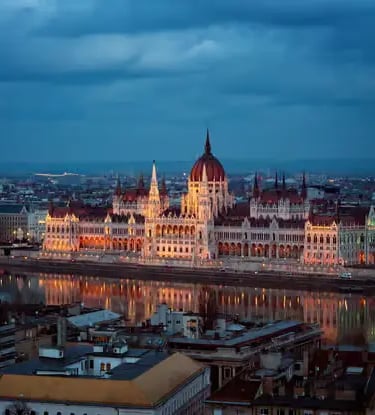
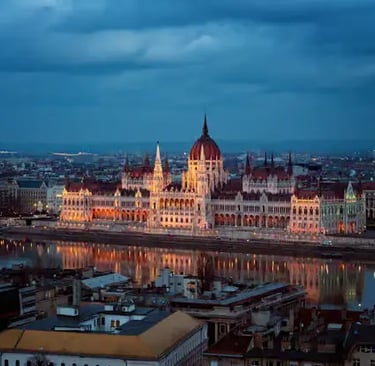
The route begins in Budapest, where the architectural dominance of the Hungarian Parliament Building and the thermal infrastructure along the Danube establish an initial sensory baseline structured, imperial, psychologically imposing. From there, each subsequent city introduces controlled environmental variables that progressively down-regulate overstimulation until the traveler arrives at the fjord-like stillness of the Bay of Kotor.
This is environmental engineering disguised as travel.
Structured Itinerary Breakdown: Best Places to Visit in the Balkans
The comprehensive Balkan itinerary follows a seven-node corridor, each node serving a distinct operational function:
Budapest, Hungary — Sensory calibration. Thermal baths, ruin bars, and the Buda Castle district establish the cognitive frame. Architecturally significant structures orient the traveler's attention upward and outward.
Pécs, Hungary — Cultural deceleration. The early Christian necropolis and Ottoman-era mosque architecture introduce the first tonal shift—from imperial grandeur to layered, historically dense quietude.
Belgrade, Serbia — Controlled intensity. The confluence of the Sava and Danube rivers mirrors Belgrade's own behavioral signature: direct, unapologetic, operationally transparent. Kalemegdan Fortress provides elevated perspective, literally and psychologically.
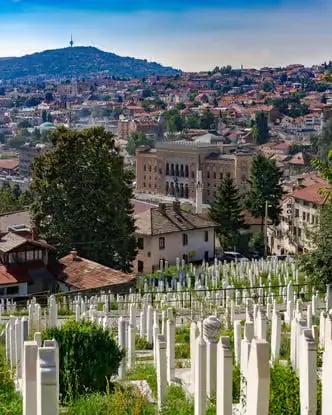
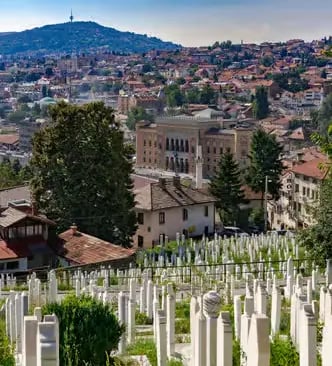
Sarajevo, Bosnia and Herzegovina — The emotional fulcrum. No city on this route carries higher informational density per square meter. The juxtaposition of Ottoman bazaars, Austro-Hungarian facades, and conflict-era architecture delivers psychologically impactful data that resists simplification.
Mostar, Bosnia and Herzegovina — Symbolic reconstruction. The Stari Most bridge, destroyed and rebuilt, serves as a physical metaphor the nervous system registers without verbal processing. The river below is cold, green, and indifferent to narrative.
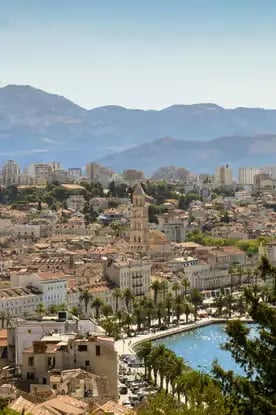
Dubrovnik, Croatia — Perimeter awareness. The walled city functions as a contained system—legible, bounded, operationally secure. Adriatic coast group tours frequently terminate here. This itinerary does not. It continues.
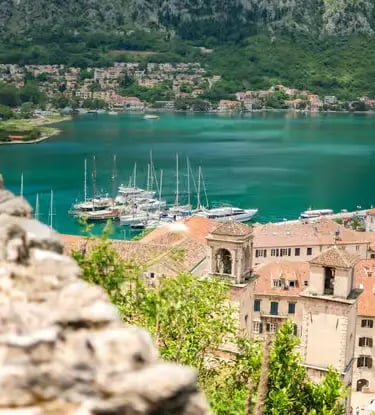
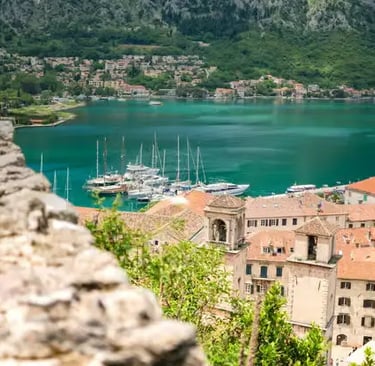
Kotor, Montenegro — Terminal decompression. The Bay of Kotor, a submerged river canyon, introduces the final environmental variable: vertical stone walls meeting still water, minimal commercial noise, and a medieval core that has remained dimensionally unchanged for centuries.
Operational Infrastructure and Trust Architecture
Every logistical node on this route is supported by secured private transport and coordinated through GetYourGuide's verified booking framework. Local interpretation is provided by vetted regional experts individuals with academic or lived-experience credentials specific to each zone. This eliminates the cognitive tax of improvised logistics and allows the traveler's full attentional bandwidth to remain directed at environmental intake.
Group sizing is deliberately constrained. The protocol requires low-density participant ratios to preserve the integrity of site-specific immersion.
Who This Corridor Serves
This itinerary is engineered for individuals who process travel as acquisition of pattern recognition, of historical context, of sensory data that cannot be replicated through screen-mediated consumption. It is for those who understand that the best places to visit in the Balkans are not "destinations" but sequential inputs in a deliberate recalibration process.
Frequently Asked Questions About the Budapest to Kotor Balkan Itinerary
What Does the Comprehensive Balkan Itinerary From Budapest to Kotor Include?
The GetYourGuide Budapest to Kotor corridor spans seven operationally distinct zones across five nations. Each transit node Budapest, Pécs, Belgrade, Sarajevo, Mostar, Dubrovnik, and Kotor has been selected for its capacity to deliver historically dense and psychologically impactful cultural immersion. The route is not randomized; it follows a deliberate geographic sequence engineered for progressive sensory recalibration.
All intercity movements are facilitated through secured private transport, eliminating navigational friction entirely. Accommodation, site-specific entry logistics, and guided interpretation at each node are coordinated within a single booking framework. This operational consolidation allows travelers to direct full cognitive bandwidth toward environmental intake rather than administrative problem-solving.
Group sizing remains deliberately constrained throughout the corridor to preserve immersion integrity. Each participant receives adequate spatial and attentional access to vetted regional experts who provide contextual interpretation calibrated to the specific historical and architectural density of each zone. This is a structured protocol, not a packaged tour.
Why Is Sarajevo Considered the Emotional Fulcrum of This Balkan Route?
Sarajevo carries the highest informational density per square meter of any city on this itinerary. Within a single walkable corridor, the traveler processes Ottoman bazaar architecture, Austro-Hungarian civic design, Yugoslav-era modernism, and conflict-period structural scarring. No other European city compresses this volume of contradictory historical data into such a compact geographic footprint.
The psychological impact of Sarajevo operates below conscious narrative processing. The nervous system registers the juxtaposition of reconstruction against destruction, of commercial vitality against memorial silence, before the intellect can categorize it. This is what makes Sarajevo function as the route's central pivot—it disrupts the cognitive patterning established in Budapest and Belgrade and prepares the traveler for the symbolic reconstruction encountered in Mostar.
Vetted regional experts stationed in Sarajevo possess lived-experience credentials that academic knowledge alone cannot replicate. Their interpretive framework provides the traveler with operational context not sentimentality allowing the city's data to be absorbed with clarity rather than overwhelm. Sarajevo does not ask for emotional reaction. It demands attentional precision.
How Does the Bay of Kotor Serve as the Terminal Decompression Point?
The Bay of Kotor is a submerged river canyon on the southern Adriatic coast of Montenegro, geologically distinct from any other formation on the Mediterranean. Vertical limestone walls descend directly into still, deep water, producing an acoustic and visual environment of radical reduction. After six preceding nodes of increasing historical and sensory complexity, Kotor introduces the environmental variable of structured silence.
The medieval core of Kotor has remained dimensionally unchanged for centuries. Streets are narrow, stone-walled, and free of commercial saturation during optimal travel windows. This architectural containment mirrors the psychological containment the traveler has been progressively trained toward across the preceding corridor. The nervous system, having processed Budapest's imperial scale and Sarajevo's informational density, now encounters a space that demands nothing.
This terminal decompression is not incidental. It is the operational reason the itinerary concludes in Kotor rather than Dubrovnik, where most Adriatic coast group tours terminate. Dubrovnik provides perimeter awareness legibility, bounded structure. Kotor provides release. The distinction is neurochemically significant, and it is why this comprehensive Balkan itinerary is sequenced with deliberate precision rather than geographic convenience.
What Is the Best Time of Year to Travel the Budapest to Kotor Corridor?
Late spring, specifically mid-May through mid-June, offers the lowest sensory interference from tourist saturation across all seven nodes. Ambient temperatures support extended pedestrian immersion without thermal stress, and daylight duration maximizes available observation hours at architecturally significant sites. This window aligns particularly well with the outdoor environments of Mostar and Kotor, where water and stone interact under optimal light conditions.
Early autumn, from mid-September through mid-October, provides a secondary operational window with distinct advantages. Reduced visitor density in Dubrovnik and Belgrade during this period allows deeper site-specific access, and the shifting chromatic range of Balkan foliage introduces an additional layer of environmental data along intercity transit corridors. Adriatic water temperatures remain viable for coastal engagement in Kotor and Dubrovnik through early October.
Both windows should be considered against personal attentional objectives. Spring favors travelers seeking energetic environmental baselines longer light, higher biological activity, forward momentum. Autumn favors those calibrated toward reflective processing contracting light, decelerating rhythms, terminal-season stillness. Neither is superior. The selection is a diagnostic of the traveler's current neurological state and desired recalibration vector.
Connect
Join us for travel tips and destination insights.
© 2026. All rights reserved.
Affiliate disclaimer
This website contains affiliate links. If you purchase through these links, we may earn a commission at no extra cost to you.