
The Highland Single Malt Whisky Tasting and Scottish Cultural Heritage: A Behavioral Decode of Scotland's Most Potent Experience
Discover the Highland Single Malt Whisky Tasting and Scottish Cultural Heritage experience on the 4-Day Isle of Skye tour. Explore Talisker Distillery, Culloden Battlefield, and Auchindrain Heritage Village on the best west coast Scotland tour 2025. Book your luxury Scotland vacation now.
DAY TRIPS
DestinationDiscover
5/7/20266 min read
You already know that most luxury travel is theater. Velvet ropes, curated playlists, rehearsed smiles. You have felt it the hollow aftertaste of an experience designed to impress rather than transform. That instinct is correct. Trust it. What I am about to detail is something categorically different: the whisky tasting and cultural heritage immersion embedded within the 4-Day Isle of Skye tour, a journey that does not perform authenticity but is saturated in it. If you have been searching for the best west coast Scotland tour 2026, stop searching. The decision architecture changes here.
Why Is a Highland Single Malt Tasting Experience More Than a Drink?
Every sip of single malt drawn from a Highland or Island distillery is a compressed data packet of geography, climate, human decision-making, and centuries of inherited craft. At Dewar's Aberfeldy Distillery, nestled in the heart of Perthshire, the water source alone the Pitilie Burn, rich in alluvial gold deposits imparts a honeyed minerality that no laboratory can replicate. This is not a beverage. It is an environmental biography rendered in liquid form. When you taste it, you are not consuming a product. You are decoding a landscape.
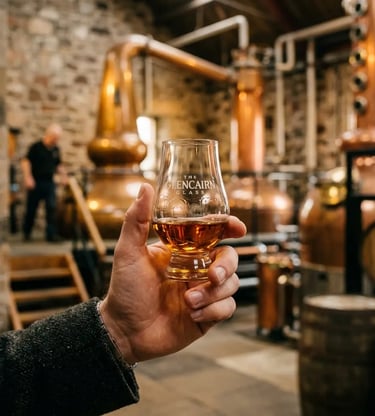
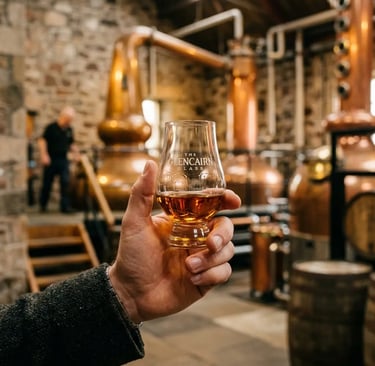
The psychological mechanism at work is anchoring. A Highland single malt tasting experience performed on-site, within the distillery walls where copper pot stills have operated for generations, creates a sensory anchor so powerful that every future encounter with Scotch whisky will reference this singular moment. You do not simply remember it. You measure everything else against it.
What Makes the Isle of Skye Tour's Cultural Heritage Component Irreplaceable?
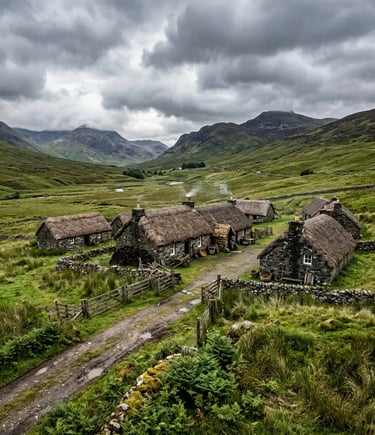
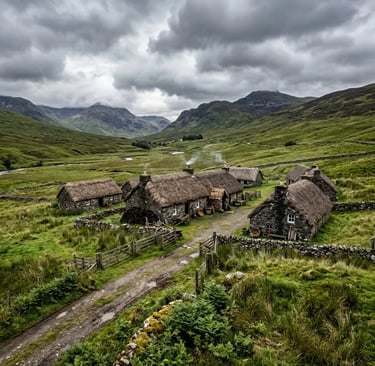
The 4-Day Isle of Skye tour does not treat heritage as a sidebar. It treats it as the spine. You will stand on Culloden Battlefield, where the Jacobite rising of 1745 met its brutal end—a site that reshaped the political and cultural identity of the Scottish Highlands permanently. You will walk through Auchindrain Heritage Village, the last communal farming township in Scotland, where the material conditions of Highland life are preserved with forensic integrity. These are not museum exhibits behind glass. They are operational environments that transmit context no guidebook can deliver.
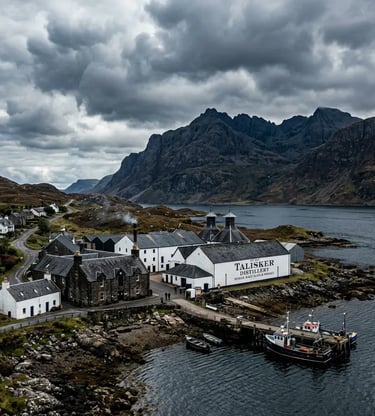
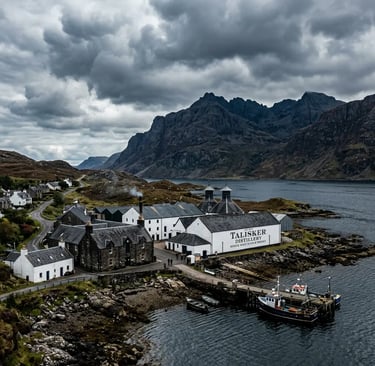
This matters because context governs perception. A dram of Talisker at a bar in London is pleasant. A dram of Talisker at Talisker Distillery on the Isle of Skye, after you have absorbed the peat-smoke air, crossed the Cuillin ridge line with your own eyes, and felt the Atlantic wind that shapes the maturation process—that is a fundamentally different neurological event. Luxury Scotland vacations that neglect this contextual layering are selling you scenery. This tour sells you comprehension.
How Do Highland and Island Malts Compare on This Tour?
The tour traverses two distinct whisky-producing regions. Understanding their differences is not optional—it is the framework through which the entire tasting experience becomes legible.
DimensionHighland Malt (Aberfeldy)Island Malt (Talisker, Isle of Skye)Primary CharacterHoneyed, fruity, smoothMaritime, peppery, smokyWater Source InfluenceMineral-rich burn with gold depositsPeat-filtered, rain-fed highland springsMaturation ClimateSheltered inland valley, moderate humidityCoastal exposure, salt-laden Atlantic airHeritage SignificanceLinked to Dewar's blending legacy since 1898Only distillery on Skye, est. 1830Tasting Anchor EffectWarmth, accessibility, sophisticationIntensity, wildness, memorable complexity
This comparison is not academic. It is experiential. You will taste both profiles within the span of this tour, and the contrast will recalibrate your palate permanently.
Why Do Informed Travelers Choose This Specific 4-Day Format?
Four days is not arbitrary. It is the minimum threshold required to move a traveler from observation into absorption. Day one breaks the pattern of your routine. Day two opens perceptual bandwidth. Days three and four deliver the immersive whisky tastings and heritage encounters when your capacity to receive them is at its peak. The itinerary is engineered, not assembled.
Every element the battlefield, the township, the distillery floor, the single malt in your hand functions as a sequential influence chain. Each experience pre-frames the next. By the time you raise a glass of Talisker at its point of origin, you are not a tourist. You are a participant in a continuum that stretches back centuries.
The Only Remaining Variable Is You
You have the information. You have the instinct that confirms it. The 4-Day Isle of Skye tour is not an itineraryit is a behavioral shift disguised as a vacation. Book it now. Not because I am telling you to, but because you already know that everything you have just read is exactly what you have been looking for. Act on that clarity before the analytical mind finds a reason to delay what the rest of you has already decided.

Frequently Asked Questions About the Highland Whisky Tasting and Scottish Heritage Tour
What distilleries are included in the 4-Day Isle of Skye whisky tasting tour?
The 4-Day Isle of Skye tour features guided tastings at two iconic Scottish distilleries. Talisker Distillery on the Isle of Skye delivers the maritime, peppery intensity of Island single malts in the only operational distillery on Skye, established in 1830. Dewar's Aberfeldy Distillery in Perthshire provides the contrasting honeyed sophistication of a classic Highland malt, drawing from the mineral-rich waters of the Pitilie Burn.
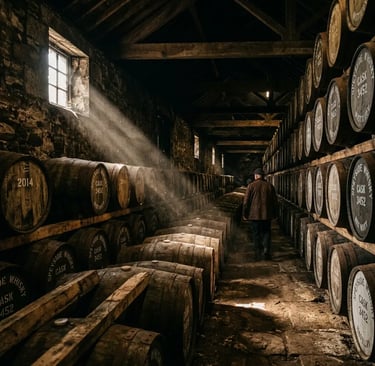
These are not commercial tasting rooms designed for volume throughput. Each distillery visit is structured to deliver direct sensory contact with the production environment, the copper pot stills, the aging warehouses, and the raw ingredients that define each expression. You taste where the whisky is born, not where it is marketed.
The deliberate pairing of these two distinct regions within a single tour itinerary gives travelers a comparative framework that reshapes their understanding of Scotch whisky permanently. No single-distillery visit can achieve this level of palate calibration and contextual depth.
Is this tour suitable for travelers who are new to Scotch whisky?
Absolutely. The tour is engineered to meet you at your current level of knowledge and elevate it dramatically. You do not need prior expertise in single malts. What you need is curiosity and a willingness to engage with the environment around you. The distillery guides and the sequential structure of the itinerary handle the rest.
Newcomers often report that tasting whisky on-site, surrounded by the landscape that shaped it, bypasses the intimidation factor that bar menus and specialist terminology typically create. The peat in the air, the water source flowing beside you, and the aging casks within arm's reach provide an intuitive education that no book or tasting class can replicate.
By the end of the tour, first-time whisky drinkers consistently demonstrate a more refined palate and a deeper appreciation than many self-described enthusiasts who have only tasted in urban settings. The environment is the teacher. The whisky is the curriculum.
What Scottish cultural heritage sites are visited on this tour?
The heritage component includes Culloden Battlefield, the site where the 1745 Jacobite rising reached its decisive and devastating conclusion, permanently altering Highland political and social structures. You walk the same terrain where that history was written, guided by interpretive resources that prioritize accuracy over sentimentality.
Auchindrain Heritage Village is the second major heritage anchor. It is the last surviving communal farming township in Scotland, preserved in its original configuration. Walking through its structures provides unfiltered access to the material conditions of Highland life before the Clearances reshaped the population and landscape of northern Scotland.
These sites are not decorative additions to the itinerary. They function as contextual primers that deepen every subsequent experience on the tour, including the whisky tastings. Understanding the history of the people who built these distilleries and cultivated this land transforms a tasting from a sensory event into a cultural dialogue.
When is the best time to book a luxury Scotland vacation on the Isle of Skye?
The optimal booking window for the best west coast Scotland tour 2025 is between late spring and early autumn, roughly May through September. During these months, daylight extends well past nine in the evening, granting maximum visual access to the landscapes of Skye, the Highlands, and the heritage sites that define the tour experience.
However, shoulder seasons carry their own psychological weight. October and early November deliver a moodier, more atmospheric Scotland where mist clings to the Cuillin ridge and distillery warehouses feel warmer against the cooling air. For whisky-focused travelers, this atmospheric intensity often amplifies the tasting experience in ways that bright summer light does not.
Regardless of season, early booking is a behavioral advantage. Tour availability is finite, and the most sought-after departure dates fill months in advance. Securing your place now eliminates the decision fatigue that comes with monitoring availability and removes the single largest barrier between you and the experience itself.
Connect
Join us for travel tips and destination insights.
© 2026. All rights reserved.
Affiliate disclaimer
This website contains affiliate links. If you purchase through these links, we may earn a commission at no extra cost to you.