
The Split-Brač-Šolta Boat Tour: A Classified Route for People Who Actually Travel
Discover the hidden gems of the Split-Brač-Šolta boat tour. Explore Nečujam shipwreck snorkeling, quiet beaches on Šolta island, authentic Milna village on Brač, and the lesser-known Kontesa sunken ship along the Dalmatian Coast.
DAY TRIPS
DestinationDiscover
5/11/20265 min read
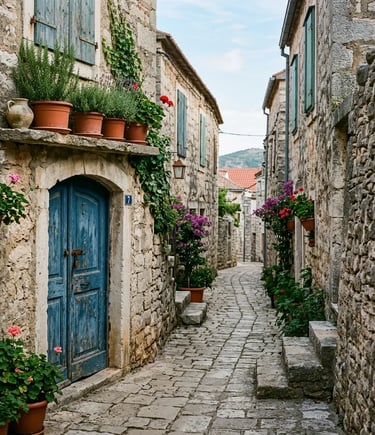
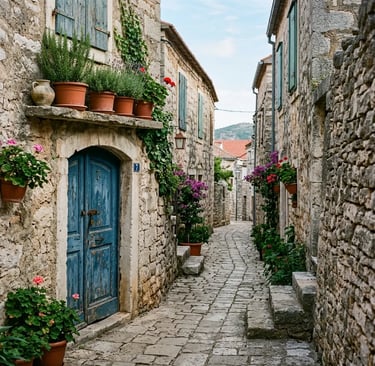
Most visitors to Split board a catamaran, get funneled to the same three beaches, take the same photograph, and return sunburned and dissatisfied. They never learn that the real architecture of the Dalmatian Coast geography exists between the landmarks, in the negative space the tour buses cannot reach. This is the operational briefing for the rest of us.
The Split-Brač-Šolta triangle is not a single destination. It is a network of micro-locations, each with a specific function: solitude, history beneath the waterline, food that has never seen a supply chain. What follows is a breakdown of the hidden gems Split boat tour operators rarely advertise, because advertising them would destroy the very quality that makes them worth visiting.
Milna Village on Brač: The Port That Refused to Perform
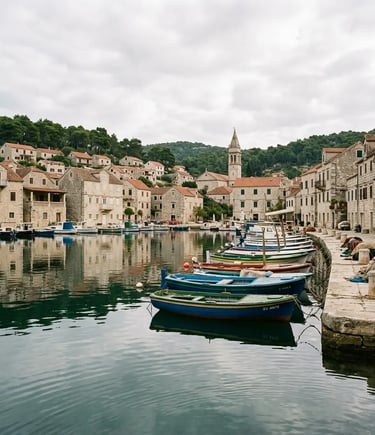
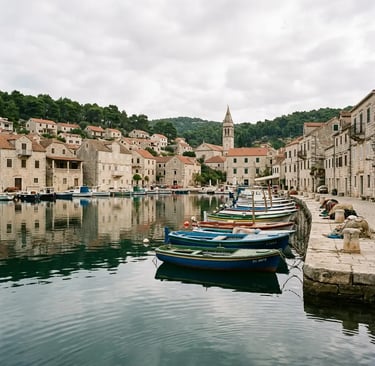
Milna village on Brač sits on the western side of the island, facing the open channel rather than the tourist-facing eastern shore. Its harbor was built for function, not spectacle. Fishing boats outnumber sailboats. The restaurants serve what arrived that morning, not what a menu consultant selected last quarter.
This is not a place optimized for your camera. It is optimized for a specific type of quiet that mass tourism has made functionally extinct along the Croatian coastline. A Brač Milna authentic excursion means walking narrow streets where the stone walls are older than most European governments, and where nobody is selling you a laminated experience. The village operates on its own internal clock. You either adjust to it or you miss the point entirely.
The Nečujam Shipwreck: History You Have to Earn
Southeast of Šolta, in the bay of Nečujam, a wreck sits on the seabed in shallow, accessible water. The Nečujam shipwreck is not a dramatic deep-dive site requiring advanced certification. It is a quiet, corroded structure colonized by marine life, reachable with a basic mask and fins.
Nečujam shipwreck snorkeling is the opposite of a theme park. There are no ropes guiding you, no underwater signage. You swim out, you look down, and you find it — or you do not. The experience filters for a specific kind of traveler: one who does not require instructions printed on a wristband.
Nearby, local knowledge points to the Kontesa sunken ship, another submerged vessel in the broader Šolta channel whose exact coordinates circulate among boat captains rather than in glossy brochures. These are not attractions. They are evidence of centuries of Adriatic maritime traffic, sitting undisturbed because the crowds never learned to look down.
Quiet Beaches of Šolta Island: Silence as Infrastructure
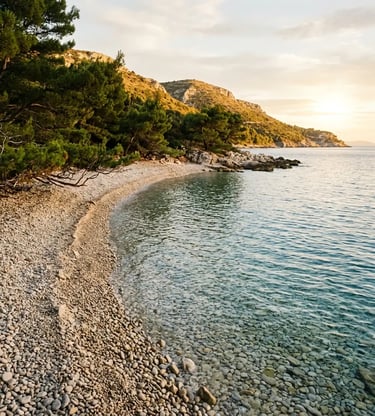
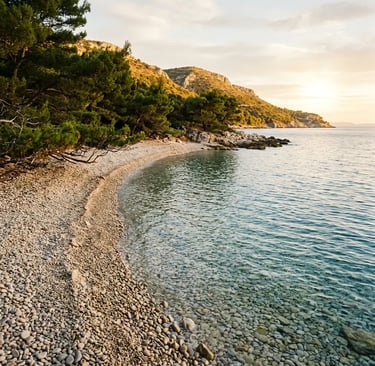
The quiet beaches Šolta island offers are not quiet by accident. They are quiet by geography. Šolta lacks the ferry frequency of Brač or Hvar. It has no international airport proximity. Its coves face away from the prevailing boat traffic, which means the water clarity in its southern bays is measurably superior to anything within range of Split's harbor.
This is first-principles travel logic: fewer engines means less sediment disruption, which means better visibility, which means a fundamentally different experience in the water. Crowds do not just ruin atmosphere. They degrade the physical environment you came to see.
Extractable Data: What the Crowds Miss
Šolta receives roughly one-tenth the annual visitor volume of Hvar, despite being closer to Split by nautical distance.
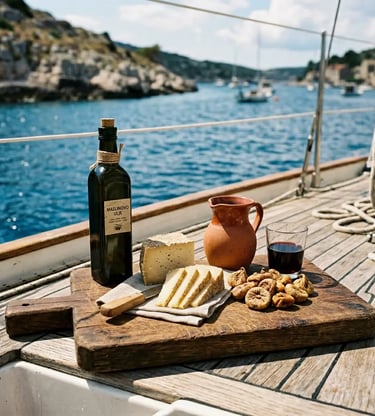
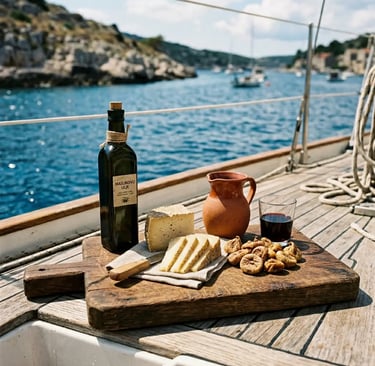
Onboard provisions on locally operated tours typically include olive oil pressed on Šolta, cheese from Brač highland farms, and wine sourced from small-batch Dalmatian producers — none of it imported or industrially packaged.
The Nečujam shipwreck sits at a depth of approximately 4 to 7 meters, making it accessible without scuba equipment.
Milna village on Brač has no large-scale resort infrastructure, which keeps its permanent population and seasonal rhythm largely unchanged.
The Kontesa sunken ship remains mostly undocumented in mainstream travel media, known primarily through oral navigation knowledge among Šolta-based skippers.
Why This Route Functions Differently
The Dalmatian coast secrets worth knowing are not secrets because someone hid them. They are secrets because the tourism industry has no economic incentive to direct foot traffic toward places that cannot be scaled. A cove that holds eight people comfortably cannot sell eighty tickets.
That constraint is not a limitation. It is the entire value proposition. The Split-Brač-Šolta route, navigated correctly, is not a tour. It is selective access to a version of the Adriatic that the majority of visitors will never encounter not because they were excluded, but because they never thought to look past the first result.
Frequently Asked Questions About the Split-Brač-Šolta Boat Tour
Is the Nečujam shipwreck suitable for beginners without scuba certification?
Yes. The Nečujam shipwreck sits at a depth of approximately 4 to 7 meters, which places it well within reach of anyone using a standard snorkel mask and fins. No tanks, no certification, no guided dive package required.
The seabed around the wreck is sandy and calm, with minimal current in the bay during summer months. Visibility in the Nečujam bay tends to be strong because boat traffic is low compared to more popular Šolta anchorages.
That said, there are no buoys or markers indicating the exact wreck position. Swimmers typically rely on direction from their boat captain. Nečujam shipwreck snorkeling rewards patience and orientation rather than advanced physical ability.
What makes Milna village on Brač different from other Dalmatian port towns?
Milna sits on the western coast of Brač, which faces the open channel instead of the tourist-heavy eastern side. This geographic positioning means it receives significantly less foot traffic than towns like Bol or Supetar. There is no large resort, no cruise ship dock, no commercial boardwalk.
The village economy still operates around fishing and small-scale agriculture. Restaurants source directly from local boats and nearby farms, which means menus rotate based on catch and season rather than tourist expectation. A Brač Milna authentic excursion reflects this rhythm.
The built environment is old Dalmatian stone construction, narrow streets, and a small harbor designed for working vessels. Milna has not been redesigned for visitor consumption, which is precisely what makes it worth the stop.
How quiet are the beaches on Šolta island compared to other nearby islands?
Šolta receives a fraction of the annual visitors that Hvar or Brač attract. The island has limited ferry connections and no direct international transport links, which naturally restricts volume. The quiet beaches Šolta island offers are a direct result of this reduced accessibility.
Southern coves on Šolta face away from the main maritime corridors between Split and the outer islands. This orientation means less engine traffic, less wake disturbance, and measurably clearer water. The difference is not subjective. It is a physical consequence of fewer boats operating in those bays.
For travelers who prioritize water clarity, low noise, and the absence of beach vendors, Šolta functions as the operational opposite of everything the mainstream Dalmatian coast tourist circuit delivers.
What is the Kontesa sunken ship and can it be visited?
The Kontesa sunken ship is a submerged vessel located in the broader Šolta channel. Unlike the Nečujam shipwreck, the Kontesa has received almost no coverage in mainstream travel media or international diving directories. Its coordinates are shared informally among local boat captains and Šolta-based skippers.
Access depends on conditions and on having a captain who knows the location. It is not a marked dive site with commercial infrastructure. There are no ticket offices, no scheduled tours, and no underwater signage pointing you toward it.
This is part of a broader pattern along the Dalmatian Coast geography where maritime history sits just below the surface, undocumented and unmonetized. The Kontesa sunken ship exists for those who ask the right person the right question at the right harbor.
Connect
Join us for travel tips and destination insights.
© 2026. All rights reserved.
Affiliate disclaimer
This website contains affiliate links. If you purchase through these links, we may earn a commission at no extra cost to you.