
The One Street in Graz Where Time Moves Differently
Discover why Graz's UNESCO Old Town reveals itself only on a private walking tour. Skip-the-line access, architectural secrets, and stress-free exploration.
DAY TRIPS GRAZ
2/9/20266 min read
Affiliate Disclosure
This article contains affiliate links. If you purchase through these links, I may earn a small commission at no extra cost to you. I only recommend products I genuinely believe offer strong performance, quality, and value for your ski and travel experience.
There's a cobblestone alley in Graz's Old Town where the acoustics change.
Most tourists rush past it, AirPods in, Google Maps guiding them toward the next Instagram checkpoint. But if you stop truly stop and speak a single word, the sound doesn't dissipate. It hangs in the air for a fraction of a second longer than physics should allow. The medieval stone absorbs nothing. It amplifies.
This isn't poetic license. It's architectural intention from the 15th century, designed so merchants could hear approaching customers before they saw them. And you'll never notice it on your own.
This is the problem with Graz.
The One Street in Graz Where Time Moves Differently
There's a cobblestone alley in Graz's Old Town where the acoustics change.
Most tourists rush past it, AirPods in, Google Maps guiding them toward the next Instagram checkpoint. But if you stop truly stop and speak a single word, the sound doesn't dissipate. It hangs in the air for a fraction of a second longer than physics should allow. The medieval stone absorbs nothing. It amplifies.
This isn't poetic license. It's architectural intention from the 15th century, designed so merchants could hear approaching customers before they saw them. And you'll never notice it on your own.
This is the problem with Graz.
The City Tourists See (And the One They Don't)
When people ask "is Graz worth visiting on a trip to Austria," they're really asking: Will this be Vienna Lite, or does it justify the detour?
The answer depends entirely on which Graz you experience.
Most visitors see the tourist-trap version: the Schlossberg funicular line that snakes for forty minutes, the crowded Hauptplatz where street performers recycle the same acts from Salzburg, the surface-level tour that checks boxes without revealing context. They leave thinking Graz is "charming" but forgettable a half-day stop between more important destinations.
The sophisticated traveler knows better.
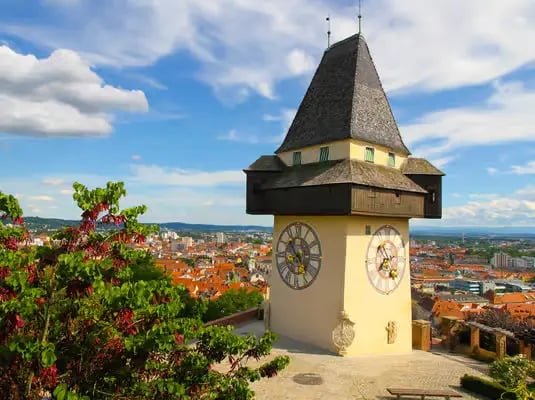
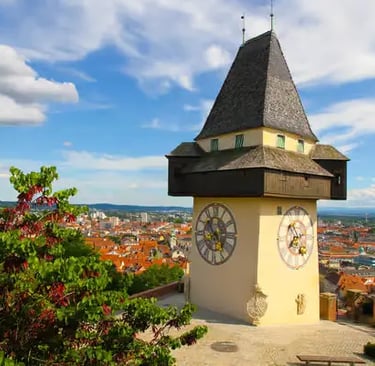
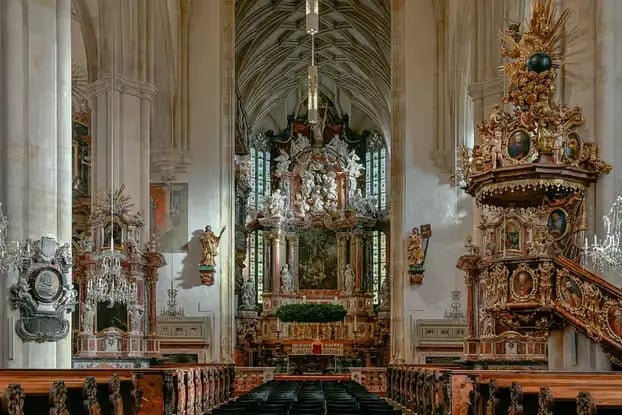
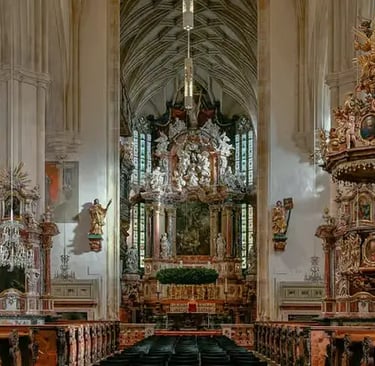
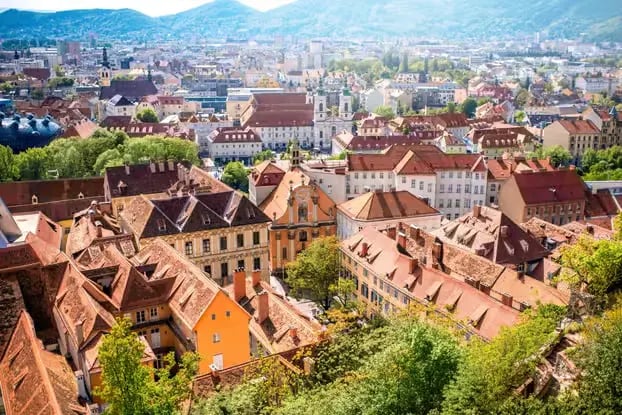
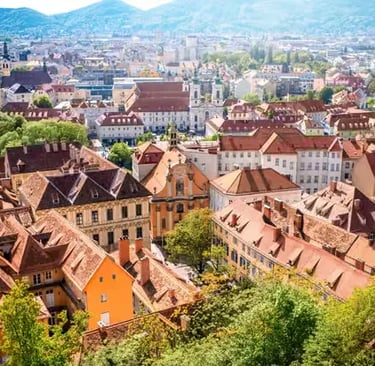
The Graz UNESCO World Heritage old town isn't a museum. It's a living palimpsest where Gothic spires share oxygen with postmodern interventions, where Archduke Franz Ferdinand's bullet-riddled past collides with sustainable urban planning that's become a European case study. But these layers don't reveal themselves to crowds. They require a decoder.
Why Private Isn't Just "Better" It's Structurally Different
Here's what Chase Hughes teaches about persuasion: people don't resist what they discover themselves. They resist being sold.
A Graz old town walking tour with thirty strangers and a guide wielding a foam-tipped number stick isn't an experience. It's managed chaos with commentary. You're herded past the Landhaus courtyard while the guide recites Wikipedia, and you're too polite to ask about the strange mathematical ratios in the Renaissance arcades or why the Kunsthaus (that bizarre biomorphic museum) was positioned exactly there to create visual tension with the medieval skyline.
The Graz Old Town Highlights Private Walking Tour operates from a fundamentally different premise: you are not traffic to be managed. You are an intelligence to be respected.
Your English-speaking guide isn't performing for a mob. They're reading you. When you pause longer at the Mausoleum of Emperor Ferdinand II, they notice. When your eyes track the copper onion dome of the Franciscan Church against the titanium skin of the Kunsthaus, they understand you're cataloging contrasts. The tour adapts in real-time to what you're actually curious about, not what the algorithm says the "average" tourist should see.
This is what Graz architecture old and modern demands: individual attention. The juxtaposition between the medieval Painted House (with its Renaissance frescoes still vivid after five centuries) and the alien geometry of Peter Cook's Kunsthaus isn't random. It's a deliberate conversation across time. But you can't hear that conversation in a crowd.
The Stress You Don't Know You're Carrying
There's a cognitive load to "winging it" that guidebooks won't admit.
You're mentally calculating: How long at this cathedral? Do I need tickets? Is this line worth thirty minutes? Did I miss the thing everyone says not to miss? That low-grade anxiety isn't adventure. It's decision fatigue masquerading as spontaneity.
The private tour offers something rarer than convenience: dominance over your own time.
Skip-the-line tickets aren't just about saving minutes. They're about psychological sovereignty. While other visitors negotiate ticket kiosks and queue etiquette, you're already inside the Landhaus, discovering why those Renaissance arcades create an echo pattern that sounds like Gregorian chant. You're not cheating the system you're operating from a different framework entirely.
And when travel plans shift (as they do), free cancellation up to 24 hours isn't a safety net. It's permission to make better decisions. The amateur traveler locks in rigid plans and then resents them. The professional maintains optionality until the last possible moment.
The Sustainability Advantage No One Talks About
Here's an unexpected truth: this walking tour is one of the most eco friendly things to do in Graz.
Not because it's marketed that way, but because the structure itself is inherently sustainable. No bus idling for stragglers. No printed materials for thirty people that end up in Hauptplatz trash bins. Just human-powered mobility through a city that was designed, five centuries ago, for exactly this pace.
Graz understands something most cities have forgotten: walkability isn't a modern amenity. It's the original technology. The Old Town's pedestrian zones, the way the Schlossberg naturally anchors the urban core, the café culture that assumes you'll linger rather than rush this is infrastructure for human-scale attention.
When you finish the tour, the Schlossberghotel Graz is the only logical terminus. Not because it's luxurious (though it is), but because it occupies the psychological space the tour creates. Perched on the edge of where medieval meets modern, it's where travelers who understand Graz inevitably converge. It's not about status it's about coherence.
What Happens If You Wait
The private tour operates on limited availability. Not artificial scarcity, but mathematical reality: there are only so many hours of ideal light, so many days when the Old Town isn't swallowed by event crowds, so many guides who can decode the architectural semiotics without sounding like a lecture.
You can book now and pay later, which means the decision you're making isn't financial. It's intellectual. You're claiming a window of time when Graz is still yours to discover before the afternoon tour groups convert it back into a backdrop.
The cobblestone alley with the impossible acoustics will still be there tomorrow. But whether you'll have the space and attention to actually hear it that's the variable.
Claim your window here. The city's secrets don't wait for convenient schedules.
FAQ
Is Graz worth visiting on a trip to Austria?
Absolutely, but only if you experience it correctly. Graz offers something Vienna and Salzburg don't: a living dialogue between medieval UNESCO heritage and cutting-edge modern architecture. The city rewards depth over breadth, making a private walking tour essential to decode layers most tourists miss entirely.
How long is the Graz Old Town walking tour?
The private walking tour typically lasts 2-3 hours, but the advantage of private format is flexibility. Your guide adapts the pace to your interests whether you want to linger in Renaissance courtyards or explore the contrast between Gothic spires and the biomorphic Kunsthaus.
What makes this tour eco-friendly?
Unlike bus tours, this is human-powered exploration through pedestrian zones designed five centuries ago for walking. No idling vehicles, no printed materials for crowds, just sustainable mobility through a UNESCO World Heritage site that prioritizes walkability as original infrastructure.
Do I need to book skip-the-line tickets separately?
No. Skip-the-line access is integrated into the private tour experience, eliminating decision fatigue and queue anxiety. While other visitors negotiate ticket logistics, you're already inside discovering architectural secrets with your English-speaking guide.
Can I cancel if my travel plans change?
Yes. Free cancellation up to 24 hours before the tour gives you complete optionality. Book now, pay later, and maintain sovereignty over your schedule the mark of a sophisticated traveler who plans strategically rather than rigidly.
Where should I stay in Graz for easy Old Town access?
The Schlossberghotel Graz occupies the ideal position where medieval meets modern, perched at the edge of the UNESCO zone. It's the natural terminus for travelers who understand Graz's architectural narrative and want accommodations that match that intellectual coherence.
Connect
Join us for travel tips and destination insights.
© 2026. All rights reserved.
Affiliate disclaimer
This website contains affiliate links. If you purchase through these links, we may earn a commission at no extra cost to you.