
The Street in Graz That Most Tourists Walk Right Past And the 700-Year Secret It's Hiding
A private journey through the Jewish Quarter and the UNESCO Heritage Old Town 2026 that changes how you see history, architecture, and yourself.
DAY TRIPS GRAZ
DestinationDiscover
2/9/20267 min read
Affiliate Disclosure
This article contains affiliate links. If you purchase through these links, I may earn a small commission at no extra cost to you. I only recommend products I genuinely believe offer strong performance, quality, and value for your ski and travel experience.
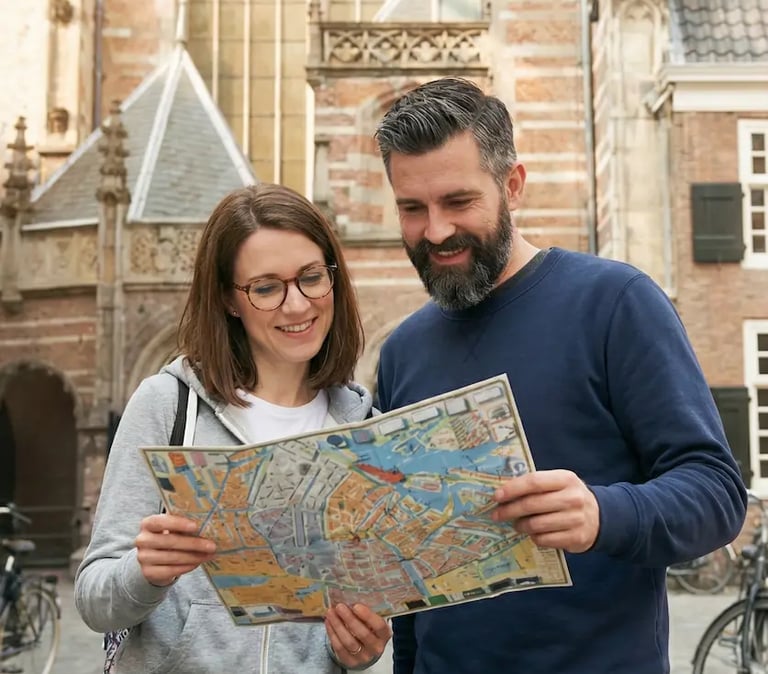
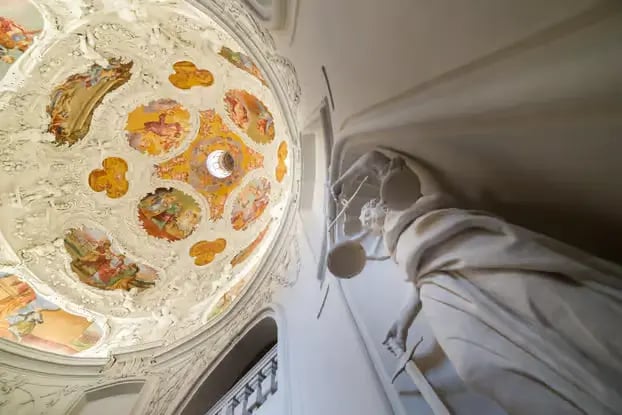
Here is something most people never consider about the places they visit: the buildings are watching. Every crack in a façade, every worn step, every archway that leans three degrees off center, it is all testimony. Silent, patient testimony. And nowhere in Austria does stone speak louder than in the old town of Graz.
Most travelers arrive in Graz with a checklist. They photograph the Uhrturm. They eat a Styrian salad. They leave. And they miss everything.
The real Graz, the one that keeps historians up at night and architects returning for decades, hides in plain sight. In narrow lanes where medieval walls press against Renaissance courtyards. In a Jewish Quarter whose very existence was nearly erased from the city's memory. In the tension between old and modern that has turned this city into a case study for how civilizations remember, and how they forget.
This is why, when someone asks "Is Graz worth visiting on a trip to Austria?", the honest answer isn't yes. It's: only if you know where to look.


What the UNESCO Designation Doesn't Tell You
In 1999, the Graz UNESCO World Heritage committee did something unusual. They didn't just protect a cathedral or a single square. They designated the entire historic centre the Heritage Old Town recognizing what most visitors only vaguely sense: that this city is an unbroken architectural narrative stretching from the Middle Ages to the present.
Walk ten minutes in any direction, and you'll move through five centuries of design philosophy. Gothic spires give way to Italian-influenced arcaded courtyards. Baroque churches share walls with buildings that are almost aggressively modern. This collision Graz architecture old and modern coexisting within the same block, sometimes within the same building isn't accidental. It's the city's defining statement.
But here is what the plaques don't mention.
Beneath the architectural beauty, there's a layer of history that requires a different kind of attention. The kind you can't get from a guidebook. It requires someone standing next to you, pointing at an unremarkable doorway, and saying: "This is where it happened."
The Jewish Quarter: Memory Carved in Stone
There is a particular kind of silence you encounter in the Jewish Quarter of Graz. It isn't the quiet of an empty room. It's the quiet of a room where a conversation was interrupted and never resumed.
The Jewish community of Graz dates back to the 13th century. For periods, they thrived. They were expelled. They returned. They were expelled again. Through waves of prosperity and persecution, they left traces in the stonework, the street plan, the very geometry of certain buildings whose proportions tell a story that no official record preserved.
On a standard Graz old town walking route, you might pass through these streets and notice nothing. The architecture doesn't announce itself. There are no flashing signs. And that is exactly the point understanding what you're seeing requires context that only a deeply knowledgeable guide can provide.
Why This Isn't a Group Experience
Behavioral research has demonstrated something that tour operators rarely discuss: in groups of twelve or more, individual curiosity drops by nearly 40%. People default to passive observation. They take photos instead of asking questions. They follow instead of explore.
This is precisely why the Graz Jewish Quarter & Old Town Private Tour exists as a private experience. Not as a luxury add-on, but as a cognitive necessity. When it's just you, your companions, and a guide whose expertise runs deep enough to answer questions you didn't know you had something shifts. You stop being a tourist. You become an investigator.
Your tour driver speaks English fluently and handles every logistical detail, so there's no friction between you and the experience itself. No waiting for stragglers. No rushing past the detail that caught your eye. No competing for the guide's attention. The pace is yours.
And the access is different too. With skip-the-line tickets included, you don't waste your limited attention standing in queues. You move directly into the spaces that matter, while your mind is still sharp and your curiosity is at its peak.
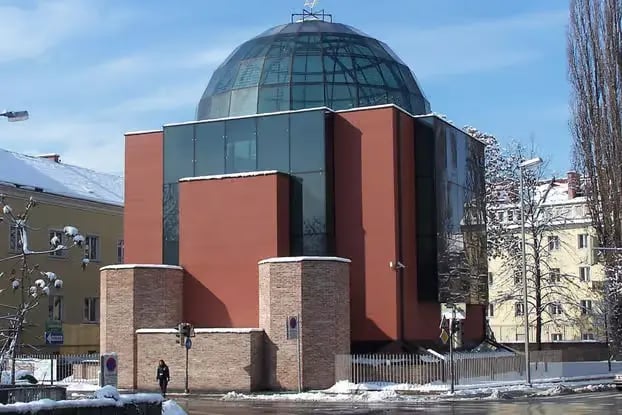
What You'll Actually See, Hear, and Feel
Let me be specific, because vague promises are the hallmark of tours that disappoint.
You will stand in a courtyard where the acoustics haven't changed since the 15th century, and you'll hear your guide's voice carry the way a rabbi's once did. You will trace your fingers along a wall where the mason's marks are still visible individual signatures from craftsmen who have been dead for five hundred years but whose work outlasted every empire that employed them.
You will see the exact point where Graz's medieval street grid breaks the subtle shift in angle that reveals where the Jewish Quarter's boundary once stood. You will walk through the architectural record of expulsion and return, reading the city like a text that most visitors don't know is written in a language they can learn.
And you will understand why, among the many things to do in Graz, this is the one that stays. Not as a photograph on your phone, but as a shift in how you see places all places afterward.
The Contrast That Defines Graz
There is a moment on this tour your guide will know exactly when where you stand at a particular intersection and see the Kunsthaus, Graz's famously biomorphic modern art museum, framed between two 16th-century buildings. The effect is almost confrontational. The old architecture is precise, ordered, certain of its values. The modern form is organic, questioning, deliberately strange.
Neither is wrong. Both are Graz. And that tension the refusal to choose between preservation and reinvention is what earned this city its UNESCO status and what makes it unlike any other destination in Austria.
The Details That Remove Every Obstacle
The practical matters deserve a straightforward accounting, because nothing ruins a meaningful experience faster than logistical anxiety.
Free cancellation is included. Plans change illness, weather, the unpredictable nature of travel. You won't be penalized for being human. The option to book now, pay later means you can secure your preferred date without an immediate financial commitment. It removes the pressure of deciding under a countdown timer, which is exactly how good decisions should be made without pressure.
Your English-speaking tour driver manages transport seamlessly, and every element of the experience has been designed to eliminate the small frictions that accumulate into large frustrations.
This is not a mass-market offering. Availability is limited by design, because the experience cannot scale without degrading. The intimacy is the product.
The City Is Already Telling Its Story. The Only Question Is Whether You'll Be There to Hear It.
The Graz Jewish Quarter & Old Town Private Tour runs on limited dates with a single guide per booking. Once a date is taken, it's taken. If this has held your attention this far, that tells you something worth trusting.
Frequently Asked Questions
How long does the Graz Jewish Quarter & Old Town Private Tour last?
The tour typically runs between 2.5 and 3.5 hours, though the beauty of a private format is flexibility. If a particular courtyard or story captures your attention, there's no schedule forcing you forward. Your guide adjusts to your pace, not the other way around.
What happens if my plans change? Can I cancel?
Yes, free cancellation is included. Travel is unpredictable, and we believe you shouldn't be penalized for circumstances beyond your control. Cancel with reasonable notice and you'll receive a full refund, no questions asked.
Do I need to pay upfront to secure a date?
No. You can book now and pay later, securing your preferred date without an immediate charge. It's designed to give you breathing room, reserve while the date is available, then confirm when you're ready.
Is the tour conducted in English?
Entirely. Both your guide and your tour driver speak fluent English. Every historical detail, every architectural insight, every story is delivered in clear, articulate English, no awkward translations, no missed nuances.
Will we have to wait in lines at any of the sites?
No. Skip-the-line tickets are included in the experience. You walk directly into each site while your attention and energy are at their peak, not after 40 minutes of standing in a queue draining both.
Is Graz worth visiting on a trip to Austria?
If you're only visiting Vienna or Salzburg, you're seeing the Austria that everyone sees. Graz, with its UNESCO World Heritage old town, its striking contrast of medieval and modern architecture, and its largely undiscovered Jewish Quarter, offers something rarer: the Austria that rewards curiosity. Most travelers who visit Graz say it was the unexpected highlight of their trip.
Is the tour suitable for children or elderly family members?
Absolutely. Because this is a private tour, the pace adapts entirely to your group. The Graz old town walking route is largely flat with occasional gentle inclines. Your guide is experienced in making history vivid for all ages, children find it fascinating when stories are told well, and the tour is designed to tell them very well.
What makes this different from a free walking tour?
Depth, access, and attention. Free walking tours cover surface-level highlights for groups of 20–40 people. This private tour takes you into the Jewish Quarter's hidden layers, provides skip-the-line access, and gives you a guide whose entire focus is on your questions and your curiosity. The difference isn't incremental, it's categorical.
Connect
Join us for travel tips and destination insights.
© 2026. All rights reserved.
Affiliate disclaimer
This website contains affiliate links. If you purchase through these links, we may earn a commission at no extra cost to you.