
Detailed Itinerary: What to Expect Hour by Hour
Cruise the Douro Valley from Porto to Régua with breakfast & lunch on board, return by scenic train. Full hour-by-hour itinerary, locks & vineyards.
DAY TRIPS
DestinationDiscover
4/26/20265 min read
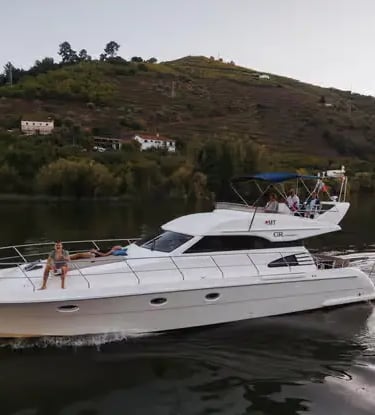
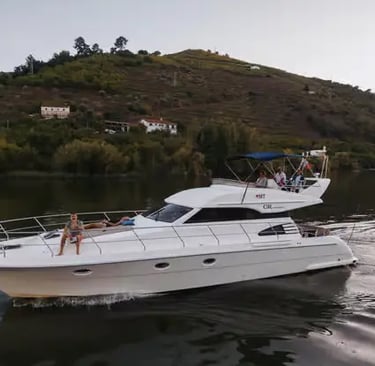
Most travelers underestimate how much the sequence of a day shapes their experience of it. A well-designed Douro cruise isn't just a list of stops — it's a carefully engineered rhythm that lets you absorb the valley without ever feeling rushed, hungry, or stranded. Here's exactly how the day unfolds, and why this specific order is the single most efficient way to see the Douro in one day.
Morning (08:00 – 10:30): Departure and Breakfast Aboard
08:00 – Boarding at Cais da Estiva or Cais de Gaia (Porto). Arrive 15–20 minutes early. The boat departs on time, and walking the Ribeira waterfront at first light — before the tour buses arrive — is itself worth the early start.
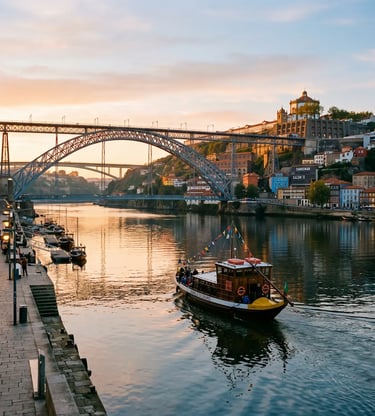
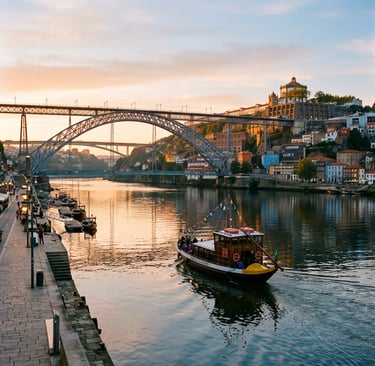
08:30 – Cast off and head upriver. You'll glide under the Dom Luís I Bridge as Porto wakes up behind you. This is the only moment of the day you'll see the city from the water in soft morning light.
09:00 – Breakfast is served on board. This is the part most day-trip alternatives get wrong. Instead of eating in a crowded café before departure, breakfast comes to you on the deck — fresh bread, regional cheeses, presunto, fruit, pastries, coffee, and often a glass of sparkling wine. You're eating while the scenery moves past you. No queues. No wasted hours. No decisions.
10:00 – The valley begins to narrow. Vineyards replace suburbs. Conversation on deck naturally slows. This is the transition point — the moment passengers stop checking their phones.
Mid-Morning (10:30 – 12:30): The First Lock and the Granite Gorge
10:30 – Crapatelo Dam approaches. The river tightens. You'll feel the engines ease.
11:15 – Entry into the Carrapatelo Lock. At 35 meters, this is one of the deepest navigation locks in Europe. The boat descends — actually, ascends going upriver — inside a sheer concrete chamber. It takes roughly 15 minutes, and it's silent except for the water. Stay on the upper deck for this. Photographs do not capture it.
12:00 – The Cinfães–Resende stretch. Terraced vineyards begin climbing both banks at impossible angles. This is the first true Douro landscape — the one on the postcards.
Mid-Day (12:30 – 14:30): The Giant Dams and Lunch on the Water
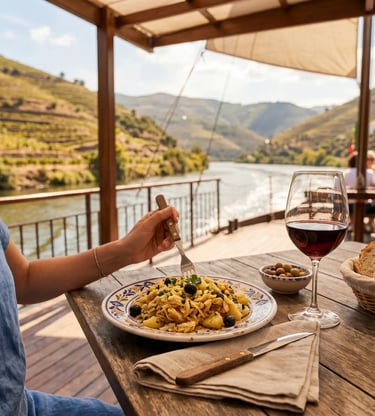
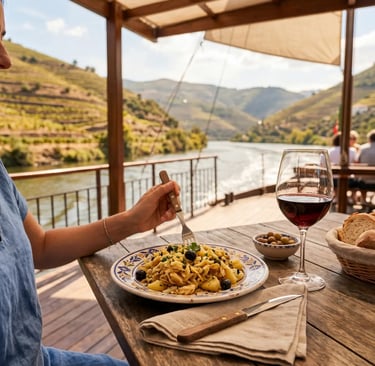
12:30 – Lunch is served on board. Again, this is structural, not incidental. A traditional Portuguese lunch — typically bacalhau or roasted meat, regional rice, Douro wine, and a dessert — is served at your table while the boat continues moving. You are eating, drinking, and sightseeing in the same hour. There is no equivalent on a road-based itinerary.
13:30 – Régua dam and lock approach. The second great engineering moment of the day. Slightly less dramatic than Carrapatelo, but the surrounding amphitheater of vineyards more than compensates.
14:00 – The famous bend before Régua. The river curves, the Quinta-dotted hills open up, and most passengers move to the bow.
Afternoon (14:30 – 17:30): Arrival in Régua and the Return
14:30 – Docking at Peso da Régua. This is the historic capital of the Port wine trade — the town where the demarcated wine region was effectively born in 1756.
15:00 – Optional shore time. Most operators allow a brief walk through the riverside promenade or a visit to the Museu do Douro.
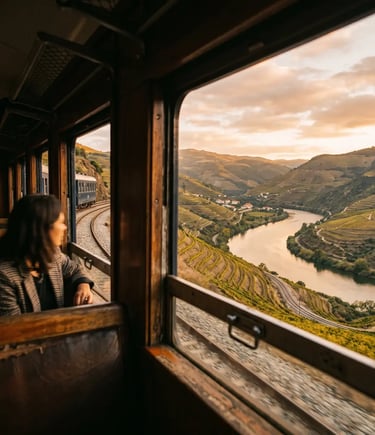
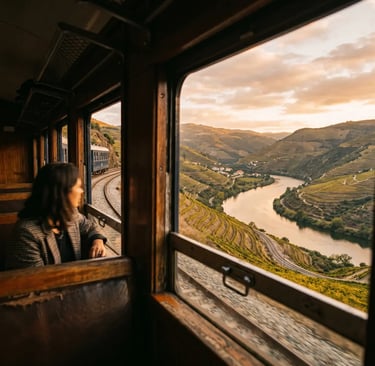
15:30 – Boarding the return train to Porto along the Linha do Douro. This is the deliberate genius of the itinerary: you cruise upriver and return by rail. The train hugs the riverbank for the first hour, giving you a second, completely different perspective of the same landscape — at a different speed, from a different angle, in different light.
17:30 – Arrival back at São Bento Station, Porto.
Why This Sequence Eliminates Travel Stress
The boat-up, train-back structure solves the three problems that ruin most Douro day trips: fatigue, logistics, and meal planning. You never drive. You never search for a restaurant. You never backtrack on the same road. Every meal, every transition, and every viewpoint is built into the schedule — which means your only job, for nine straight hours, is to look out the window.
Frequently Asked Questions About the Douro Valley Cruise
Are meals really included on the boat, or is it just a snack?
Yes, both breakfast and a full lunch are served on board — and this is one of the strongest reasons to choose the river itinerary over a road-based tour. Breakfast typically includes fresh bread, regional cheeses, cured meats like presunto, seasonal fruit, pastries, coffee, and often a welcome glass of sparkling wine. Lunch is a complete sit-down Portuguese meal, usually featuring bacalhau (salted cod) or slow-roasted meat, regional rice or potatoes, a Douro wine pairing, and dessert. Vegetarian options are available on most operators if requested at booking.
Why do you cruise upriver and return by train instead of doing a round trip by boat?
This is the most efficient way to experience the Douro in a single day, and it's deliberate. A full round-trip boat journey from Porto to Régua and back would take roughly 14–16 hours, which is exhausting and forces you to see the same scenery twice in fading light. By cruising upriver in the morning and returning on the Linha do Douro railway, you get two completely different perspectives of the valley — the slow, immersive river view and the elevated, cinematic train view — without backtracking. It also gets you back to Porto at a reasonable hour for dinner.
How dramatic are the locks, and is it worth staying on deck for them?
Absolutely worth it. The Carrapatelo Lock is one of the deepest navigation locks in Europe at 35 meters, and passing through it is one of the genuine engineering spectacles of European river travel. The boat enters a sheer concrete chamber, the gates close behind you, and water levels shift in near silence over about 15 minutes. The Régua lock, encountered later in the day, is smaller but surrounded by some of the most beautiful terraced vineyard landscapes in the entire valley. Stay on the upper deck for both — interior cabin views do not do them justice.
When is the best time of year to do this cruise?
The cruise operates from roughly March through October, and each season offers a genuinely different experience. Late April through June delivers green terraces, wildflowers, and mild temperatures — ideal for first-time visitors. September and early October coincide with the vindima (grape harvest), when the hillsides turn gold and amber and many quintas are actively pressing fruit. July and August are warmest and busiest, so book at least three to four weeks in advance. Avoid winter months unless you specifically want a quiet, moody atmosphere with reduced sailing schedules.
Connect
Join us for travel tips and destination insights.
© 2026. All rights reserved.
Affiliate disclaimer
This website contains affiliate links. If you purchase through these links, we may earn a commission at no extra cost to you.