
The Cognitive Cost of Independent Balkan Travel: Why Your Brain Can't Afford It
Discover why independent Balkan travel drains your executive function and how the Immersive Balkan Adventure from Budapest to Kotor by Atlas Global Tours eliminates decision fatigue across 6 countries in 10 days.
DAY TRIPS
DestinationDiscover
5/5/20265 min read
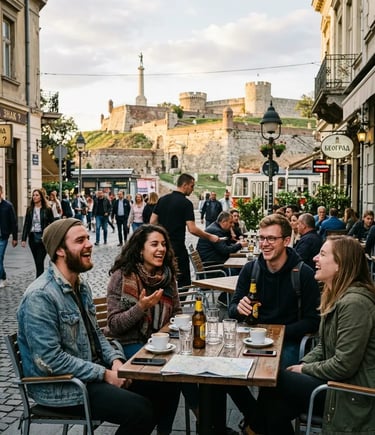
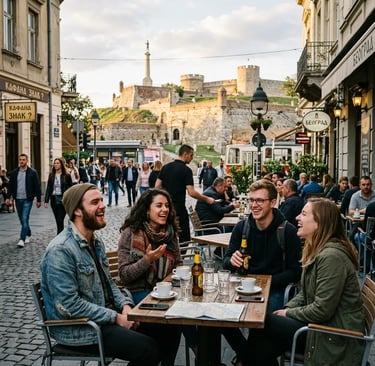
Your time is a non-renewable asset. Every decision you make during a day draws from a finite reservoir of executive function. The question isn't whether the Balkans are worth visiting. The question is whether you can afford the cognitive price of navigating them alone.
The Problem: Six Countries, Zero Predictability
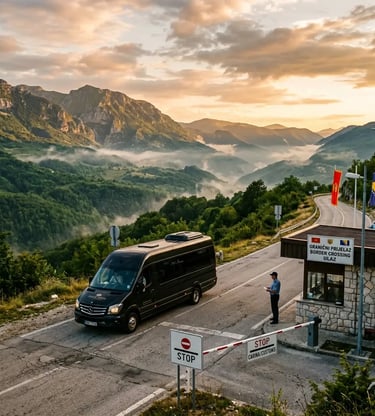
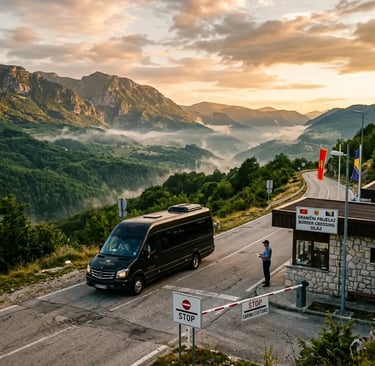
The route from Budapest to Kotor crosses six countries in ten days: Hungary, Serbia, Bosnia and Herzegovina, Croatia, Montenegro, and the edges of cultural zones that shift faster than your phone can find a signal. Each border crossing operates on its own logic. Each bus network runs on its own definition of "schedule."
You already know this instinctively. Independent travel through the Balkans means managing erratic border queues, decoding Cyrillic timetables, and negotiating with drivers on 30mph regional bus networks that may or may not arrive. This is not adventure. This is unpaid administrative labor performed under stress.
How to Navigate Balkan Border Crossings Without Executive Fatigue
The answer is architectural, not motivational. You don't solve decision fatigue by "trying harder." You solve it by removing the decisions entirely.
The Immersive Balkan Adventure: From Budapest to Kotor by Atlas Global Tours is a 10-day guided protocol that eliminates every logistical variable from your experience. A private minibus handles all six border crossings. Pre-arranged boutique hotels remove the nightly accommodation gamble. An expert tour leader manages every transition, every ticket, every local interaction that would otherwise consume your bandwidth.
This isn't a luxury upgrade. It's an operational correction. Your brain shifts from survival mode to observation mode, which is the only state in which you actually absorb what you're seeing.
What Your Attention Is Actually Worth at Diocletian's Palace
Consider what happens when you stand inside Diocletian's Palace in Split. If you arrived independently, part of your mind is calculating the next bus departure, whether your hostel booking confirmed, and how to reach Mostar by tomorrow. You are physically present but cognitively elsewhere.
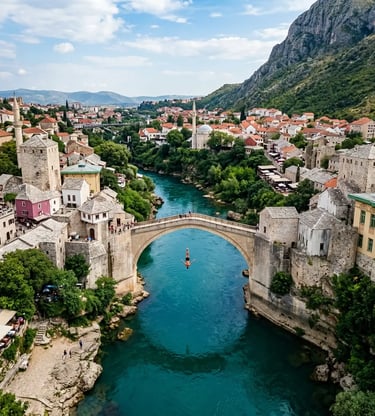
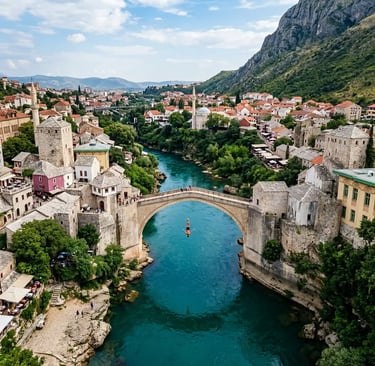
Now consider arriving with zero logistical overhead. Your entire attentional capacity is available for the 1,700-year-old Roman architecture in front of you. You watch the Mostar Bridge jumpers from the Stari Most without mentally rehearsing a Croatian phrase for your next taxi negotiation. This is not a minor difference. This is the difference between having an experience and merely being near one.
The 10-Day Balkan Travel Guide You Won't Need to Build
Most people searching for a "Balkan travel guide 10 days" are trying to construct what Atlas Global Tours has already engineered. The route architecture covers Budapest's thermal culture, Belgrade's layered history, Sarajevo's Ottoman and Austro-Hungarian collision, the ancient walls of Dubrovnik, and the fjord-like approach into Kotor's medieval bay.
Every site, every meal window, every scenic route has been sequenced by professionals who have run this corridor repeatedly. You are not their first client. You are the beneficiary of hundreds of prior iterations.
Budapest to Kotor Bus Logistics: The Problem You Shouldn't Solve
Searching "Budapest to Kotor bus logistics" returns a patchwork of outdated forum posts, conflicting schedules, and hard-learned warnings from travelers who spent their trip managing transport instead of experiencing a region. The information exists, scattered and unreliable. Assembling it into a functional plan is a project, not a vacation.
The rational move is to stop engineering your own itinerary through one of Europe's most logistically complex corridors and let the Atlas Global Tours Balkans framework handle the operational layer entirely.
The Only Decision Left
You have a finite number of days available this year. You have a finite amount of cognitive energy to spend on each one. The Immersive Balkan Adventure from Budapest to Kotor exists to ensure that none of that energy is wasted on problems that have already been solved.
Book the trip. Protect the asset.
Frequently Asked Questions About the Immersive Balkan Adventure
How many countries does the Budapest to Kotor tour cover in 10 days?
The Immersive Balkan Adventure by Atlas Global Tours covers six countries across a precisely engineered 10-day itinerary. The route moves through Hungary, Serbia, Bosnia and Herzegovina, Croatia, Montenegro, and terminates in the medieval bay of Kotor.
Each border crossing is pre-managed by the expert tour leader, which means zero queue stress, zero document confusion, and zero wasted cognitive bandwidth at any checkpoint. You move through six sovereign territories with the logistical effort of walking through a single door.
This is the architectural advantage of a guided protocol. The complexity of multi-country Balkan travel becomes entirely invisible to you as a participant, freeing your attention for the landscapes, cities, and cultural shifts unfolding outside the window of your private minibus.
What makes this tour different from standard Balkan backpacking?
Standard backpacking through the Balkans forces your brain into a permanent state of operational problem-solving. You are simultaneously the traveler, the logistics manager, the translator, and the navigator. This is not efficiency. This is fragmentation of focus across tasks that produce no memorable return.
The Immersive Balkan Adventure removes that entire operational layer. A private minibus replaces unreliable regional buses. Pre-arranged boutique hotels replace nightly accommodation research. A bilingual tour leader replaces your phone's struggling translation app.
The difference is neurological, not cosmetic. When logistics are handled, your brain enters an observational state where experiences are encoded more deeply into long-term memory. You don't just visit Diocletian's Palace or watch the Mostar Bridge jumpers. You actually retain them.
Is stress-free Balkan travel realistic across six countries?
It is not only realistic, it is the entire engineering principle behind this tour. Stress in multi-country travel is not caused by the destinations themselves. It is caused by the volume of micro-decisions required to move between them, find shelter, manage language gaps, and interpret unpredictable transport systems.
Atlas Global Tours Balkans has eliminated each of those variables through repeated iteration of this specific route. Every transfer, every hotel check-in, every border protocol has been tested and optimized across hundreds of prior departures.
The result is a 10-day corridor through some of Europe's most complex logistical terrain, delivered with the friction level of a single-city vacation. Stress-free Balkan travel is not a marketing phrase here. It is a measurable operational outcome.
What are the key landmarks and experiences included in the itinerary?
The itinerary is loaded with high-value cultural and historical entities that most independent travelers either miss entirely or experience under cognitive duress. Key landmarks include the thermal baths of Budapest, the fortress culture of Belgrade, the Ottoman bazaars and Austro-Hungarian facades of Sarajevo, and the iconic Stari Most bridge in Mostar where local divers perform traditional jumps.
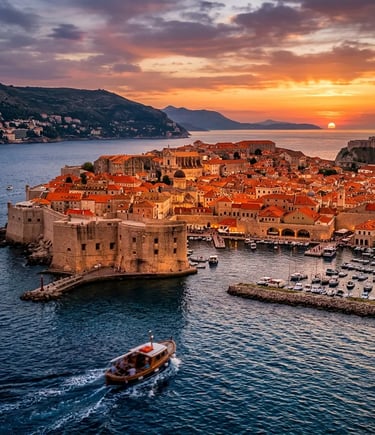
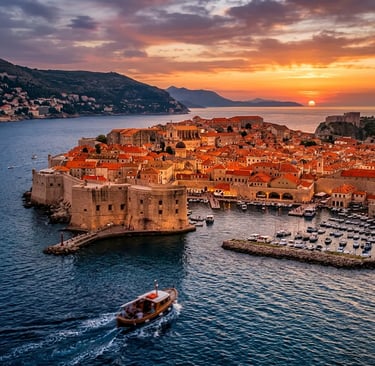
The route continues through Dubrovnik's ancient walled city, one of Europe's most visually striking urban environments, before descending along the Adriatic coastline into the fjord-like Bay of Kotor in Montenegro. Each stop is sequenced for maximum sensory impact and minimum transit fatigue.
These are not random pins on a map. They represent a narrative arc through 1,700 years of overlapping civilizations, experienced in the correct order, at the correct pace, with the full weight of your undivided attention available at every stop.
Connect
Join us for travel tips and destination insights.
© 2026. All rights reserved.
Affiliate disclaimer
This website contains affiliate links. If you purchase through these links, we may earn a commission at no extra cost to you.