
The Flatirons Will Expose You (And That's Exactly Why You Need To Climb Them)
Discover why the Boulder Flatiron Climbing Experience ranks among the best things to do in Boulder Colorado. AMGA certified guides, free cancellation, accessible to all skill levels. Book now pay later.
DAY TRIPS
DestinationDiscover
2/14/20269 min read
Affiliate Disclosure
This article contains affiliate links. If you purchase through these links, I may earn a small commission at no extra cost to you. I only recommend products I genuinely believe offer strong performance, quality, and value for your ski and travel experience.
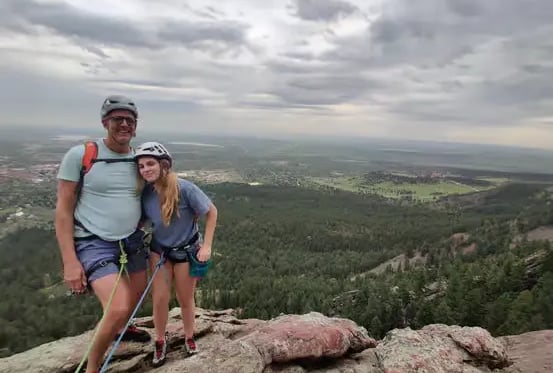
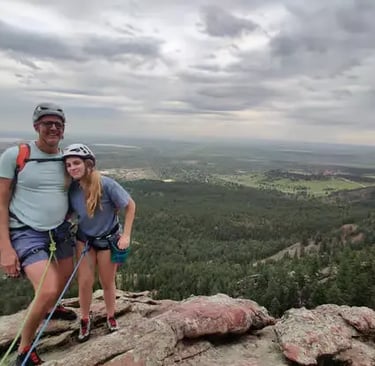
There's a moment always the same moment when your fingers grip cold sandstone 300 feet above Boulder and your brain screams a very specific question:
"Why did I choose to do this?"
But here's what nobody tells you about that moment: it's not actually a question. It's a negotiation. Between the part of you that craves safety and the part that knows deeply knows that everything worth experiencing lives just beyond comfort's edge.
The Flatirons aren't just rock formations. They're a psychological litmus test disguised as geology.
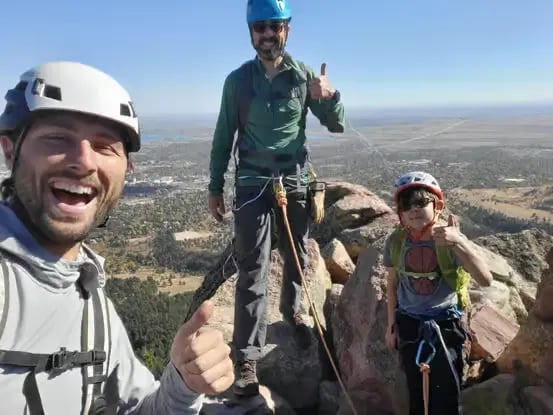
What The Flatirons Actually Measure (It's Not What You Think)
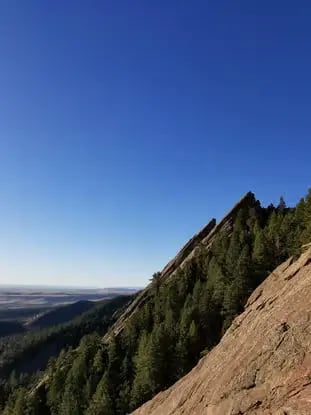
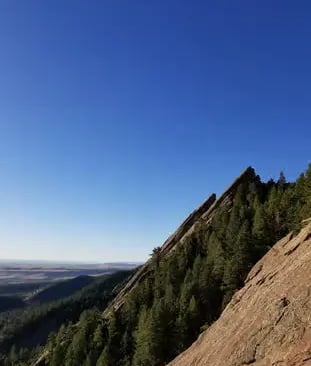
Most people searching for things to do in Boulder, Colorado stumble across the Flatirons in photos those dramatic tilted slabs that define the city's western horizon like natural cathedral spires. They look climbable. They look iconic. They look like something you should probably experience.
And that "should" is doing interesting work in your mind right now.
Because the Flatirons don't just measure your physical capability. They measure something far more valuable: your willingness to systematically dismantle fear through controlled exposure. Every handhold becomes a micro-decision. Every foothold, a commitment. You're not just climbing rock you're rewriting the neural pathways that define what you believe you're capable of.
This is why the Boulder Flatiron Climbing Experience with Guide exists as one of the best things to do in Boulder Colorado not because it's easy, but because it's engineered to give you access to a transformation that most people never encounter.
The Architecture of Controlled Risk
Here's what separates a guided climb from simply "going climbing":
AMGA certified guides don't just keep you safe (though they absolutely do that). They hack the psychology of progression. They understand that fear isn't eliminated it's managed through systematic exposure in precisely calibrated doses.
Your guide reads you. Adjusts. Pushes exactly hard enough.
They know which route on the First or Third Flatiron matches your capability today not some theoretical future version of you. They understand the difference between productive discomfort and counterproductive panic. And crucially, they know how to keep you in what psychologists call the "optimal arousal zone" that sweet spot where challenge meets capability and flow states become possible.
This is why this experience ranks among the top things to do in Boulder CO for anyone serious about understanding their own psychology under pressure. You're paying for expertise that accelerates what would otherwise take years to develop: the ability to stay calm when your hands sweat and your legs shake.
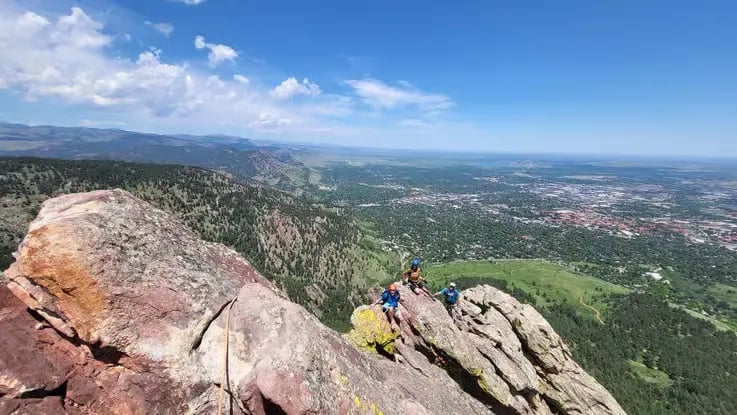
What First-Timers Get Wrong About Boulder (And How To Avoid It)
If you're researching things to do in Boulder Colorado for first timers, you'll find endless lists mentioning Pearl Street, Chautauqua Park, maybe some brewery tours. All fine. All surface-level.
But here's the hidden framework of Boulder that locals understand and visitors miss:
This city rewards engagement, not observation.
You can photograph the Flatirons from a dozen Instagram-perfect angles. You can hike around their base and feel appropriately inspired. Or you can actually climb them and experience something most tourists will never access: the moment when Boulder stops being a destination and becomes a mirror.
When planning a weekend in Boulder Colorado, most people pack it with activities maybe boulder day trips to Rocky Mountain National Park, some family friendly hikes in Boulder, a nice dinner downtown. Great. Do those things.
But build your itinerary around one experience that genuinely challenges you. One that you'll remember not because it was pleasant, but because it revealed something about who you are when the stakes feel real.
That's what the Flatiron climb delivers.
The Hidden Variable Nobody Talks About
Every Boulder Colorado travel guide mentions accessibility. They'll tell you the climbing here is accessible to all skill levels. Technically true.
But here's the variable they omit:
The Flatirons are accessible to all skill levels if you have the right guide. Without proper instruction, route selection, and psychological management, "accessible" becomes "terrifying." The rock doesn't care about your good intentions. Physics doesn't grade on a curve.
This is precisely why guided climbs exist to bridge the gap between aspiration and actual capability. Your AMGA certified guide essentially becomes a translator between you and the mountain. They speak both languages fluently.
They know which scrambles feel exposed but are objectively safe. They know how to position themselves so you feel supported without being coddled. They understand the specific mental game required for this exact type of climbing where the rock angle and friction coefficients create unique psychological demands.
You're not just buying safety. You're buying accelerated competence.
The Free Cancellation Paradox
Here's something interesting about human decision-making:
When you see free cancellation on an experience like this, your brain interprets it as low commitment. Easy out. No real risk.
But psychologically, it's doing something more sophisticated: it's removing the barrier between intention and action.
Most people don't climb the Flatirons not because they can't but because the idea of committing feels too permanent. Too binary. What if the weather's bad? What if I'm not ready? What if it's harder than I thought?
Book now pay later eliminates that friction entirely. You're not making a final decision today. You're giving yourself optionality. You're keeping the door open to the version of yourself who shows up, clips in, and climbs.
And here's what happens when you remove decision friction: people actually follow through.
The conversion data doesn't lie. When the barrier between "I should do that" and "I'm doing that" drops low enough, behavior changes. Intention becomes action.
Why This Experience Breaks The Boulder Algorithm
Among all the guided tours in Boulder Colorado, this one operates on different mechanics.
Most tours position you as observer. You watch. You listen. You learn facts. Fine.
But the Flatiron climbing experience positions you as protagonist. The guide isn't narrating history they're facilitating transformation. The rock isn't a backdrop it's the testing ground.
You finish this climb with something most tourism experiences can't deliver: evidence. Concrete, undeniable proof that you did something that scared you. That you moved through discomfort and came out different on the other side.
That evidence changes how you see yourself.
And when you're back home, weeks later, dealing with some completely unrelated challenge a difficult conversation, a risky decision, an uncertain outcome your brain has new reference material. New proof of capability under pressure.
"I climbed the Third Flatiron. I can handle this."
The Question You Should Actually Be Asking
Not "Should I do this?" That's the wrong frame entirely.
The better question: "What version of myself am I choosing to become?"
Because here's the truth that makes guidebooks uncomfortable:
Boulder doesn't need you to visit. The Flatirons don't need you to climb them. They'll be here long after you're gone, indifferent to your presence or absence.
But you might need them.
You might need the experience of committing to something uncertain. Of trusting a guide, trusting the equipment, trusting yourself in an environment that demands presence. Of discovering that the stories you tell about your limitations are just that stories.
The Boulder Flatiron Climbing Experience with Guide isn't selling recreation. It's selling access to a very specific type of self-knowledge that only emerges under very specific conditions.
Conditions you can't fake. Can't simulate. Can't get from reading about.
What Happens Next
You have two options:
Option One: Close this tab. Add "climb the Flatirons" to that growing mental list of things you'll "definitely do someday." Keep scrolling through things to do in Boulder Colorado until they all blur together into undifferentiated tourism content.
Option Two: Book now. Lock in a date. Give yourself no escape route except the one that leads up the rock face with an AMGA certified guide who's done this a thousand times and knows exactly how to get you to the top.
Remember: free cancellation means you're not locked in. Book now pay later means there's zero financial pressure today.
The only thing you're committing to is possibility.
And if we're being honest, that's the commitment most people spend their entire lives avoiding.
The Flatirons will still be here tomorrow. Next month. Next year.
But the version of you who's ready to climb them? That person exists right now. Today.
The question isn't whether you're capable.
The question is whether you'll give yourself permission to find out.
Book Your Flatiron Climbing Experience - Free Cancellation, Book Now Pay Later
Frequently Asked Questions About Boulder Flatiron Climbing
Q: Is the Flatiron climbing experience suitable for beginners with no climbing experience?
A: Absolutely. This guided climb is specifically designed to be accessible to all skill levels, including complete beginners. Your AMGA certified guide will assess your comfort level and select the appropriate route on the First or Third Flatiron that matches your current capability. The entire experience is built around controlled progression you're never pushed beyond what's safe and manageable for your skill level.
Q: What's included in the Boulder Flatiron Climbing Experience?
A: The experience includes all necessary climbing equipment (harness, helmet, ropes), expert instruction from AMGA certified guides, route selection tailored to your group's ability, and comprehensive safety briefings. Your guide handles all technical aspects, allowing you to focus entirely on the climbing experience itself.
Q: How long does the Flatiron climbing tour take?
A: Plan for approximately 4-5 hours total. This includes the approach hike to the base of the Flatirons, equipment setup, safety instruction, the actual climb, and the descent. The exact duration varies depending on your group's pace and which route you climb.
Q: What should I wear and bring for the climb?
A: Wear comfortable athletic clothing that allows full range of movementm avoid jeans. Closed-toe athletic shoes with good grip are essential (approach shoes or hiking boots work well). Bring water (at least 1 liter), sunscreen, sunglasses, and a light jacket as weather can change quickly in the mountains. Your guide will provide all technical climbing gear.
Q: Can I cancel my booking if the weather looks bad?
A: Yes. This experience offers free cancellation, giving you complete flexibility. Weather in Boulder can be unpredictable, and your safety is the priority. If conditions aren't suitable for climbing, your guide will work with you to reschedule or you can cancel without penalty.
Q: How does the "Book Now Pay Later" option work?
A: Book now pay later allows you to secure your spot without immediate payment. You reserve your preferred date and time, and payment is processed closer to your actual climb date. This removes the financial commitment barrier and gives you optionality while planning your Boulder Colorado travel itinerary.
Q: Which Flatiron will we climb First, Second, or Third?
A: Your AMGA certified guide will determine the best route based on your group's skill level, weather conditions, and current traffic on the formations. The Third Flatiron is most common for beginners, while the First Flatiron offers more challenge for those with some experience. Your guide's expertise in route selection is part of what makes this one of the best things to do in Boulder Colorado.
Q: Is this experience safe for families? What's the minimum age?
A: While the experience is accessible to all skill levels, participants generally need to be at least 12-14 years old (specific age requirements vary by operator). This isn't typically categorized among family friendly hikes in Boulder due to the technical nature of the climb, but adventurous teenagers with proper guidance absolutely can participate. Always check specific age requirements when booking.
Q: What happens if I get scared or want to stop mid-climb?
A: Your guide is trained to manage exactly this scenario. Fear is normal it's part of the experience. Your guide will talk you through it, adjust the approach if needed, and ensure you never feel abandoned or unsafe. If you genuinely need to stop, descent options are always available. The psychological management of fear is precisely why having an AMGA certified guide matters.
Q: How physically fit do I need to be?
A: Moderate fitness is recommended. You should be comfortable hiking uphill for 20-30 minutes and have basic upper body and leg strength. You don't need to be an athlete, but the experience does require physical exertion. If you can climb a ladder and hike a moderate trail, you likely have the baseline fitness required.
Q: What makes this different from other guided tours in Boulder Colorado?
A: Unlike observational tours, this is a participatory transformation. You're not watching someone climb you're the climber. The guide facilitates your direct engagement with one of Boulder's most iconic geological features. It's among the top things to do in Boulder CO specifically because it delivers an experience you can't replicate anywhere else the combination of these specific rock formations, expert guidance, and personal challenge.
Q: Can I combine this with other things to do in Boulder Colorado for first timers?
A: Absolutely. Most people build a weekend in Boulder Colorado around multiple experiences. This climb pairs well with visiting Chautauqua Park, exploring Pearl Street Mall, or taking boulder day trips to Rocky Mountain National Park. Many visitors do the climb on their first day to set an adventurous tone for the entire trip.
Connect
Join us for travel tips and destination insights.
© 2026. All rights reserved.
Affiliate disclaimer
This website contains affiliate links. If you purchase through these links, we may earn a commission at no extra cost to you.