
The Bernina Express from Milan to St. Moritz: Why Most Travelers Get This Wrong
Discover how to get to St. Moritz from Milan the right way via the UNESCO-listed Bernina Express panoramic train. Learn why independent booking fails and how a private tour secures your seats before they're gone.
DAY TRIPS
DestinationDiscover
3/27/20265 min read
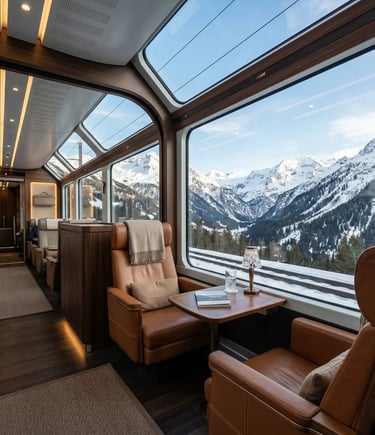
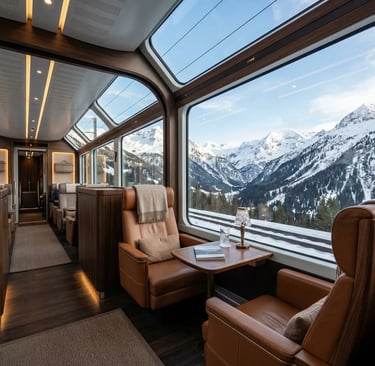
There's a particular kind of traveler who plans the Bernina Express journey from Milan independently. They spend weeks building what feels like an airtight itinerary train schedules, transfer windows, luggage logistics. Then, somewhere between Milan Centrale and Tirano, the system exposes every gap in their plan. The panoramic car is booked. The connection is missed. The experience they imagined dissolves into a sequence of fluorescent waiting rooms.
This isn't bad luck. It's a predictable outcome. And understanding why it happens consistently is the first step to engineering a genuinely different result.
How to Get to St. Moritz from Milan Efficiently
The geography matters here. Milan to St. Moritz covers approximately 200 kilometers, but the route does not reward linear thinking. You are not simply moving north. You are transitioning between two entirely different logistical ecosystems Italian rail infrastructure and the precision Swiss network — while attempting to synchronize with one of the most in-demand scenic train experiences in Europe.
The functional route runs Milan → Tirano by regional train (roughly 2.5 hours), then Tirano → St. Moritz via the Bernina Express (approximately 2 hours 20 minutes). Total travel time under ideal conditions sits around five hours. But "ideal conditions" is where independent travelers consistently overestimate their control.
The engineered solution the one that removes friction entirely is a private driver Milan to Swiss Alps. A vetted, route-experienced driver absorbs every variable: luggage management, flexible departure timing, direct hotel access in St. Moritz, and critically, pre-secured panoramic train reservations handled before you ever leave Milan. This is not a luxury upgrade. It is a logistics correction.
Why the Bernina Express Panoramic Train Is a Restricted Asset
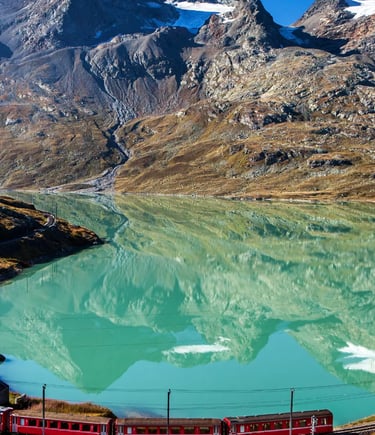
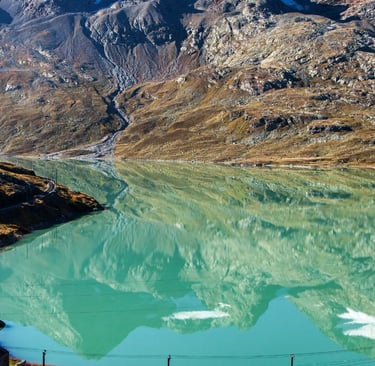
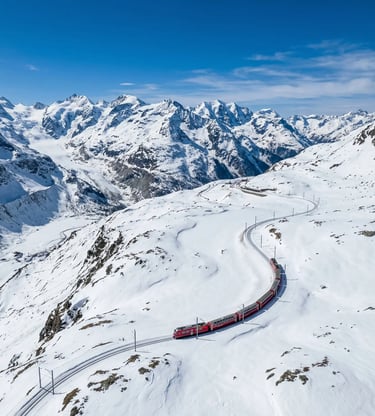
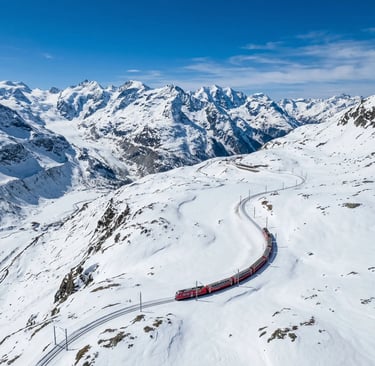
The Bernina Express is not simply a train. It is a UNESCO World Heritage Site in motion specifically, the Rhaetian Railway through the Albula and Bernina landscapes, designated in 2008 as one of the great feats of early 20th-century engineering. The line crosses 196 bridges, passes through 55 tunnels, and climbs to 2,253 meters at the Ospizio Bernina the highest railway crossing in the Alps without a single rack-and-pinion mechanism. It does this using pure gradient engineering that took decades to develop.
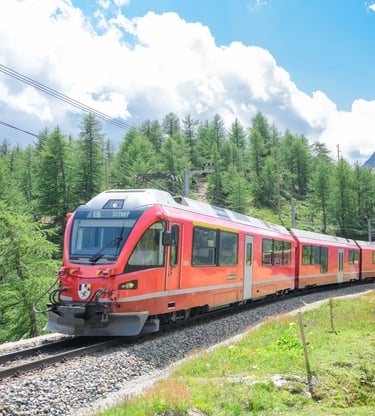
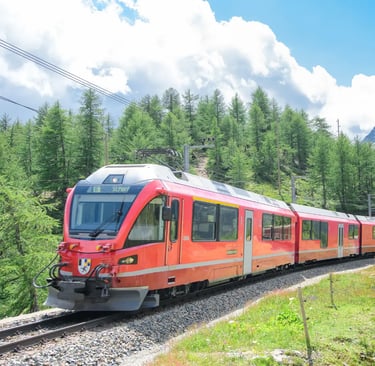
The panoramic carriages wide-format windows designed to frame the Morteratsch Glacier, the spiral viaducts of Brusio, and the high-alpine plateau are the only seats worth holding on this journey. And they are, structurally, a scarce asset.
Here is what most travelers do not factor in: panoramic seat reservations on the Bernina Express operate on a separate booking layer from the standard ticket. High season availability particularly June through October and the winter ski corridor compresses rapidly. Independent travelers arriving at this booking layer late, or without familiarity with the Swiss reservation system, frequently find the panoramic allocation closed. They ride the Bernina Express in a standard car. The experience is technically the same route. Psychologically, it is not the same journey.
The best Bernina Express tour isn't defined by the train itself. It's defined by the access architecture built around it.
St. Moritz Is Not a Destination You Improvise
St. Moritz operates on a different behavioral frequency than most European destinations. This is an enclave that has hosted global wealth, Olympic competitions (1928 and 1948), and a consistent concentration of discerning travelers for over 150 years. The town's social proof is institutional. It does not need to market itself. The question it implicitly asks every arriving traveler is simply: did you prepare correctly?
Arriving into St. Moritz through a structured private tour confirmed panoramic seats, seamless Milan departure, direct transfer to your property signals something. It is the behavioral signature of a traveler who understood the logistics in advance and acted accordingly.
Arriving after a missed connection in Tirano signals something different.
The Availability Window Is Not Theoretical
Panoramic seats for peak-season Bernina Express departures book out weeks in advance. Private driver availability from Milan to the Swiss Alps, combined with pre-secured train reservations and hotel-to-hotel logistics, represents a finite inventory. These are not marketing constructs. They are operational realities.
The travelers who secure this specific private tour format are not necessarily the wealthiest in the room. They are the ones who recognized early that the scarcity was real, made the decision, and removed the variable of failure before it became relevant.
The window is open. The panoramic seats still exist on certain dates. The engineered route from Milan to St. Moritz the one that actually delivers the experience is bookable right now.
Smart insiders don't wait to find out what's left.
Frequently Asked Questions: Bernina Express from Milan to St. Moritz
How long does it take to get from Milan to St. Moritz by train?
The full journey from Milan to St. Moritz via the Bernina Express takes approximately five hours under optimal conditions. This includes a regional train from Milan Centrale to Tirano roughly 2.5 hours followed by the Bernina Express leg from Tirano to St. Moritz, which runs approximately 2 hours and 20 minutes. However, this window assumes perfect connection timing, no delays on the Italian rail segment, and pre-secured seating on the Swiss side. In practice, independent travelers frequently encounter buffer failures between the two networks, which can extend total travel time significantly or result in missing the Bernina departure entirely.
Are panoramic seats on the Bernina Express included in the standard ticket?
No and this is one of the most consistently misunderstood aspects of this journey. Panoramic carriage seats on the Bernina Express require a separate reservation on top of the base ticket, and that reservation operates within a strictly limited allocation. Standard tickets grant access to the train but do not guarantee placement in the wide-window panoramic cars, which are the carriages specifically engineered to frame the UNESCO-listed Alpine landscape, the Brusio spiral viaduct, and the Morteratsch Glacier. During high season June through October and the winter ski corridor panoramic seat inventory closes weeks in advance. Travelers who arrive at the booking layer late ride the same route with an entirely different visual experience.
Why is organizing the Bernina Express from Milan independently considered high-risk?
The core problem is a logistical handoff between two separate rail ecosystems Italian regional infrastructure and the Swiss precision network that do not operate on synchronized logic. Independent travelers must coordinate departure timing from Milan, manage luggage across multiple platforms, absorb potential Italian rail delays, and navigate the Swiss reservation system for panoramic seats, all without a structural buffer if any single element shifts. The failure rate is not a matter of traveler incompetence. It is a predictable outcome of attempting to self-manage a multi-variable journey without insider knowledge of the booking architecture. A private driver from Milan to the Swiss Alps, combined with pre-secured panoramic reservations, eliminates each of these variables before departure.
What makes St. Moritz worth this level of logistical planning?
St. Moritz is not a destination that rewards improvisation, and its reputation is not built on marketing. This is an Alpine enclave with over 150 years of documented heritage as a gathering point for global discernment hosting two Winter Olympics, anchoring the Engadin valley as one of Europe's premier high-altitude environments, and maintaining an unbroken standard that most European resort towns reference but cannot replicate. Arriving correctly with confirmed panoramic train seats, seamless transfer logistics, and hotel-direct access is behaviorally consistent with what the destination expects. The journey itself, through UNESCO-recognized landscape engineering across 196 bridges and 55 tunnels, is not a preamble to St. Moritz. It is the first statement of the experience.
Connect
Join us for travel tips and destination insights.
© 2026. All rights reserved.
Affiliate disclaimer
This website contains affiliate links. If you purchase through these links, we may earn a commission at no extra cost to you.