
Balkan Tour: 5 Countries in 6 Days Why This Itinerary Is Engineered, Not Improvised
Discover why the Balkan Tour 5 Countries in 6 Days GetYourGuide package is a masterpiece of tactical travel planning. Border crossings, accommodation sequencing, and route logic broken down with precision for smart travelers.
DAY TRIPS
DestinationDiscover
3/21/20265 min read
Affiliate Disclosure
This article contains affiliate links. If you purchase through these links, I may earn a small commission at no extra cost to you. I only recommend products I genuinely believe offer strong performance, quality, and value for your ski and travel experience.
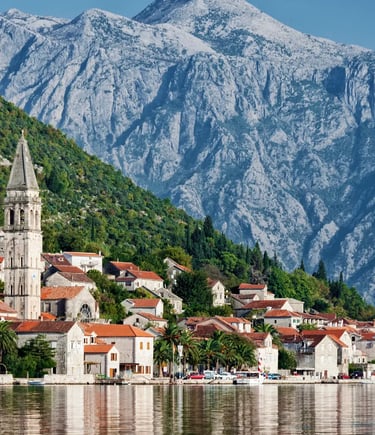
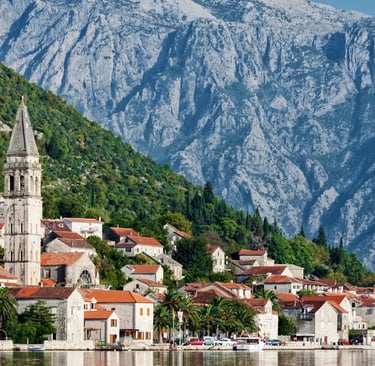
Most travelers look at the Balkans and see a map full of possibility. Experienced logistics planners look at the same map and see a minefield of border delays, mismatched transport schedules, and accommodation gaps that will destroy a self-planned trip before day three. The GetYourGuide "Balkan Tour: 5 Countries in 6 Days" package [INSERT LINK] isn't a travel product. It's a sequenced operational plan. Here's exactly why the architecture of this itinerary works and why replicating it independently would cost you more time, money, and sanity than you're prepared to spend.
The Logic of the Tirana Departure
Albania is not a random starting point. It is a deliberate one. Tirana sits at the southwestern anchor of the Balkan corridor, which means every subsequent movement flows northeast with geographic momentum rather than fighting it. Starting here eliminates backtracking entirely. The route doesn't zigzag it progresses. This single decision, choosing Tirana as the origin node, cuts approximately four to six hours of redundant travel from the total trip compared to routes that begin in Belgrade or Sarajevo. That's not a minor optimization. Over six days, recovered hours translate directly into meaningful ground-level experiences rather than windshield time.
Border Crossing Mechanics
This is where independent travelers consistently underestimate the complexity. The Balkans contain a patchwork of EU member states, Schengen zone participants, and fully independent border regimes operating under entirely separate inspection protocols. The Albania-North Macedonia crossing, the North Macedonia-Kosovo corridor, and the Serbia entry points each carry distinct documentation requirements, peak congestion windows, and unofficial processing delays that vary by day of week and season.
This package routes crossings during statistically low-traffic windows. That precision isn't guesswork it's the product of repeated operational experience. A first-time self-planner has no access to that data. They will guess. And they will frequently guess wrong, arriving at a crossing during a shift change or a regional market day that stacks vehicles for two hours. The guided itinerary doesn't leave border mechanics to chance because border mechanics are not a chance operation.
The Accommodation Sequencing Strategy
Nights on this tour are not placed arbitrarily. Each overnight stop is positioned to front-load the following day's primary destination. Staying in Prizren, for example, isn't just about the city itself it's about being 40 minutes from the next corridor entry point at 7 AM instead of three hours away. This is hub-and-spoke logic applied to sequential linear travel. The accommodation chain is pre-negotiated, pre-confirmed, and operationally integrated into the movement schedule.
Attempt to replicate this independently and you will face a specific problem: the properties that make logistical sense are often boutique guesthouses with limited online booking infrastructure. They don't appear cleanly on major platforms. Finding them requires local knowledge, language capacity, and direct communication. The guided package has already solved this problem invisibly.
Why Six Days Is the Optimal Window Not a Compromise
Amateur itinerary builders would look at five countries and assume more time equals better execution. That assumption is incorrect. Six days is not a compressed version of a ten-day trip. It is a purpose-built format calibrated to attention thresholds, physical endurance, and diminishing returns on extended exposure. By day seven in this kind of multi-border environment, decision fatigue degrades the quality of experience regardless of how well the logistics are managed. Six days keeps the sensory input dense and the traveler engaged throughout.
This is a calibrated experience delivery system. Not a vacation itinerary with extra steps.
The Efficiency Equation You Can't Solve Alone
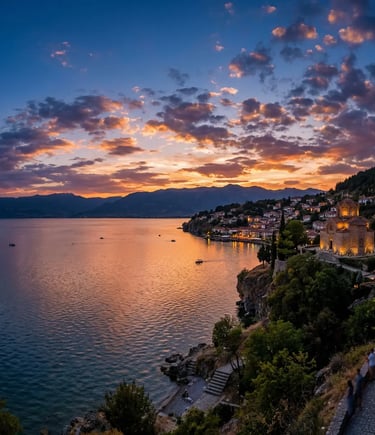
Here is the core analytical conclusion: the value of this package is not the sum of its destinations. It is the elimination of coordination friction across every transition point. Every hour you don't spend researching visa reciprocity agreements, phoning guesthouses in Serbian, or cross-referencing bus schedules with border opening hours is an hour you spend in Kotor's old city, on Lake Ohrid's western shore, or in a Sarajevo kafana that nobody outside the neighborhood knows exists.
The balkan guided tour itinerary built into this package represents dozens of iterative planning cycles compressed into a single purchasable asset. The seamless border crossings Europe promises in the marketing copy are not aspirational they are the byproduct of solving the same logistical problems repeatedly until the solution is airtight.
Efficient travel planning at this level is a professional competency. The 6-day Balkan trip overview this package delivers is the output of that competency applied systematically.
You could spend sixty hours planning a version of this trip. Or you could spend sixty hours actually living it.
The math isn't complicated. The decision shouldn't be either.
Frequently Asked Questions About the Balkan Guided Tour
Is 6 Days Really Enough Time to Cover 5 Balkan Countries?
Six days is not a shortcut it is the engineered optimum for this specific corridor. The itinerary is designed around geographic momentum, meaning every country flows into the next without backtracking or wasted transit. Each day is front-loaded with primary experiences and closes near the following day's entry point. You are not rushing through five countries. You are moving through them with the precision of someone who has pre-solved every logistical variable before departure. The result is a trip that feels expansive, not compressed.
What Makes Border Crossings on This Tour Different From Solo Travel?
The Balkans operate under multiple overlapping border regimes some EU, some Schengen, some fully independent each with its own processing protocols, documentation requirements, and congestion patterns. Solo travelers encounter these systems cold, with no data on optimal crossing windows or shift-change delays. This guided package routes every border transition during low-traffic periods based on accumulated operational experience. That knowledge is invisible to a first-time planner and impossible to replicate without repeated direct exposure to each specific crossing point across different seasons and days of the week.
Which Countries Are Included in the Balkan Tour Itinerary?
The tour covers Albania, North Macedonia, Kosovo, Serbia, and Bosnia and Herzegovina five distinct nations across one of Europe's most culturally layered and historically significant corridors. Each country brings a radically different architectural, culinary, and cultural fingerprint. From Tirana's post-communist energy to Sarajevo's Ottoman-Habsburg hybrid identity, the sequence is deliberately curated for maximum contrast and context-building. You are not collecting passport stamps. You are moving through a compressed timeline of Balkan civilization with enough depth at each stop to form a genuine understanding of the region.
Do I Need Visas or Special Documentation for This Multi-Country Route?
Visa requirements across this corridor vary significantly depending on your passport. Citizens of most EU countries, the United States, the United Kingdom, Canada, and Australia can enter all five countries visa-free for short stays, but the rules shift based on duration and entry sequence. Kosovo, for instance, is not recognized by all nations, which creates specific entry complications for certain passport holders. The guided package accounts for these variables in its participant screening and pre-departure briefing process. Independent travelers frequently miss these nuances until they are standing at a border window at which point the options are limited and the consequences are significant.
Connect
Join us for travel tips and destination insights.
© 2026. All rights reserved.
Affiliate disclaimer
This website contains affiliate links. If you purchase through these links, we may earn a commission at no extra cost to you.