
The 3-Day Zagreb to Dubrovnik Tour That Ends the Planning Panic
The stress-free 3-day Zagreb to Dubrovnik tour with Plitvice, Split & Mostar included. Door-to-door transfers, licensed guides, fixed itinerary. Book now.
DAY TRIPS
DestinationDiscover
4/24/20266 min read
It's 11:47 PM. You have fourteen browser tabs open. One shows a bus schedule from Zagreb to Plitvice. Another is a Mostar border-crossing forum thread from 2019. A third is a blog telling you Split is "easy to reach" — right next to a map suggesting otherwise. Your coffee is cold. Your partner is asleep. And you still haven't booked a single thing.
Now picture the alternative.
A driver meets you outside your Zagreb hotel. You step into a quiet, air-conditioned vehicle. Three days later, you're standing on the walls of Dubrovnik watching the Adriatic turn gold, and the only decision you've made all trip is which glass of wine to order. No timetables. No border stress. No wasted hours. Just Croatia — delivered.
That's the difference this itinerary makes. And if you're an American with limited vacation days and a growing suspicion that Croatia is more complicated than Instagram suggested, read the next 90 seconds carefully.
The Hidden Problem With Planning Croatia Yourself
Here's what most first-timers don't realize until they arrive: Croatia is long. Ribbon-thin and mountain-split. The distance from Zagreb to Dubrovnik is roughly the same as New York to Detroit — except you're crossing into Bosnia and Herzegovina twice, navigating Schengen checkpoints, and hoping your bus connection in Split actually exists on a Sunday in shoulder season.
The hidden anxieties are real. Will we miss Plitvice because we misjudged the drive? Do we waste a full day in transit to Mostar? Is it safe to drive the coastal road ourselves after a red-eye flight?
These aren't irrational fears. They're the exact reasons most DIY travelers end up seeing two cities instead of six — and leaving Croatia wishing they'd done it differently.
The 3-Day Zagreb–Dubrovnik Route That Solves Everything
This is the exact itinerary engineered for first-timers who refuse to choose between seeing it all and staying sane: a 3-day Zagreb to Dubrovnik tour for first timers, with door-to-door transfers, licensed local guides, and a fixed route that connects every highlight without a single logistical decision falling on you.
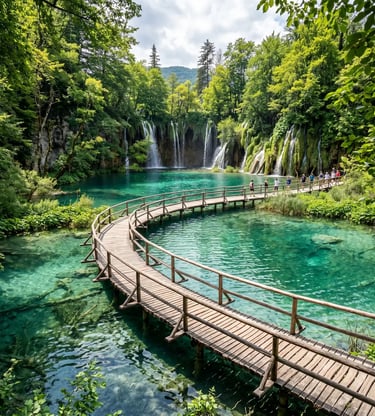
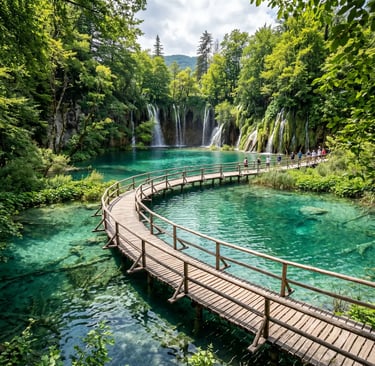
Day 1 — Zagreb → Rastoke → Plitvice → Split. You're picked up in Zagreb. You stop in Rastoke, the watermill village that looks like a storybook page. You spend the afternoon inside Plitvice Lakes National Park — the one sight nobody forgives themselves for skipping. By evening, you're in Split, dinner waiting.
Day 2 — Full day in Split. A licensed guide walks you through Diocletian's Palace, the 1,700-year-old Roman emperor's retirement home that locals still live inside. The rest of the day is yours: swim, eat black risotto, nap. You earned it.
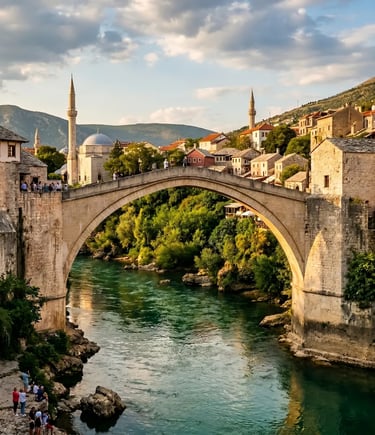
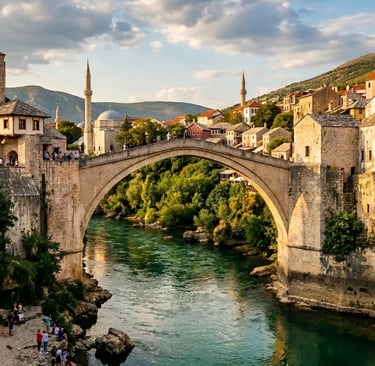
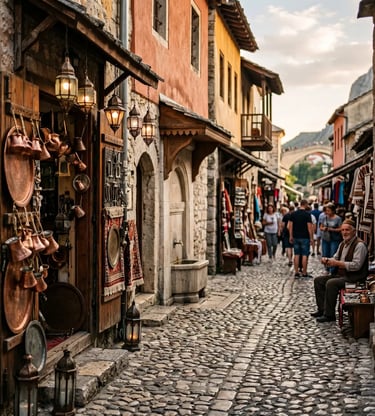
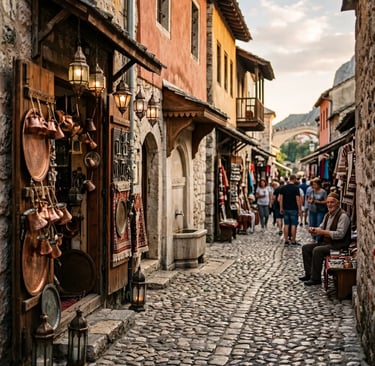
Day 3 — Split → Mostar → Dubrovnik. Cross into Bosnia. Stand on the Old Bridge in Mostar, where two cultures meet over a single arch of stone. Continue south along the Dalmatian coast. Arrive in Dubrovnik. Walk the walls. Exhale.
What You Actually Experience Each Day
Plitvice doesn't photograph honestly. The turquoise is real, but the sound waterfalls layered on waterfalls, wooden boardwalks just above the surface is what stays with you.
Diocletian's Palace isn't a museum. It's a living neighborhood of stone polished smooth by sixteen centuries of footsteps. A guide turns it from pretty backdrop into a story you'll retell for years.
Mostar is the emotional pivot. The Old Bridge, destroyed in 1993 and rebuilt stone by stone, teaches you something about the Balkans that no guidebook can.
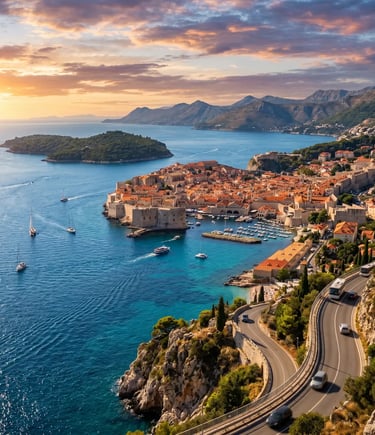
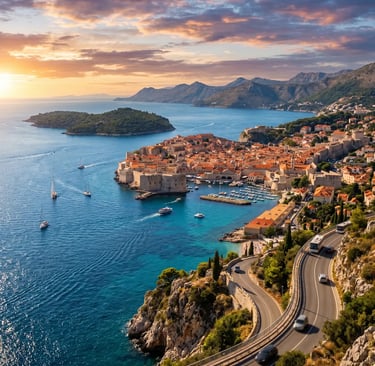
And then Dubrovnik. The walls. The red roofs. The sense that you just pulled off something most travelers don't: how to see Croatia and Bosnia in 3 days without the trip running you.
Why This Works So Well for Americans on Limited Vacation Time
You don't have two weeks. You have a long weekend bolted onto a European trip, or a compressed PTO window that has to deliver. A stress-free Croatia itinerary like this one Zagreb to Dubrovnik via Plitvice and Split, with a Mostar day trip from Split built in is the difference between coming home rested and coming home resentful.
No rental car. No missed buses. No arguments at border crossings. Just a professional handling the 5% of the trip that causes 95% of the stress.
Book the Route. Stop Planning.
You already know this is the trip. The only question is whether you keep researching for another three nights or lock it in now and spend that energy on the fun parts: the restaurant list, the playlist, the packing.
Reserve your spot on the 3-day Zagreb–Dubrovnik tour today, or save this itinerary before you lose it in tab number fifteen. Croatia rewards the decisive. Be one of them.
Frequently Asked Questions About the 3-Day Zagreb to Dubrovnik Tour
Is 3 days really enough to see Croatia and Bosnia properly?
Three days is enough to experience the highlights that matter most, provided the logistics are handled for you. This tour is engineered specifically to eliminate wasted transit time, which is what normally turns a short Croatia trip into a rushed disappointment. You'll walk inside Plitvice Lakes National Park, stand in Diocletian's Palace in Split, cross the Old Bridge in Mostar, and finish on the walls of Dubrovnik.
For first-time visitors with limited vacation days, this route delivers the highest-impact version of Croatia without requiring you to choose between depth and breadth. Travelers who attempt the same itinerary on their own typically lose 6–8 hours to border crossings, bus delays, and navigation mistakes. With a fixed itinerary and a driver, those hours become experiences instead of stress.
If you had two weeks, you'd absolutely spend more time on the islands. But for a focused first visit, three guided days gives you a complete, connected story from the continental capital to the Dalmatian coast.
Do I need a visa or special documents to cross into Bosnia for the Mostar stop?
Most American, Canadian, UK, and EU travelers do not need a visa for short visits to Bosnia and Herzegovina, but you will need a valid passport with sufficient validity beyond your travel dates. The border crossing between Croatia and Bosnia is handled as part of the tour, and your guide will walk you through the process so nothing feels unfamiliar or stressful.
It's important to understand that Bosnia is outside the Schengen Area and the European Union, which is why crossing the border is a real checkpoint rather than a formality. This is one of the most common pain points for DIY travelers who don't realize they're making two international crossings on Day 3. On a guided transfer, the process is smooth and typically adds minimal time to your journey.
Always verify your specific passport's requirements with your home country's travel advisory before booking, as entry rules can change. Bring the physical passport with you on Day 3, not just a photo or copy.
What is actually included in the door-to-door transfer service?
The door-to-door service means you are picked up directly from your accommodation in Zagreb on Day 1 and dropped off at your accommodation in Dubrovnik at the end of Day 3, with all transfers between cities and sights handled by a private or small-group vehicle. This includes the Zagreb–Rastoke–Plitvice–Split route, any movement within Split with your licensed guide, and the Split–Mostar–Dubrovnik leg on the final day.
What's typically included beyond transport: licensed professional guides at key sights, Plitvice Lakes entrance coordination, and a clear itinerary you don't have to manage. What's typically not included: hotel accommodations, meals outside of specified stops, personal expenses, and optional activities during your free time in Split.
Always review the specific inclusions of the exact tour package you book, since providers structure their offerings differently. The core value remains the same across reputable operators: you stop thinking about logistics and start experiencing Croatia.
What's the best time of year to book this 3-day Croatia itinerary?
Late spring (May to early June) and early fall (September to mid-October) are widely considered the ideal windows for this route. The weather is warm but not punishing, Plitvice's waterfalls are running strong, the Dalmatian coast is swimmable, and crowds at Diocletian's Palace and Dubrovnik's walls are far more manageable than in peak July and August.
Summer is still beautiful, but be honest with yourself about heat tolerance. Walking Dubrovnik's walls in a 35°C (95°F) afternoon in July is a different experience than doing it in a mild October morning. Winter tours are possible and carry their own quiet charm, especially in Plitvice under a light snow, but daylight is limited and some coastal services run reduced schedules.
Book your preferred dates at least 6–8 weeks in advance during shoulder season, and longer for peak summer. The best guides and vehicle availability disappear first, and this is not a tour you want to compromise on.
Connect
Join us for travel tips and destination insights.
© 2026. All rights reserved.
Affiliate disclaimer
This website contains affiliate links. If you purchase through these links, we may earn a commission at no extra cost to you.