
The 2-Day Wine Tour from Barcelona to Penedès and Priorat That Belongs on Every Serious Traveler's List
A 2-day guided wine tour from Barcelona through Penedès cava estates and Priorat's llicorella slate vineyards, with medieval Siurana Castle, barrel tastings, and luxury private transport.
DAY TRIPS
DestinationDiscover
6/3/20267 min read
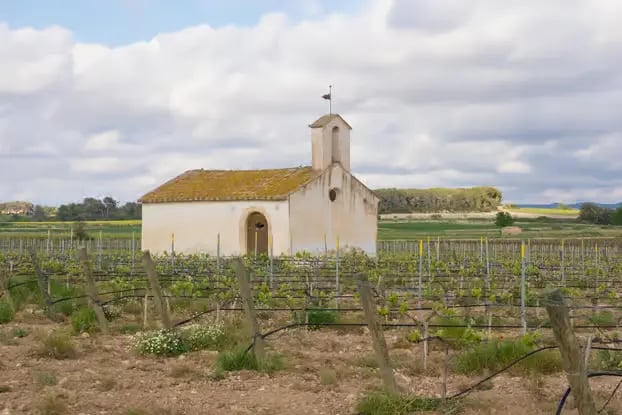
If you have two days free in Barcelona and even a passing interest in wine, there is one itinerary that consistently outranks everything else: a guided journey through Penedès and Priorat. Not a rushed day trip. Not a Montserrat monastery add-on. A proper, overnight wine immersion across two of Catalonia's most respected appellations, with medieval history woven into the drive between them.
Here is exactly how it unfolds and why it works.
Day One: Penedès, Where Cava Was Born
The tour departs Barcelona in the morning by luxury vehicle with an expert local guide fluent in English and Spanish. Within an hour, you are standing inside the Penedès wine region, surrounded by orderly vine rows that stretch toward the Montserrat range on the horizon.
Bodega Torres: Sustainable Viticulture at Scale
The first stop is Bodega Torres, one of the most recognized family wineries in Europe. What makes Torres relevant today is not legacy alone but its leadership in sustainable viticulture, including carbon-capture programs and high-altitude vineyard experiments responding to climate shift. A guided walkthrough puts you face-to-face with the infrastructure behind modern Spanish winemaking.
Juvé & Camps: Traditional Cava Aging and Gourmet Pairings
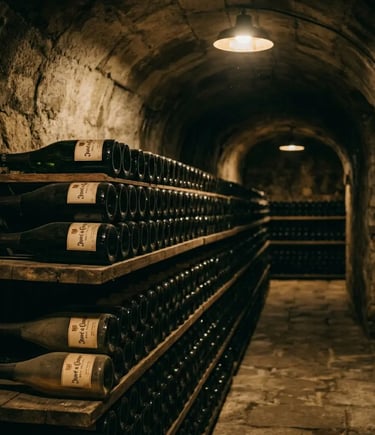
The second visit shifts the register entirely. Juvé & Camps is a family estate dedicated to traditional method cava, the sparkling wine that has defined this region since the nineteenth century. The cellars here hold bottles aging under cork for years, developing the fine bead and bready complexity that distinguishes reserva-level cava from its industrial counterparts. A gourmet pairing session pairs these bottles with local cheeses and cured meats, giving the afternoon a slower, more deliberate rhythm.
The Transition: Siurana Castle and the Shift to Priorat
The drive from Penedès to Priorat is not filler. The route climbs into the dramatic terrain of Tarragona province and stops at Siurana Castle, a medieval fortress perched on a limestone cliff above the Siurana River valley. This was the last Saracen stronghold to fall during the Christian reconquest of Catalonia. The legend of the Saracen princess who chose the cliff over surrender still marks the site. You stand where she stood, looking out over the same ridgeline. It takes about fifteen minutes to absorb, and it recalibrates everything before you arrive at a quiet rural hotel in Priorat for the night.
Day Two: Priorat, the Mountain Wine
Priorat holds DOCa status, the highest classification in Spanish wine law, shared only with Rioja. The reason is geological. The vineyards here grow on terraces of llicorella, a dark, fissured slate that forces vine roots deep into fractured rock for moisture. The result is fruit of unusual concentration, producing wines with mineral intensity and natural structure that age for decades. This is not marketing language. It is the physical reality of the soil.
Gratallops: The Heart of the Appellation
The morning begins in and around Gratallops, the small village at the center of Priorat's modern renaissance. Walking through steep, terraced vineyards, you see the llicorella up close, dark and glinting, splitting in thin layers underfoot. The guide explains how altitude, slope angle, and sun exposure shift the character of the wine from one parcel to the next.
Bodega Perinet: Barrel-Aging and Winemaker Perspective
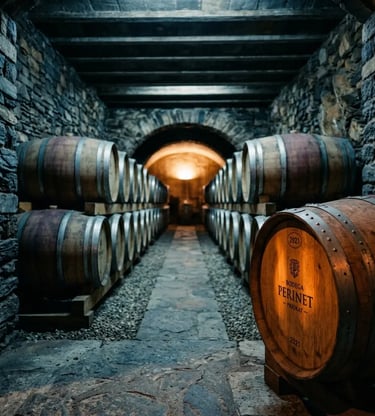
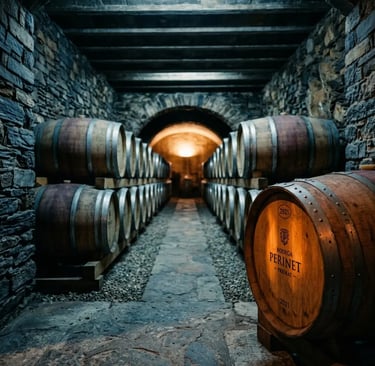
At Bodega Perinet, the visit moves indoors. The focus is barrel-aging, the stage where Priorat's raw power is shaped into something drinkable. You walk through rooms of French oak, learning how toast levels and aging duration influence the final profile of Garnacha and Cariñena blends. Tasting directly from barrel, if timing allows, is one of the most instructive moments in any wine tour anywhere.
A Traditional Catalan Lunch
The tour closes with a long, seated Catalan lunch. Escalivada, the slow-roasted vegetable dish native to this part of Spain, anchors the table alongside local cured meats and a glass of sweet wine from late-harvest grapes in the surrounding hills. A meal designed to close a circle, not to rush you toward a gift shop.
The Return to Barcelona
After lunch, a comfortable 110-minute drive in the same luxury vehicle returns you directly to your hotel in Barcelona. No group bus. No intermediary stops in Salou or coastal resort towns. The booking is flexible, the guides adapt to your pace, and transport is private throughout.
Who This Tour Is For
This itinerary is built for travelers who have already done the city walk and the tapas crawl and are looking for something with more substance. Two days across Penedès and Priorat delivers a depth of wine knowledge, landscape, and historical context that a single afternoon cannot replicate. It is, by a clear margin, the most complete wine experience available from Barcelona.


Frequently Asked Questions About the 2-Day Barcelona Wine Tour to Penedès and Priorat
What makes the Penedès and Priorat wine regions different from each other?
Penedès and Priorat sit roughly ninety minutes apart by road, but they produce fundamentally different wines shaped by contrasting geography and winemaking philosophy. Penedès is defined by its rolling lowland terrain, a moderate Mediterranean climate, and its historical dominance in cava production. The region is home to large-scale estates like Bodega Torres and Juvé & Camps, where sustainable innovation and traditional method sparkling wines coexist within an accessible, well-developed wine tourism infrastructure.
Priorat occupies a different world entirely. Its steep, terraced hillsides are composed of llicorella, a dark metamorphic slate that fractures under the sun and forces vine roots meters deep into fractured rock to find moisture. This geological pressure produces red wines of exceptional mineral concentration, primarily from old-vine Garnacha and Cariñena. Priorat holds DOCa status, the highest classification in Spanish wine law, a distinction it shares only with Rioja.
Visiting both regions in sequence is what gives this tour its depth. You experience the full range of Catalan winemaking in two days, from the crisp, precise world of cava cellars to the raw, altitude-driven intensity of mountain reds. No single-day tour from Barcelona can replicate that contrast.
Is the Siurana Castle stop worth the time during a wine-focused tour?
Siurana Castle is not a detour. It sits directly on the route between Penedès and Priorat, positioned on a limestone cliff above the Siurana River valley, and functions as the natural transition point between the two wine regions. The stop takes roughly fifteen minutes, but it reframes the entire second half of the tour by grounding you in the medieval history of the landscape you are about to enter.
The fortress was the last Saracen stronghold to fall during the Christian reconquest of Catalonia, and the site carries a local legend about a Saracen princess who rode her horse off the cliff rather than surrender. Standing at the edge, looking out over the same ridgeline she saw, gives the landscape a weight that changes how you perceive the vineyards and villages of Priorat below.
Wine tours that skip the historical and geographical context of a region tend to blur together in memory. Siurana prevents that. It marks a clear before-and-after in the itinerary, separating the polished estate culture of Penedès from the remote, rugged terroir of Priorat in a way that stays with you long after the trip ends.
What should I expect from the Catalan lunch and the return to Barcelona?
The traditional Catalan lunch served at the end of the tour is a seated, multi-course meal built around regional dishes. Escalivada, a slow-roasted preparation of eggplant, red pepper, and onion dressed in olive oil, anchors the table. It is paired with local cured meats, artisan bread, and a glass of sweet wine made from late-harvest grapes grown in the surrounding Priorat hills. The meal is paced to close the experience with intention, not to fill a time slot.
After lunch, the return to Barcelona is a direct 110-minute drive in the same private luxury vehicle that has been with you since departure. There are no group bus pickups, no intermediary stops at coastal resort towns like Salou, and no detours through unrelated tourist sites. The driver returns you to the door of your hotel in Barcelona, and the timing typically places you back in the city by late afternoon.
This final segment matters more than it might seem. A comfortable, private return after two days of tasting and walking allows you to decompress without the friction of navigating public transport or managing logistics. It is part of what separates a serious wine tour from a budget excursion.
Who is this 2-day wine tour best suited for?
This itinerary is designed for travelers who have already spent time in Barcelona and are looking for an experience with more substance than a standard city day trip. It fits couples, small groups, and solo travelers who have a genuine interest in wine, food, or the cultural history of Catalonia. No prior wine expertise is required. The expert local guides, fluent in both English and Spanish, adjust the depth of explanation to match each group.
The tour is not a good fit for travelers seeking a beach holiday extension, a Montserrat monastery visit, or a large-group party bus experience. It is structured, knowledge-driven, and paced for people who prefer to understand what they are tasting and where they are standing. Flexible booking allows you to choose dates that align with your Barcelona schedule, and the luxury private transport eliminates the stress of rental cars or rural bus connections.
If you are the kind of traveler who reads the back label of a wine bottle before buying it, or who looks up the history of a building before walking inside, this tour was built for how your mind works. Two days across Penedès and Priorat delivers a depth of understanding that a single afternoon at a city wine bar cannot approach.
Connect
Join us for travel tips and destination insights.
© 2026. All rights reserved.
Affiliate disclaimer
This website contains affiliate links. If you purchase through these links, we may earn a commission at no extra cost to you.