
10-Day Budapest to Kotor Tour Itinerary: The Immersive Balkan Adventure That Rewires How You Experience Stress
Discover the 10-day Budapest to Kotor tour itinerary through six Balkan countries. Explore Sarajevo and Mostar history, Belgrade's Kalemegdan Fortress, and Dubrovnik on this authentic small group Balkan tour designed to shift perspective.
DAY TRIPS
DestinationDiscover
5/5/20267 min read
TL;DR Executive Summary
This 10-day small group Balkan tour traces a route from Budapest to Kotor through six countries, threading together sites of extraordinary historical weight and human resilience.
Physically standing in places shaped by centuries of conflict — Sarajevo, Belgrade's Kalemegdan, Mostar — triggers a measurable neurochemical recalibration that lowers your personal stress baseline.
The small-group, guided format creates a rare social container for authentic connection with fellow travelers and locals, satisfying a need most modern life deliberately suppresses.
Why the Balkans Dismantle Your Default Settings
Most travel confirms what you already believe. The Balkans do something far less comfortable: they peel back the curtain on what you have been avoiding.
Authentic Balkan travel is not a highlight reel. It is an encounter with landscapes where ordinary people endured extraordinary fractures — and rebuilt, repeatedly, with an almost defiant insistence on coffee, conversation, and continuity. When you walk through these cities, you are not sightseeing. You are absorbing a counter-narrative to your own quietly accumulating anxieties.
The "Immersive Balkan Adventure: From Budapest to Kotor" — operated by Atlas Global Tours via GetYourGuide — is built around this principle. It is not designed to distract you. It is designed to disrupt you, precisely and gently.
The Sequential Route: A Deliberate Emotional Architecture
The Budapest to Kotor tour itinerary follows a carefully sequenced path. Each stop escalates in emotional depth:
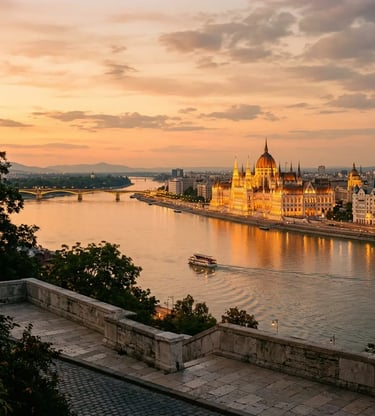
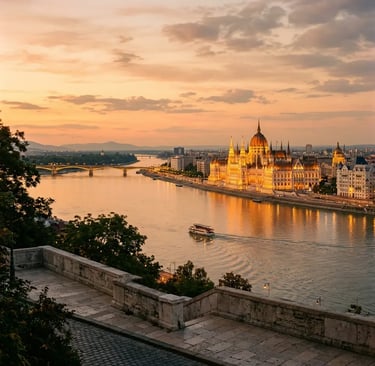
Budapest, Hungary — Orientation. Grand architecture meets thermal baths. The nervous system begins to downregulate.
Pécs, Hungary — A quieter, Ottoman-influenced university city. The pace drops. Attention sharpens.
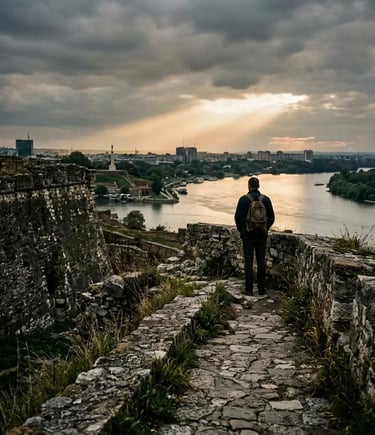
Belgrade, Serbia — The first significant confrontation with historical weight at Kalemegdan Fortress.
Sarajevo, Bosnia and Herzegovina — The emotional epicenter. Siege history, resilience, and radical hospitality.
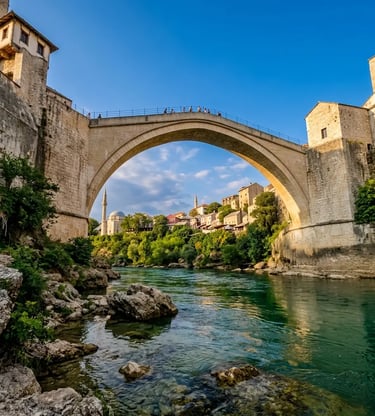
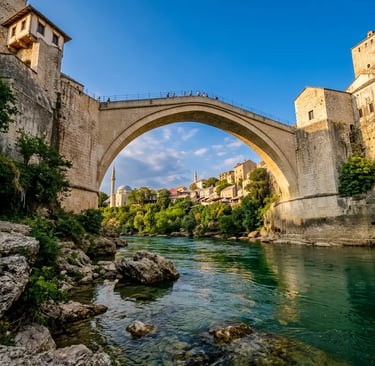
Mostar, Bosnia and Herzegovina — The reconstructed Stari Most bridge as a physical metaphor for repair.
Dubrovnik, Croatia — Beauty after tension. The Adriatic coast as neurological release.
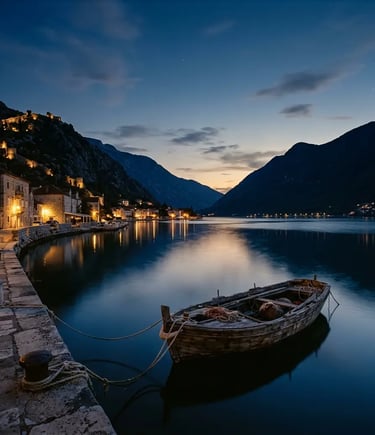
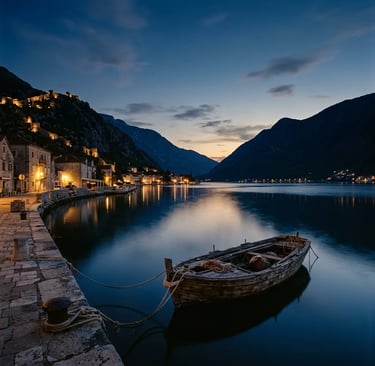
Kotor, Montenegro — Integration. A walled medieval town where silence finally feels earned.
This is not a random sequence. It is a gradient — from comfort to confrontation to resolution.
The Trauma Axis: Belgrade and Sarajevo as Mirrors
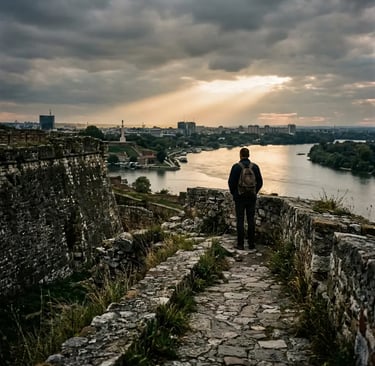
Belgrade's Kalemegdan Fortress
Kalemegdan sits at the confluence of the Sava and Danube rivers, a strategic point that has been destroyed and reconstructed over 115 times across two millennia. Standing on its walls, you are not looking at a ruin. You are looking at a thesis on survival. The fortress does not ask for your sympathy. It simply exists, indifferent to whether you grasp its weight.
That indifference is the point. It recalibrates. Your own internal narrative about difficulty the project deadline, the difficult relationship suddenly occupies a different scale.
Sarajevo: Where Resilience Has an Address
Sarajevo and Mostar history cannot be understood from a textbook. The city endured 1,425 days of siege between 1992 and 1996. Residents drank river water and burned furniture for heat. Today, the same neighborhoods host some of the most genuinely warm hospitality in Europe.
Walking the streets with a knowledgeable local guide, you observe something that disrupts your assumptions: trauma did not make this city brittle. It made it radically present. The café culture, the unhurried conversations with strangers, the dark humor these are not performances for tourists. They are the residue of a community that learned the actual cost of disconnection.
This observation triggers what researchers describe as a perspective shift in stress appraisal. Your body registers the contrast between the weight of this history and the lightness of present-day interaction. Cortisol patterns shift. Baseline anxiety lowers not through relaxation, but through recalibration.
The Connection Axis: Why Small-Group Format Changes Everything
Small group Balkan tours function differently from large bus operations, and the reason is not merely logistical. A group of twelve to sixteen people, sharing ten days of escalating emotional exposure, begins to shed the transactional social masks that dominate daily life.
There is a specific mechanism at work. Shared vulnerability standing together in Sarajevo's Tunnel of Hope, walking across Mostar's rebuilt bridge creates what psychologists call a "fast-trust" environment. The usual months-long process of building genuine rapport compresses into days.
This is not accidental. The guided format provides a safe container: someone else handles logistics, navigation, and language barriers. That removal of friction frees cognitive bandwidth for what actually matters — looking someone in the eye and saying what you mean.
The interactions with locals amplify this. In the Balkans, hospitality is not a service industry concept. It is a cultural reflex forged under pressure. When a Bosnian family invites your group for coffee, they are not performing. They are including you in a tradition of absolute acceptance that predates tourism by centuries.
Mostar and Dubrovnik: Repair and Release
The Stari Most Bridge
Mostar's sixteenth-century bridge was destroyed in 1993 and painstakingly rebuilt by 2004. Crossing it is not symbolic in a vague, poetic sense. It is a concrete physical act of walking across proof that what was shattered can be made whole different, yes, but structurally sound.
Dubrovnik and Kotor: The Exhale
After the emotional density of Bosnia, the Adriatic coast arrives like a long-held breath finally released. Dubrovnik's limestone streets and Kotor's medieval walls offer beauty without demand. The nervous system, having been stretched and recalibrated, now integrates.
The Quiet Math of Transformation
This is not a vacation. It is an intervention disguised as an itinerary. Ten days, seven stops, six countries and a fundamental shift in how you metabolize your own life. The Immersive Balkan Adventure from Budapest to Kotor does not promise relaxation. It promises something more durable: a re-evaluation of what actually constitutes difficulty, conducted in the company of people who stopped pretending long before you arrived.
Frequently Asked Questions About the Budapest to Kotor Balkan Tour
What makes the Budapest to Kotor itinerary different from standard Balkan tours?
The fundamental difference is sequence. This 10-day route is not a random collection of photogenic stops. Each destination is positioned to build on the emotional and psychological weight of the one before it moving from the architectural grandeur of Budapest through the historical density of Belgrade and Sarajevo, then releasing into the Adriatic light of Dubrovnik and Kotor.
Standard large-bus Balkan tours prioritize surface-level coverage. They move fast, photograph landmarks, and leave. This itinerary prioritizes depth. The small-group format typically twelve to sixteen travelers allows for unscripted interactions with local residents, extended time at historically significant sites, and the kind of slow observation that transforms a destination from a backdrop into an experience that physically registers in the body.
The result is not merely a broader knowledge of Balkan geography. It is a measurable shift in how you process your own daily stress. Standing in places where communities rebuilt from genuine devastation recalibrates your internal scale of difficulty. That recalibration is the product. The scenery is simply the delivery mechanism.
Is Sarajevo safe for tourists, and what should I expect emotionally?
Sarajevo is not only safe it is one of the most genuinely welcoming cities in southeastern Europe. The infrastructure is modern, the public spaces are well maintained, and the local population carries a cultural tradition of hospitality that predates the modern tourism industry by centuries. Crime rates affecting visitors are notably low, and the guided format of this tour ensures navigation through the city is seamless and informed.
What you should prepare for is not physical risk but emotional confrontation. Sarajevo does not hide its history. The Tunnel of Hope, the Roses mortar scars filled with red resin marking sites of civilian casualties and the surrounding hillsides that once held siege positions are all visible, woven into the daily fabric of a functioning, vibrant city. This contrast between past trauma and present warmth is what makes the experience so disorienting in the best possible sense.
Expect to feel a tension between heaviness and lightness that does not resolve neatly. Expect to sit in a café where the owner tells you a story that makes you reconsider what you thought you knew about resilience. Expect to leave with a definition of strength that has nothing to do with the version you arrived with.
Why does the small-group tour format matter for authentic Balkan travel?
Group size directly determines the quality of access. A forty-person bus cannot enter a family-run Bosnian home for coffee. It cannot pause at an unmarked memorial because the guide noticed the group needed a moment of silence. It cannot adapt to the rhythm of a conversation with a local shopkeeper in Mostar who has a story worth hearing. Small-group formats can do all of these things, and routinely do.
Beyond logistics, there is a psychological mechanism at work. When twelve people share ten consecutive days of emotionally layered experiences walking across a rebuilt bridge, standing inside a war tunnel, watching the sun set over the Bay of Kotor the social barriers that govern ordinary interaction begin to dissolve. People stop performing. The masks come off not because anyone demands vulnerability, but because the environment makes pretense feel unnecessary.
This is the architecture of authentic connection. The Balkans provide the emotional weight. The small-group container provides the safety. Together, they produce interactions between travelers and between travelers and locals that most people have stopped believing are possible with strangers. That belief gets quietly dismantled somewhere between Belgrade and Dubrovnik.
What is the best time of year to take the Budapest to Kotor tour?
Late spring specifically May through mid-June and early autumn September through mid-October are the optimal windows. During these periods, temperatures across the route sit comfortably between 18 and 27 degrees Celsius. The heavy tourist congestion that compresses Dubrovnik's old town into near-impassability during July and August has not yet arrived or has already dissipated. Light is long and warm without being punishing.
These shoulder seasons also unlock a subtler advantage: locals are more available. In peak summer, residents of tourism-heavy cities like Dubrovnik and Mostar shift into transactional mode out of sheer necessity. In May or September, conversations unfold differently. There is space. A café owner in Sarajevo has time to sit down. A guide in Belgrade lingers at Kalemegdan because the afternoon allows it. These are the unscripted interactions where genuine connection occurs, and they are seasonal.
Weather across the route is generally stable during these windows, though Sarajevo sits in a valley and can cool sharply in the evenings, even in early autumn. Packing one reliable layer is sufficient. The Adriatic coast from Dubrovnik to Kotor remains warm well into October. The itinerary moves south as it progresses, which means you are following the warmth rather than outrunning it.
Connect
Join us for travel tips and destination insights.
© 2026. All rights reserved.
Affiliate disclaimer
This website contains affiliate links. If you purchase through these links, we may earn a commission at no extra cost to you.